


 Password Manager
 Identity Theft Protection

 Team / Business
 Enterprise
 Government
 MSP
MSP


Every american who manages online accounts confronts new security threats every day. With cybercrime costs set to hit over 10 trillion dollars globally by 2025, protecting digital identities has never been more urgent. Understanding authentication factors is the key to safeguarding sensitive data and personal information. This clear breakdown reveals how these security layers work together, so you can confidently choose methods that enhance protection and reduce risk.
Key Takeaways
| Point | Details |
|---|---|
| Authentication Factors | Authentication factors are divided into knowledge, possession, and inherence, each serving distinct roles in verifying user identity. |
| Multi-Factor Authentication (MFA) | MFA improves security by requiring two or more independent credentials from different categories, making unauthorized access more difficult. |
| Industry Adoption | Industries like banking, healthcare, and government employ MFA to protect sensitive data and prevent unauthorized access using tailored strategies. |
| Continuous Adaptation | Organizations should regularly audit and adapt their MFA strategies to address emerging threats while balancing user experience with security needs. |
Defining Authentication Factors and Core Concepts
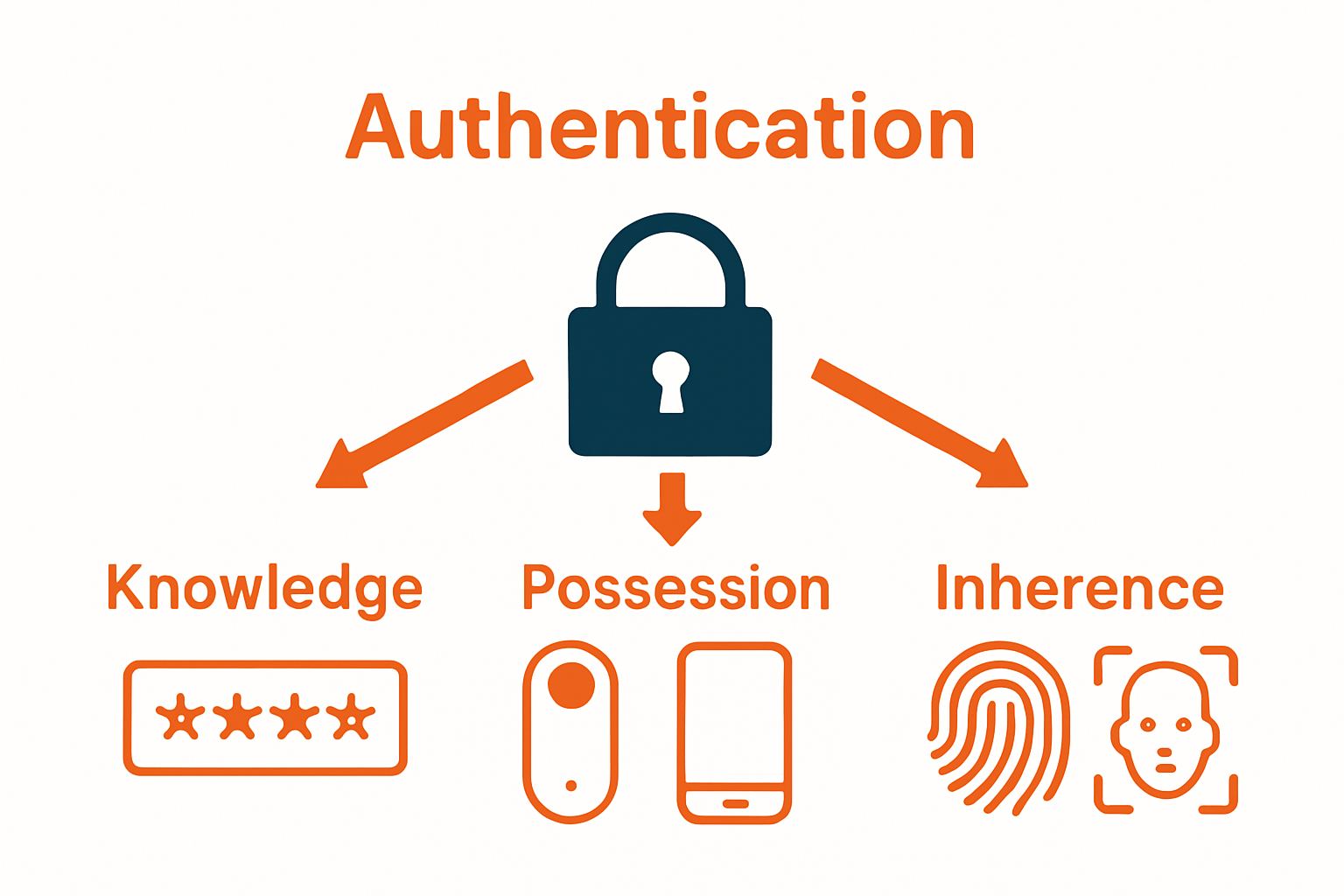
Authentication is the critical digital security process that verifies a user’s identity before granting access to systems, networks, or sensitive resources. Authentication factors represent the core credentials used in this verification process. According to TechTarget, authentication factors are categorized into three primary classifications: something you know, something you have, and something you are.
The first category, knowledge factors, involves credentials that rely on information only the authorized user should possess. This typically includes passwords, PIN codes, or security questions. Possession factors represent physical items a user must have to authenticate, such as security tokens, smart cards, or mobile devices that generate unique verification codes. Inherence factors are the most advanced, involving biometric data unique to an individual like fingerprints, facial recognition, voice patterns, or retinal scans.
Securing digital access requires understanding how these authentication factors work together. As ScienceDirect explains, authentication is fundamentally about verifying user identity before permitting system resource access. Modern security strategies often combine multiple factors to create robust, multilayered protection. This approach, known as multi-factor authentication, significantly reduces the risk of unauthorized access by requiring attackers to compromise multiple independent verification methods.
Authentication factors are not one-size-fits-all. Different environments and security requirements demand unique combinations. High-security sectors like government agencies or financial institutions might implement complex, multilayered authentication protocols. Conversely, personal accounts might use simpler two-factor methods. The key is selecting authentication factors that balance security effectiveness with user convenience, ensuring protection without creating undue friction in the access process.
Types of Authentication Factors Explained
Authentication security relies on three fundamental factor categories that provide layered protection for digital systems. Stony Brook University defines these categories as knowledge factors, possession factors, and inherence factors, each representing a unique approach to verifying user identity.
Knowledge Factors are credentials based on information only the authorized user should know. These include:
- Passwords
- Personal identification numbers (PINs)
- Security questions
- Secret codes
Possession Factors involve physical items that authenticate a user’s identity. According to IJERT Research, these typically include:
- Security tokens
- Smart cards
- Mobile authentication apps
- Hardware authentication devices
Inherence Factors represent the most advanced authentication method, utilizing unique biological or behavioral characteristics to confirm identity. These cutting-edge verification techniques include:
- Fingerprint scans
- Facial recognition
- Voice pattern analysis
- Retinal or iris scanning
- Behavioral biometrics like typing rhythm
When implementing practical multi-factor authentication solutions, security professionals often combine these factors to create robust protection mechanisms. By requiring multiple independent verification methods, organizations can significantly reduce the risk of unauthorized access.
 The goal is not just blocking potential threats but creating a dynamic, adaptive security environment that validates user identity with high confidence and minimal user friction.
How Multi-Factor Authentication Works
Multi-factor authentication (MFA) represents a sophisticated security approach designed to create multiple layers of identity verification. Wikipedia defines MFA as a system requiring users to present two or more independent credentials from different authentication factor categories to confirm their identity. This method dramatically increases security by making unauthorized access exponentially more difficult.
The Authentication Workflow typically follows a sequential verification process:
- Initial credential presentation (usually a username)
- First authentication factor verification (password)
- Additional factor challenge
- Final access authorization
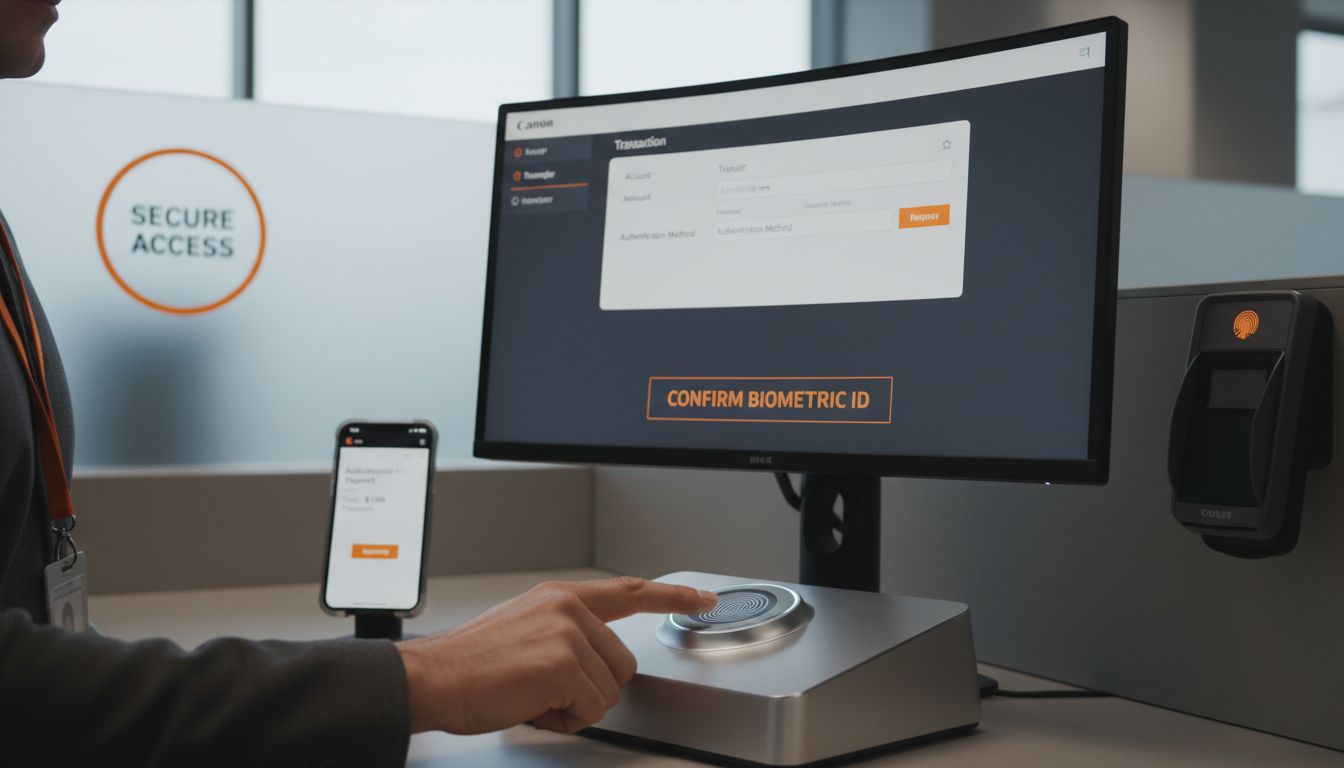
The verification process integrates multiple independent authentication methods. ScienceDirect explains that MFA enhances security by combining diverse factors like passwords (knowledge) and biometric data (inherence). For instance, a bank transaction might require:
- Something you know: Account password
- Something you have: Mobile device for code generation
- Something you are: Fingerprint or facial recognition
Understanding the role of multi-factor authentication reveals its adaptive nature. Modern MFA systems dynamically adjust verification complexity based on risk factors. High-risk scenarios like international logins or accessing sensitive data might trigger additional authentication steps. Conversely, routine access from familiar devices could require minimal verification. This intelligent approach balances robust security with user convenience, creating a flexible defense mechanism that protects against evolving digital threats.
Real-World Applications and Industry Use Cases
Wikipedia highlights that multi-factor authentication has become a critical security strategy across multiple industries, with widespread implementation in banking, healthcare, and corporate environments. These sectors recognize MFA as an essential method for protecting sensitive data and preventing unauthorized system access.
Banking and Financial Services represent the most rigorous adopters of multi-factor authentication. Modern financial institutions implement sophisticated MFA protocols that typically involve:
- Transaction verification through mobile app codes
- Biometric authentication for high-value transfers
- Geographic login monitoring
- Device recognition technologies
Healthcare Systems use MFA to comply with strict patient data protection regulations. According to ScienceDirect, healthcare organizations combine multiple authentication factors to secure electronic health records, protect patient privacy, and prevent unauthorized medical system access. This includes:
- Secure login for medical professionals
- Remote access authentication
- Prescription management systems
- Patient record viewing permissions
Government and defense sectors implement the most advanced multi-factor authentication strategies. Enterprise security guides reveal that these organizations often use complex, layered authentication approaches involving:
- Highly secure biometric verification
- Physical security tokens
- Advanced behavioral pattern recognition
- Continuous authentication techniques
The critical insight is that MFA isn’t just a technology—it’s a comprehensive security philosophy. Different industries customize authentication approaches based on their unique risk profiles, balancing stringent security requirements with operational efficiency. By requiring multiple independent verification methods, organizations create robust defense mechanisms that significantly reduce the potential for unauthorized access and data breaches.
Risks, Limitations, and Best Practices
Wikipedia reveals that while multi-factor authentication significantly enhances security, it is not an impenetrable solution. Organizations must understand potential vulnerabilities and implement strategic mitigation approaches to maintain robust digital protection.
Primary Security Risks in multi-factor authentication include:
- Phishing Attacks: Sophisticated social engineering techniques that trick users into revealing authentication credentials
- Man-in-the-Middle Intercepting: Unauthorized interception of communication between authentication systems
- Token Theft: Physical or digital compromise of authentication tokens
- User Fatigue: Complex authentication processes that reduce user compliance
According to ScienceDirect, implementing MFA requires carefully balancing security requirements with user experience. Best Practices for effective multi-factor authentication include:
- Regular security awareness training
- Implementing adaptive authentication mechanisms
- Using hardware-based authentication tokens
- Developing clear, user-friendly authentication policies
Complete Guide to Enterprise Security emphasizes that successful MFA strategies require continuous adaptation. Organizations must:
- Regularly audit authentication protocols
- Monitor emerging threat landscapes
- Update authentication technologies
- Create flexible verification workflows
The most effective multi-factor authentication approach treats security as an ongoing process, not a static solution. By combining technological sophistication with user education and adaptive strategies, organizations can create resilient defense mechanisms that protect against evolving digital threats.
Strengthen Your Digital Identity with Advanced Authentication Solutions
Understanding authentication factors is the first step toward robust digital security. This article breaks down the critical challenge of verifying user identities by combining knowledge, possession, and inherence factors to prevent unauthorized access. At LogMeOnce, we recognize the concern organizations face when balancing stringent security requirements with seamless user experiences. Weak passwords, token theft, and phishing attacks are real threats that demand innovative, adaptive solutions.
Our platform offers a comprehensive range of features designed to address these pain points directly. With passwordless multi-factor authentication and flexible identity management tools, you can protect sensitive data without burdening your users. Whether you are a business, government agency, or individual, LogMeOnce provides reliable security that adapts to evolving risks while ensuring ease of use.
Ready to convert your understanding of authentication factors into actionable security?

Explore how LogMeOnce transforms complex authentication into simple protection. Visit LogMeOnce today and empower your organization with cutting-edge multi-factor authentication and encrypted cloud storage designed to keep your digital access truly secure.
Frequently Asked Questions
What are the different types of authentication factors?
The three main types of authentication factors are knowledge factors (e.g., passwords, PINs), possession factors (e.g., security tokens, smart cards), and inherence factors (e.g., biometric data like fingerprints or facial recognition).
How does multi-factor authentication (MFA) enhance security?
MFA enhances security by requiring users to present two or more independent credentials from different categories of authentication factors. This significantly reduces the chance of unauthorized access, as attackers would need to compromise multiple verification methods.
What are some common uses of multi-factor authentication?
Multi-factor authentication is widely used in various industries, including banking for transaction verification, healthcare for securing patient data, and government sectors for protecting sensitive information. Each area customizes its MFA strategies according to its security needs.
What are the best practices for implementing multi-factor authentication?
Best practices include regular security training for users, employing adaptive authentication mechanisms, using hardware-based tokens for added security, and continuously auditing authentication protocols to adapt to new threats.
Recommended


