


 Password Manager
 Identity Theft Protection

 Team / Business
 Enterprise
 Government
 MSP
MSP


Most American organizations face rising threats from cyberattacks, with over 60 percent reporting at least one security breach each year. As technology forms the backbone of modern business, controlling who can access sensitive systems is no longer optional. Understanding access management goes far beyond creating secure passwords and brings real protection by regulating digital entry points, shielding data, and helping companies avoid costly disruptions.
Key Takeaways
| Point | Details |
|---|---|
| Effective Access Management | Implementing robust access management strategies reduces the risk of unauthorized access and enhances security visibility. |
| Role-Based Access Control | Utilizing role-based access control aligns user permissions with organizational roles, creating granular security boundaries. |
| Multi-Factor Authentication | Employing multi-factor authentication significantly enhances security by requiring multiple verification methods for system access. |
| Compliance with Regulations | Access management frameworks must meet stringent regulatory requirements to protect sensitive information and avoid legal penalties. |
What Is Access Management in Cybersecurity
Access management represents a critical cybersecurity strategy designed to control and protect digital resources by regulating user permissions and authentication. At its core, access management functions as a sophisticated gatekeeper that determines who can enter specific digital environments, what actions they can perform, and under what conditions.
In practical terms, access management involves comprehensive processes that authenticate user identities, authorize their specific system privileges, and continuously monitor digital interactions. Organizations implement these protocols to prevent unauthorized entry, protect sensitive information, and maintain granular control over technological ecosystems. The strategy goes beyond simple password protection, incorporating advanced techniques like multi-factor authentication, role-based access controls, and real-time permission monitoring.
Key components of an effective access management framework include:
- User Authentication: Verifying the identity of individuals requesting system access
- Authorization: Defining precise permission levels for each authenticated user
- Access Tracking: Monitoring and logging all system interactions
- Policy Enforcement: Establishing and maintaining consistent security protocols
By implementing robust access management strategies, organizations can significantly reduce their vulnerability to potential security breaches. These systems create intelligent barriers that adapt to evolving threat landscapes, ensuring that only legitimate users can interact with critical digital resources while maintaining comprehensive visibility into user activities.
Types of Access Management Solutions Explained
Access management solutions represent a diverse ecosystem of security technologies designed to protect digital resources through sophisticated authorization mechanisms. Organizations can choose from multiple approaches tailored to their specific security requirements and operational complexity.
Role-based access control (RBAC) stands as a fundamental strategy that assigns system permissions based on predefined organizational roles. This approach ensures that users receive precisely calibrated access rights corresponding to their professional responsibilities. For instance, a financial analyst might have different system access compared to a human resources manager, creating granular security boundaries.
Key types of access management solutions include:
- Attribute-Based Access Control (ABAC): Grants permissions using complex combinations of user, resource, and environmental attributes
- Rule-Based Access Control: Defines access through explicit security rules and conditions
- Discretionary Access Control (DAC): Allows resource owners to determine who can access their specific digital assets
- Mandatory Access Control (MAC): Implements strict, hierarchical access permissions typically used in high-security environments
Modern single sign-on technologies have further revolutionized access management by streamlining authentication processes. These solutions enable users to access multiple systems and applications using one set of credentials, dramatically reducing password fatigue while maintaining robust security protocols. By integrating advanced authentication methods like biometric verification, multi-factor authentication, and adaptive access controls, organizations can create intelligent security frameworks that balance user convenience with comprehensive protection.
How Multi-Factor Authentication Enhances Security
Multi-factor authentication represents a critical defense mechanism in modern cybersecurity, transforming traditional password protection into a multilayered security strategy. By requiring multiple verification methods, this approach creates significant barriers for potential unauthorized access, dramatically reducing the risk of digital intrusions.

Multi-factor authentication adds an extra layer of security to identity and access management systems, compelling users to provide two or more verification factors before gaining system entry. These verification methods typically fall into three primary categories: something you know (password), something you have (mobile device), and something you are (biometric data like fingerprints or facial recognition).
The core benefits of multi-factor authentication include:
- Reduced Unauthorized Access: Dramatically decreases the probability of successful security breaches
- Comprehensive Identity Verification: Requires multiple proofs of identity beyond simple password entry
- Adaptive Security: Can incorporate contextual factors like location and device characteristics
- Compliance Support: Helps organizations meet stringent regulatory security requirements
Two-factor authentication techniques have evolved to incorporate sophisticated verification methods that go far beyond traditional security approaches. Modern implementations can include adaptive authentication that analyzes user behavior patterns, risk-based authentication that adjusts verification complexity based on perceived threat levels, and seamless biometric integration that makes security both robust and user-friendly. By creating intelligent, dynamic security barriers, multi-factor authentication transforms digital protection from a static defense into an adaptive, responsive shield against evolving cyber threats.
Key Compliance and Regulatory Considerations
Access management represents a critical intersection between cybersecurity strategy and regulatory compliance, where organizations must navigate complex legal requirements while protecting sensitive digital assets. The regulatory landscape demands increasingly sophisticated approaches to identity verification and system access control, pushing businesses to implement robust security frameworks that meet stringent national and international standards.
Role-based access control (RBAC) is integral to security frameworks that align with critical compliance standards such as the Federal Information Security Modernization Act (FISMA), HIPAA, and NIST Special Publication 800-53. These regulatory frameworks require organizations to implement granular access controls that precisely map user permissions to specific organizational roles and responsibilities.
Key compliance considerations for access management include:
- Granular Permission Controls: Ensuring users have access only to resources directly relevant to their job functions
- Comprehensive Audit Trails: Maintaining detailed logs of all system access and permission modifications
- Data Protection Standards: Implementing encryption and secure access protocols for sensitive information
- Regular Security Assessments: Conducting periodic reviews of access management systems and permissions
Identity and access management systems play a pivotal role in managing user identifiers, attributes, credentials, and permissions across complex organizational ecosystems. By developing adaptive access management strategies that can dynamically adjust to evolving regulatory requirements, organizations can create flexible security frameworks that protect critical assets while maintaining compliance with increasingly complex legal and industry-specific regulations.
Risks of Poor Access Management Practices
Access management failures represent a critical vulnerability that can expose organizations to catastrophic security breaches and operational disruptions. When authentication and authorization protocols are weak or inconsistently implemented, businesses create open pathways for malicious actors to exploit sensitive digital infrastructure.
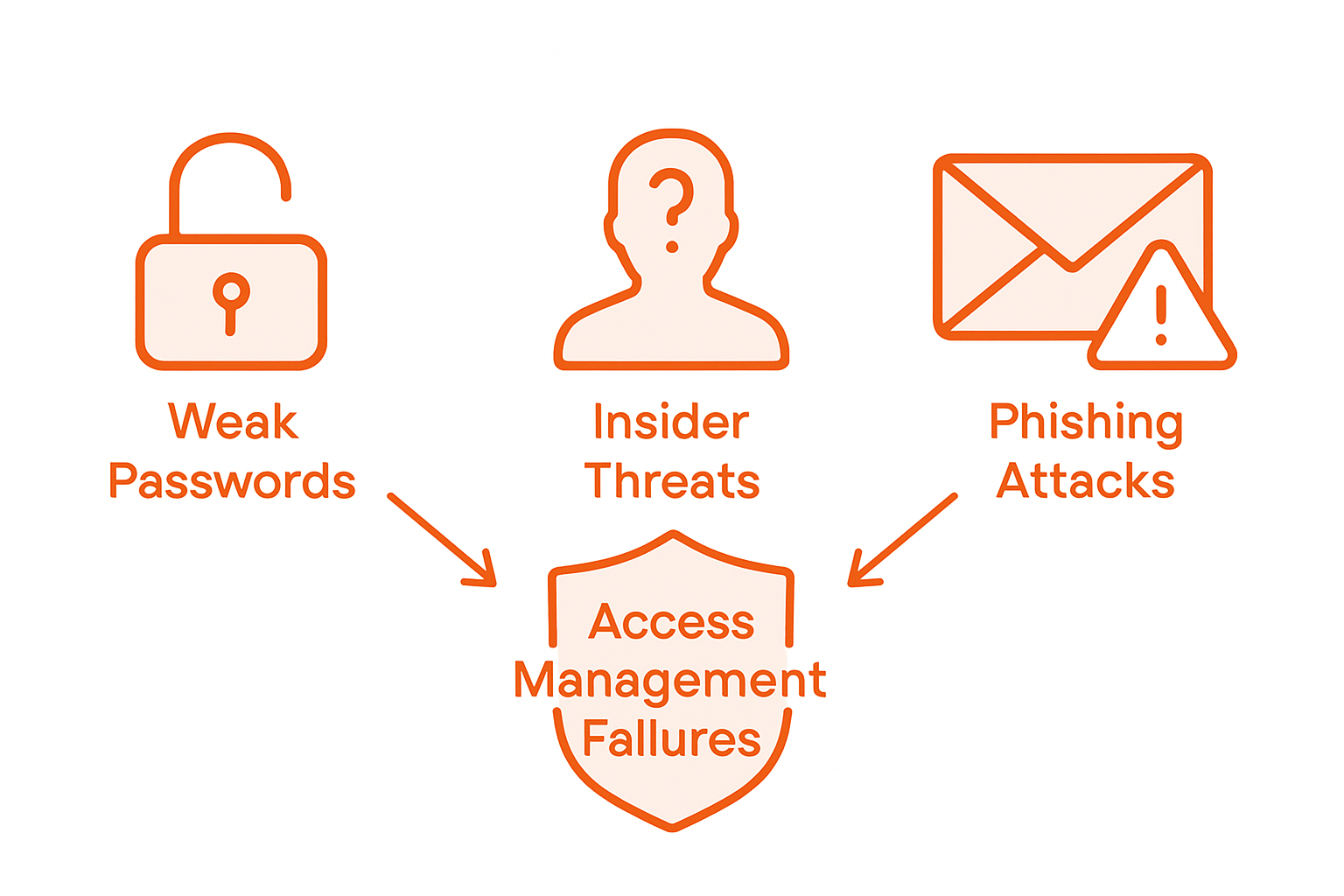
Without comprehensive access management practices, organizations risk unauthorized access to sensitive data, potentially triggering devastating consequences across technological and financial domains. These vulnerabilities can transform seemingly minor security gaps into significant systemic risks that compromise entire organizational networks.
The most significant risks associated with poor access management include:
- Unauthorized Data Exposure: Allowing unauthorized personnel to access confidential information
- Credential Compromise: Increased susceptibility to identity theft and system infiltration
- Compliance Violations: Potential legal and regulatory penalties for inadequate security controls
- Operational Disruption: Potential system-wide breaches that can halt business operations
Identity threat landscapes reveal complex risks ranging from sophisticated phishing attempts to insider threats and ransomware attacks. Modern cybercriminals continuously evolve their strategies, exploiting even minor access management weaknesses to gain unauthorized system entry. By understanding these potential vulnerabilities, organizations can develop proactive security strategies that create robust, adaptive defense mechanisms against emerging digital threats.
Real-World Benefits for Organizations and Users
Access management delivers transformative advantages that extend far beyond traditional security protocols, creating tangible value for both organizational infrastructure and individual user experiences. By implementing sophisticated access control strategies, businesses can simultaneously enhance security, improve operational efficiency, and create more streamlined technological ecosystems.
Role-based access control (RBAC) simplifies permission management especially in large-scale systems by precisely defining user privileges according to organizational roles. This approach allows companies to create granular, intelligent access frameworks that dynamically adapt to changing workforce structures and technological requirements.
Key real-world benefits include:
- Enhanced Operational Efficiency: Reducing time spent managing complex permission structures
- Improved Security Posture: Minimizing potential unauthorized access points
- Regulatory Compliance: Establishing clear, auditable access control mechanisms
- Cost Reduction: Streamlining user management and reducing administrative overhead
Enterprise password management strategies further amplify these benefits by creating intelligent, adaptive security frameworks that protect critical digital assets while maintaining user productivity. By developing comprehensive access management approaches that balance robust security with user experience, organizations can create technological environments that are simultaneously protected, efficient, and user-friendly.
Strengthen Your Digital Security with Advanced Access Management Solutions
The challenges highlighted in this article show how vital strong access management is for protecting your sensitive digital assets. Weak authentication and lack of granular control can lead to unauthorized access, data breaches, and costly compliance failures. To overcome these risks, organizations need a security partner that offers comprehensive systems like multi-factor authentication, single sign-on, and adaptive access controls.

Discover how LogMeOnce transforms access management by combining ease of use with powerful security features. Our solutions help you enforce strict user authentication, maintain detailed audit trails, and securely manage permissions across your entire infrastructure. Act now to protect your business and users from emerging threats by exploring LogMeOnce’s passwordless MFA and identity management solutions designed to simplify security without compromising control. Start your free trial today and take the first step toward a safer digital environment.
Frequently Asked Questions
What is access management in cybersecurity?
Access management is a cybersecurity strategy that regulates user permissions and authentication to protect digital resources, determining who can access specific environments and what actions they can perform.
How does multi-factor authentication enhance security?
Multi-factor authentication adds an extra layer of security by requiring users to provide multiple verification factors, significantly reducing the risk of unauthorized access to systems.
What are the types of access management solutions?
Common types of access management solutions include role-based access control (RBAC), attribute-based access control (ABAC), discretionary access control (DAC), and mandatory access control (MAC), each offering different methods for managing permissions.
Why is compliance important in access management?
Compliance in access management is crucial as it ensures organizations meet regulatory requirements and implement granular access controls, helping prevent unauthorized access and maintaining sensitive data protection.
Recommended
- Why Cybersecurity Awareness Is Vital to Your Business – LogMeOnce
- Why Is the Advanced Password Manager One of the Best Security Tools – LogMeOnce
- The Finesses of Enterprise Password Management
- Password Vault: Why You Should Keep Your Passwords Protected


