


 Password Manager
 Identity Theft Protection

 Team / Business
 Enterprise
 Government
 MSP
MSP


Nearly 60 percent of american organizations have experienced a data breach caused by weak access controls. Protecting digital resources is no longer just an IT concern, it is a vital part of everyday business. As threats grow more sophisticated, secure access management stands at the core of defending sensitive information. This guide breaks down how modern american companies use smart authentication methods and cutting-edge frameworks to safeguard their data and maintain trust.
Key Takeaways
| Point | Details |
|---|---|
| Secure Access Management Principles | The foundation of secure access management includes Zero Trust Architecture and the Principle of Least Privilege, reinforcing user verification and limiting access rights. |
| Types of Solutions | Organizations can utilize various secure access management solutions such as RBAC, MFA, and IAM systems tailored to their specific needs. |
| Authentication Methods | Advanced authentication techniques like biometric verification and risk-based authentication significantly enhance security beyond traditional methods. |
| Challenges and Compliance | Organizations face challenges related to IoT complexity and compliance with regulatory standards, necessitating robust and adaptive security strategies. |
Defining Secure Access Management Principles
Secure Access Management represents a comprehensive cybersecurity strategy focused on controlling and protecting digital resource access through advanced authentication and authorization mechanisms. At its core, secure access management ensures that only authorized individuals can interact with specific digital systems, networks, and sensitive information.
The fundamental principles of secure access management are built around two critical security frameworks: Zero Trust Architecture and the Principle of Least Privilege. According to Wikipedia, Zero Trust Architecture requires strict identity verification for every user and device attempting to access resources, regardless of their location. This approach fundamentally challenges traditional security models by never automatically trusting any user or device.
The Principle of Least Privilege further reinforces secure access management by mandating that users, programs, and processes receive only the minimum privileges necessary to perform their specific functions. As Wikipedia explains, this principle minimizes potential security risks by limiting access rights to the bare essentials required for legitimate purposes. By implementing these principles, organizations can significantly reduce their vulnerability to unauthorized access, data breaches, and potential cyber threats.
Key components of effective secure access management include:
- Continuous authentication and verification
- Granular access control mechanisms
- Real time monitoring of user activities
- Dynamic permission management
- Comprehensive user identity validation
These strategic approaches transform access management from a passive security measure into an active, intelligent defense mechanism that adapts to evolving digital environments. For a deeper understanding of authentication strategies, check out our guide on strong authentication.
Types of Secure Access Management Solutions
Secure Access Management encompasses multiple sophisticated solutions designed to protect digital environments through strategic authentication and authorization methodologies. Organizations can choose from various approaches tailored to their specific security requirements and operational frameworks.
Role-Based Access Control (RBAC) represents a fundamental secure access management strategy. According to Wikipedia, RBAC restricts system access by assigning permissions based on users’ organizational roles, simplifying administrative processes and ensuring individuals have access appropriate to their job functions. This method provides a structured approach to managing digital permissions, reducing potential security vulnerabilities.
Another critical secure access management solution is Rule-Set-Based Access Control (RSBAC). As Wikipedia explains, this open-source access control framework offers multiple security models including mandatory access control (MAC) and access control lists (ACL). RSBAC provides granular control over user and program network accesses, enabling organizations to implement highly customized security protocols.
Key types of secure access management solutions include:
- Role-Based Access Control (RBAC)
- Rule-Set-Based Access Control (RSBAC)
- Multi-Factor Authentication (MFA)
- Single Sign-On (SSO)
- Identity and Access Management (IAM) Systems
- Privileged Access Management (PAM)
To gain deeper insights into authentication strategies, explore our comprehensive single sign-on guide.
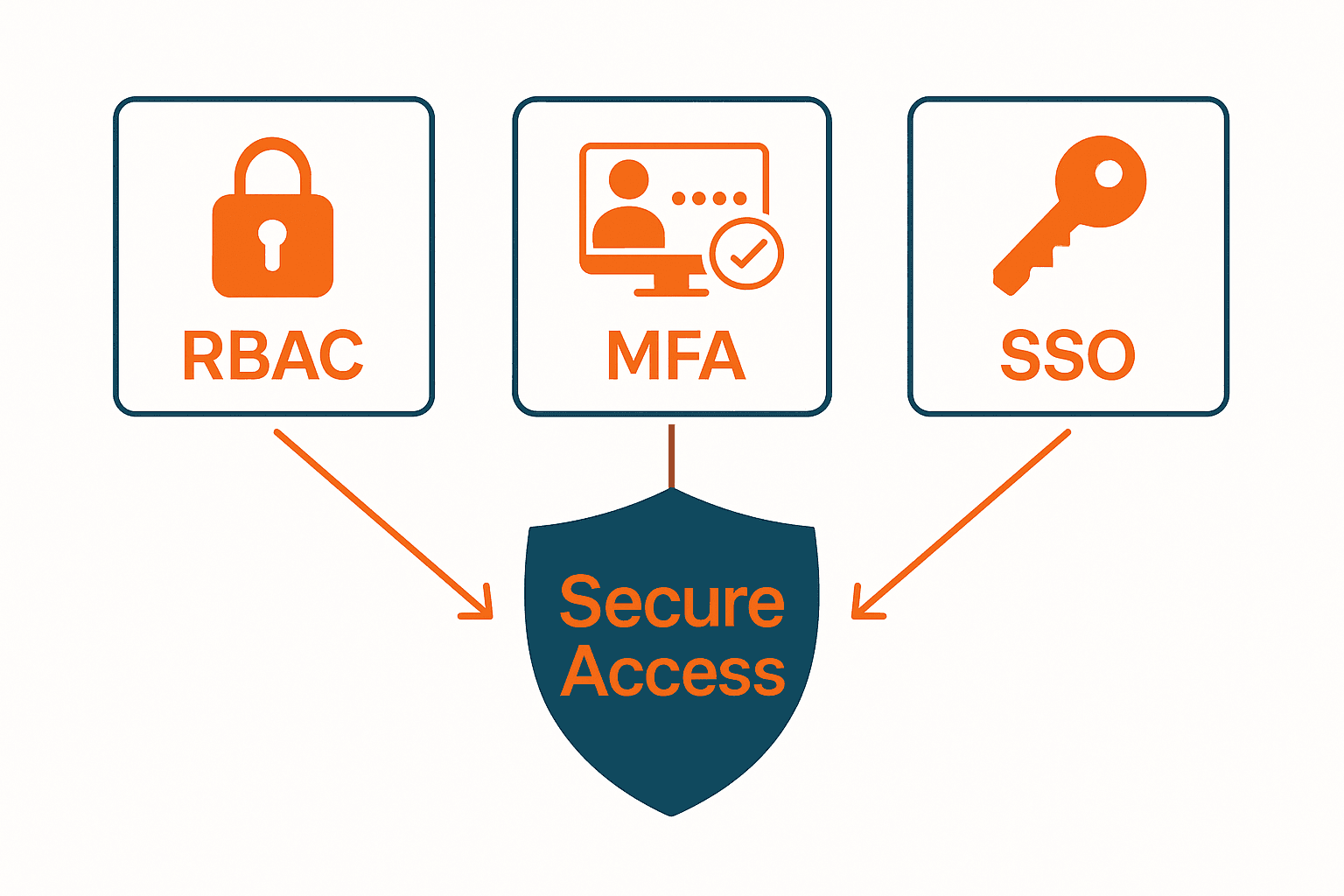 These solutions work collaboratively to create robust, adaptive security frameworks that protect sensitive digital assets while maintaining operational efficiency.

Core Features and Authentication Methods
Secure Access Management requires robust authentication methods that go beyond traditional username and password combinations to protect digital assets comprehensively. Modern authentication strategies leverage advanced technologies and multiple verification layers to ensure enhanced security and user accessibility.
Biometric Authentication represents a cutting-edge approach to secure access management. According to arXiv, secure biometrics involve authentication architectures that utilize inherent physical characteristics for identity verification. These systems address complex challenges like managing noisy biometric data while maintaining stringent privacy standards, offering a more sophisticated method of user identification.
The Zero Trust Authentication Model further revolutionizes secure access management by implementing continuous verification strategies. Research from arXiv highlights that this approach integrates dynamic trust scores and adaptive policy generation in micro-cloud environments, ensuring persistent validation of user and device identities. This method fundamentally transforms traditional security paradigms by never automatically trusting any user or system component.
Key authentication methods and core features include:
- Multi-Factor Authentication (MFA)
- Biometric Verification
- Zero Trust Authentication
- Risk-Based Authentication
- Adaptive Authentication
- Single Sign-On (SSO)
To dive deeper into enterprise-level security strategies, explore our enterprise password management resources. These advanced authentication methods work synergistically to create comprehensive, intelligent security frameworks that protect digital ecosystems while maintaining seamless user experiences.
Real-World Use Cases for Organizations
Secure Access Management has become a critical strategy across diverse organizational sectors, addressing complex security challenges while enabling efficient and protected digital interactions. Different industries implement unique approaches to safeguard their digital assets and maintain operational integrity.
In academic environments, network security implementation demonstrates the practical application of secure access management. According to Science Publishing Group, a case study at the University of Education-Kumasi Campus utilized advanced tools like SSH clients and PacketFence to enhance remote network management. These technologies enabled comprehensive authentication of user and device access while enforcing robust network policies, showcasing how educational institutions can implement sophisticated security frameworks.
Blockchain and decentralized technologies are also revolutionizing secure access management. Research from arXiv highlights Dynamic Role-Based Access Control (RBAC) frameworks for decentralized applications, which decouple access control from core business logic. This approach facilitates decentralized governance and enables more flexible, efficient policy enforcement in complex digital ecosystems.
Real-world secure access management use cases span multiple sectors:
- Financial Services: Protecting sensitive transaction data
- Healthcare: Securing patient records and medical systems
- Government Agencies: Implementing zero trust network architectures
- Technology Companies: Managing complex, distributed workforce access
- Educational Institutions: Controlling academic and research network resources
- Retail Organizations: Protecting customer and inventory data systems
To explore deeper insights into enterprise-level security strategies, explore our enterprise password management resources. These comprehensive approaches demonstrate how modern organizations can balance robust security with operational efficiency and user accessibility.
Risks, Challenges, and Compliance Factors
Secure Access Management is a complex landscape fraught with evolving technological challenges, regulatory requirements, and sophisticated cybersecurity threats. Organizations must navigate an intricate ecosystem of security risks while maintaining operational efficiency and compliance with increasingly stringent regulatory standards.
In the rapidly expanding Internet of Things (IoT) environment, secure access management faces unique implementation challenges. Research from arXiv highlights the complexity of managing diverse communication standards and resource constraints. Innovative solutions like reconfigurable security frameworks based on edge computing are emerging to address these challenges, simplifying key management and offloading computational costs while enhancing overall system security.
The Sherwood Applied Business Security Architecture (SABSA) provides a structured methodology for developing risk-driven enterprise security strategies. According to Wikipedia, this framework emphasizes aligning security measures directly with business requirements, ensuring comprehensive compliance and effective risk management through a systematic approach.
Critical risks and compliance challenges include:
- Regulatory Compliance Requirements
- Technological Complexity
- Resource Constraints
- Evolving Cybersecurity Threats
- Integration of Legacy Systems
- Privacy Protection Mandates
To gain deeper insights into managing enterprise security challenges, explore our enterprise password management resources. Understanding these multifaceted risks is crucial for developing robust, adaptive secure access management strategies that protect organizational assets while maintaining operational agility.
Strengthen Your Secure Access Management Strategy Today
The article highlights the growing challenges organizations face in implementing secure access management principles such as Zero Trust Architecture and the Principle of Least Privilege. If you are concerned about unauthorized access, complex authentication needs, or managing permissions dynamically across your network, you are not alone. Secure, adaptable solutions like multi-factor authentication and single sign-on can significantly reduce risks while improving user experience. Protecting sensitive data and ensuring continuous verification requires more than traditional methods.
Take control of your digital security with LogMeOnce’s comprehensive suite designed to simplify secure access management for businesses of all sizes. With features like passwordless MFA, encrypted cloud storage, and easy single sign-on integration, you can enforce strict identity validation and granular access control seamlessly. Don’t wait for a security breach to act. Visit LogMeOnce now and discover how our advanced cybersecurity solutions empower your organization to stay safe and compliant in an evolving threat landscape. Explore more about strong authentication and our enterprise password management resources to get started on building a resilient defense.
Frequently Asked Questions
What is Secure Access Management?
Secure Access Management is a comprehensive cybersecurity strategy focused on controlling and protecting access to digital resources through advanced authentication and authorization mechanisms. It ensures that only authorized individuals can interact with specific systems and sensitive information.
What are the fundamental principles of Secure Access Management?
The fundamental principles of Secure Access Management are based on Zero Trust Architecture and the Principle of Least Privilege. Zero Trust requires strict identity verification for every user and device accessing resources, while Least Privilege mandates users receive only the minimum necessary permissions to perform their functions.
What are some key components of effective Secure Access Management?
Key components include continuous authentication and verification, granular access control mechanisms, real-time monitoring of user activities, dynamic permission management, and comprehensive user identity validation.
What types of Secure Access Management solutions are available?
Common types of Secure Access Management solutions include Role-Based Access Control (RBAC), Rule-Set-Based Access Control (RSBAC), Multi-Factor Authentication (MFA), Single Sign-On (SSO), Identity and Access Management (IAM) Systems, and Privileged Access Management (PAM).
Recommended
- Why Is the Advanced Password Manager One of the Best Security Tools – LogMeOnce
- Password Manager – LogMeOnce
- What Is Single Sign-On and How Does It Keep Information Secure?


