


 Password Manager
 Identity Theft Protection

 Team / Business
 Enterprise
 Government
 MSP
MSP


Account Recovery Explained: Secure Access Essentials

Over 60 percent of data breaches involve weak or stolen credentials, making secure account recovery more important than ever. When you lose access to your online accounts, a strong recovery process becomes your lifeline to personal data, work documents, and financial information. Understanding how these systems work and what makes them effective helps you protect your digital identity and avoid the frustration of permanent lockout.
Key Takeaways
| Point | Details |
|---|---|
| Importance of Account Recovery | Account recovery is essential for access restoration and securing digital identities, particularly when standard login fails. |
| Common Recovery Methods | Effective recovery mechanisms include email verification, SMS authentication, and biometric validation, balancing usability and security. |
| Security Risks | Vulnerabilities such as social engineering, credential stuffing, and phishing attacks highlight the need for robust recovery strategies. |
| Best Practices | Implementing multi-factor authentication, risk-based authentication, and limiting recovery attempts can significantly enhance account security. |
Defining Account Recovery and Its Importance
Account recovery represents a critical security mechanism enabling users to regain access to digital accounts when standard login methods fail. According to a comprehensive study analyzing web authentication systems arxiv.org, password recovery processes play a fundamental role in maintaining user authentication and securing digital identities.
Account recovery involves a strategic series of verification steps designed to help legitimate account owners restore system access without compromising overall security. These procedures typically require users to prove their identity through multiple verification channels such as:
- Email address verification
- Phone number confirmation
- Security questions authentication
- Backup authentication codes
- Biometric identity validation
Research from arxiv.org examining account remediation protocols across 50 global websites reveals that robust recovery mechanisms are not just convenient—they are essential. Without well-designed recovery processes, users risk permanent lockout from critical digital services, potentially losing access to sensitive personal and professional information.
Effective account recovery systems must strike a delicate balance between accessibility and security. They need to be user-friendly enough that legitimate account owners can quickly restore access, while simultaneously robust enough to prevent unauthorized individuals from exploiting recovery pathways. This requires sophisticated verification techniques that can distinguish between genuine account owners and potential attackers attempting to gain unauthorized entry.
Common Account Recovery Methods Explained
Account recovery methods are sophisticated security protocols designed to help users regain access to their digital accounts through carefully structured verification processes. Research from arxiv.org highlights the complex landscape of web password recovery techniques, revealing the critical balance between accessibility and security that these methods must maintain.
The most prevalent account recovery methods include:
- Email Verification: Users receive a unique reset link or temporary password via their registered email address
- SMS Authentication: A one-time code is sent to the user’s registered mobile number
- Security Questions: Users answer pre-established personal questions only they should know
- Backup Contact Method: Alternative email or phone number used for verification
- Biometric Recovery: Using fingerprint, facial recognition, or other unique physical identifiers
According to an extensive investigation into risk-based recovery mechanisms arxiv.org, modern account recovery systems employ multi-layered verification strategies. These approaches go beyond simple password resets, incorporating sophisticated risk assessment algorithms that analyze factors like device location, previous login history, and behavioral patterns to prevent unauthorized access.
The most robust account recovery methods combine multiple verification channels, creating a comprehensive security net. For additional insights into securing your digital identity, check out our two-factor authentication setup guide that complements these recovery strategies. By implementing these nuanced recovery techniques, users can protect their digital accounts while maintaining convenient access when legitimate authentication challenges arise.

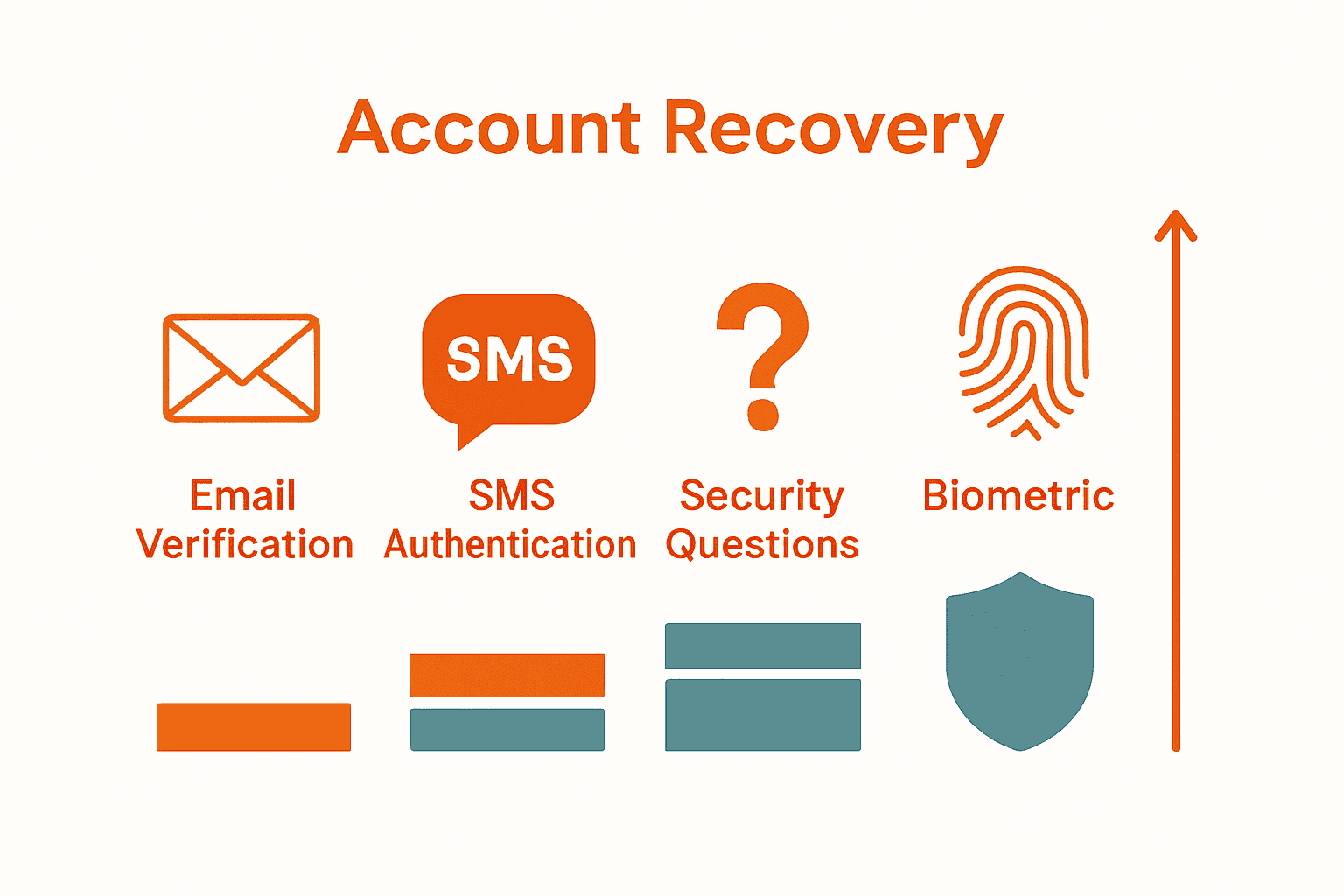
Here’s a comparison of common account recovery methods and their associated security considerations:
| Recovery Method | How It Works | Security Strength |
|---|---|---|
| Email Verification | Reset link sent to registered email | Moderate |
| SMS Authentication | One-time code via SMS | Moderate |
| Security Questions | User answers preset questions | Low to Moderate |
| Backup Contact Method | Uses alternate email/phone | Moderate |
| Biometric Recovery | Uses fingerprints or facial data | High |
How Account Recovery Works in Practice
Account recovery is a nuanced process that varies across digital platforms but follows a consistent framework of identity verification and secure access restoration. According to research analyzing global account remediation procedures arxiv.org, the practical implementation of recovery mechanisms involves multiple strategic steps designed to protect user accounts while providing legitimate access.
The typical account recovery workflow unfolds through several critical stages:
- Initial Access Request: User indicates inability to log in
- Identity Verification: System prompts for secondary authentication methods
- Challenge Response: User provides predetermined verification information
- Risk Assessment: Background systems analyze request legitimacy
- Access Restoration: Successful verification allows account reset
Research from arxiv.org examining risk-based recovery strategies reveals that modern services implement sophisticated algorithmic checks during this process. These checks evaluate multiple contextual factors such as:
- Geographic login location
- Device fingerprint
- Previous account activity patterns
- Time since last successful login
- Network connection characteristics
By integrating these multilayered verification techniques, digital platforms can dramatically reduce unauthorized access risks while maintaining a streamlined recovery experience. For users seeking additional protection, our two-factor authentication setup guide provides comprehensive strategies to enhance account security beyond standard recovery methods. The goal remains consistent: protecting user data while ensuring legitimate users can always regain system access.
Security Risks and How to Mitigate Them
Account recovery processes, while essential for user access, present significant security vulnerabilities that can be exploited by malicious actors. Research from arxiv.org reveals inherent weaknesses in web password recovery systems that can potentially compromise user authentication and digital identity protection.
The primary security risks associated with account recovery include:
- Social Engineering Attacks: Manipulating recovery mechanisms through personal information gathering
- Credential Stuffing: Using leaked credentials to access recovery channels
- Brute Force Attempts: Systematically attempting multiple recovery method combinations
- Phishing Scams: Creating fake recovery interfaces to steal user information
- Weak Secondary Authentication: Exploiting easily guessable backup verification methods
According to an extensive investigation into account recovery vulnerabilities arxiv.org, modern digital services are increasingly adopting risk-based authentication strategies to mitigate these threats. These advanced approaches incorporate sophisticated algorithmic checks that analyze multiple contextual signals to distinguish between legitimate recovery attempts and potential security breaches.
To enhance account security, users should implement comprehensive protection strategies. Understanding the nuanced risks is critical, which is why our password security guide provides detailed insights into protecting your digital identity. By combining multiple verification layers, staying informed about potential threats, and utilizing advanced authentication methods, individuals can significantly reduce their vulnerability to account recovery-related security risks.
Best Practices for Robust Account Recovery
Developing a comprehensive account recovery strategy requires a multifaceted approach that balances security, usability, and user experience. Research from arxiv.org provides critical recommendations for implementing secure web password recovery systems that protect user identities while maintaining accessibility.
Key best practices for robust account recovery include:
- Implement Multi-Factor Authentication (MFA): Require multiple verification methods
- Use Risk-Based Authentication: Analyze contextual login signals
- Create Complex Security Questions: Develop unique, personal verification challenges
- Limit Recovery Attempt Frequency: Implement strict rate limiting
- Encrypt Sensitive Recovery Information: Protect backup authentication data
- Enable Notification Mechanisms: Alert users of recovery attempts
According to an extensive analysis of online services arxiv.org, advanced organizations are developing sophisticated risk-based recovery models that dynamically assess authentication challenges. These models evaluate multiple contextual signals to distinguish legitimate recovery attempts from potential security threats.
For users seeking to enhance their digital security, understanding these nuanced recovery strategies is crucial. Our strong passwords guide offers additional insights into creating comprehensive protection strategies. By implementing multilayered verification techniques, continuously updating security protocols, and remaining vigilant about potential vulnerabilities, individuals and organizations can significantly improve their account recovery resilience.
Strengthen Your Account Recovery with LogMeOnce Security Solutions
The challenges of securely regaining access to your accounts after losing login credentials are real and can be stressful. This article highlights key pain points such as balancing ease of recovery with strong security to prevent unauthorized access. If you want to avoid the frustration of social engineering attacks, weak secondary authentication, or permanent lockouts, it is vital to adopt a solution that implements multi-factor authentication and risk-based verification.

Enhance your digital security by exploring how LogMeOnce offers comprehensive identity management designed to protect your accounts during recovery. With features such as passwordless MFA, cloud encryption, and alerts for suspicious recovery attempts, you can regain control quickly and safely. Don’t wait for a security breach to happen. Take action now by visiting our official website and discover tailored plans for individuals and organizations that demand reliable account recovery and access protection.
Frequently Asked Questions
What is account recovery and why is it important?
Account recovery is a security mechanism that allows users to regain access to their digital accounts when standard login methods fail. It is crucial for maintaining user authentication and protecting digital identities from unauthorized access.
What are the common methods used for account recovery?
Common account recovery methods include email verification, SMS authentication, security questions, backup contact methods, and biometric recovery. These methods provide multiple verification channels to ensure secure access restoration.
How does the account recovery process generally work?
The typical account recovery process involves several stages: the user requests access, the system verifies identity through secondary authentication, the user responds with verification information, a risk assessment is conducted, and access is restored if verification is successful.
What security risks are associated with account recovery?
Key security risks in account recovery include social engineering attacks, credential stuffing, brute force attempts, phishing scams, and weak secondary authentication. These vulnerabilities can be exploited by malicious actors to gain unauthorized access to accounts.
Recommended
- How to Secure Your Data: Essential Steps for Protection – buy2fix
- Understanding Effective Password Management Tips – SRS Networks


