


 Password Manager
 Identity Theft Protection

 Team / Business
 Enterprise
 Government
 MSP
MSP

Complete Guide to MFA in Enterprise Security
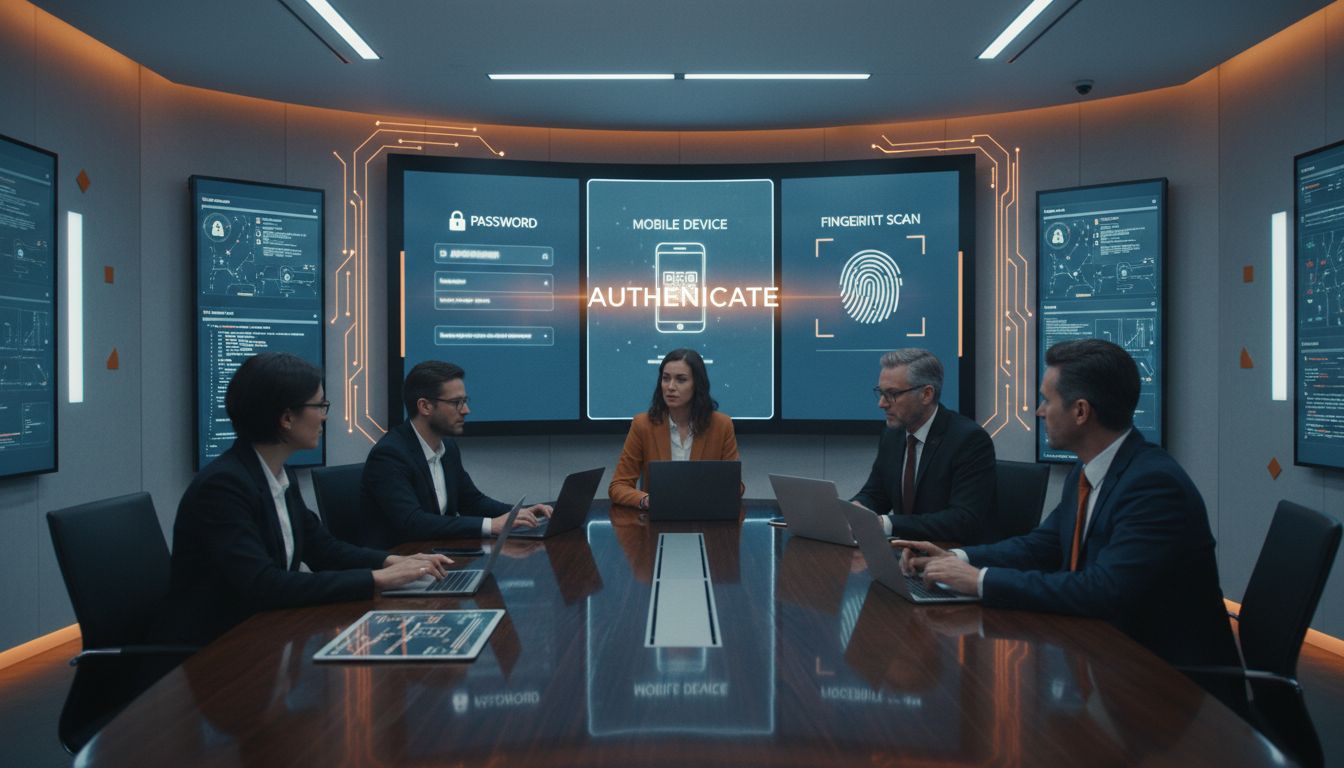
More than 80 percent of security breaches in american enterprises start with stolen or weak passwords. As threats continue to grow in both scale and complexity, organizations can no longer rely on single-line defenses to protect confidential data. Multi-factor authentication offers a layer of security that makes it dramatically harder for unauthorized users to gain access, helping businesses secure their systems and build greater trust in an unpredictable digital world.
Key Takeaways
| Point | Details |
|---|---|
| Importance of MFA | Multi-factor authentication is essential for enterprises to secure systems and protect against various cyber threats. |
| Types of Authentication Factors | MFA includes knowledge factors, possession factors, and inherence factors, adding layers of security. |
| Implementation Strategy | A phased approach is necessary for MFA implementation, focusing on high-risk systems first and ensuring minimal user friction. |
| Challenges & Best Practices | Address user resistance and system complexity by fostering user education and selecting intuitive technologies for smoother adoption. |
Defining Multi-Factor Authentication for Enterprises
Multi-factor authentication (MFA) represents a sophisticated security strategy that transforms traditional identity verification processes for enterprises. Multi-factor authentication requires users to provide multiple forms of identification before gaining system access, dramatically reducing the risk of unauthorized entry. According to helpdesk.tcsedsystem.edu, MFA is a security process requiring multiple identification forms such as a password and an additional verification code from a cell phone.
The core principle of MFA involves layering different authentication factors to create a robust security mechanism. These factors typically include three primary categories: something you know (like a password), something you have (such as a mobile device or security token), and something you are (biometric data like fingerprints or facial recognition). As staffsupport.spcollege.edu explains, this multi-layered approach significantly enhances security by making unauthorized access exponentially more challenging.
For enterprises, MFA is not just an optional security feature but a critical defense mechanism against sophisticated cyber threats. The implementation of MFA can protect against various attack vectors, including:
- Credential theft
- Phishing attempts
- Brute force password attacks
- Social engineering tactics
By requiring multiple verification steps, organizations create a dynamic security environment where a single compromised credential becomes insufficient for system access. Learn more about MFA solutions in our comprehensive guide on multi-factor authentication that breaks down enterprise-level implementation strategies and best practices.
Major MFA Types and Authentication Methods
Multi-factor authentication (MFA) encompasses a range of sophisticated security methods designed to protect enterprise systems through layered verification. According to WiCyS, MFA methods are categorized into three fundamental types: knowledge factors, possession factors, and inherence factors, each offering unique security characteristics and user experiences.
Knowledge Factors represent the most traditional authentication method, involving information that only the user should know. These typically include:
- Passwords
- PIN numbers
- Security questions
- Personal identification details
Possession Factors require users to demonstrate control of a specific physical or digital item, such as:
- Mobile devices
- Hardware tokens
- One-time password (OTP) generators
- Smart cards
- Authentication mobile applications
Biometric or Inherence Factors leverage unique physiological or behavioral characteristics for authentication, including:
- Fingerprint scans
- Facial recognition
- Voice recognition
- Retinal scans
- Behavioral patterns like typing rhythm
As GeeksforGeeks explains, this multi-layered approach provides enhanced security by making unauthorized access exponentially more challenging.
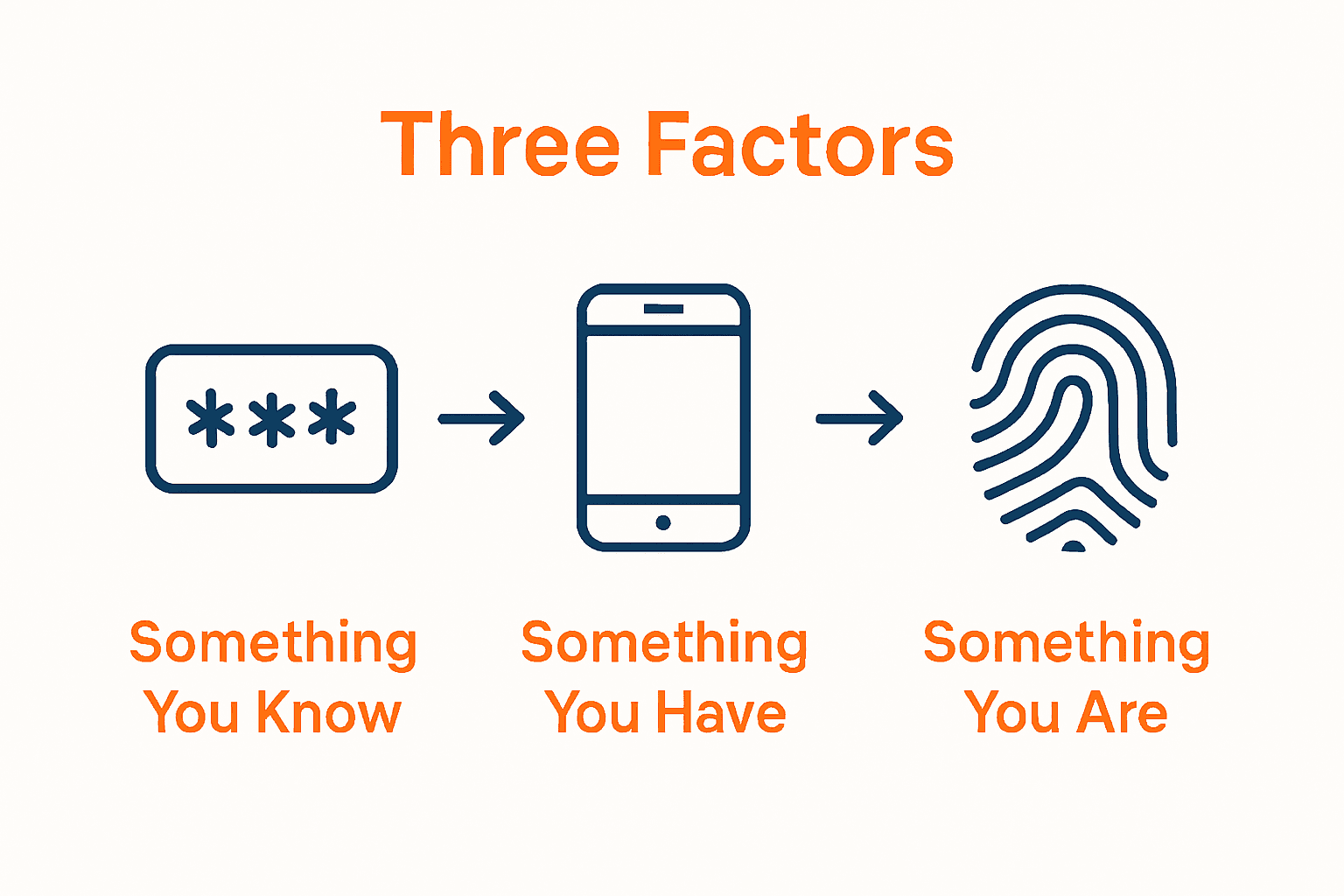 Each authentication factor adds a complex layer of protection, transforming enterprise security from a single-point vulnerability to a robust, dynamic defense system.
 Learn more about practical MFA solutions in our comprehensive guide on authentication methods.
MFA Implementation in Enterprise Environments
Enterprise multi-factor authentication represents a strategic approach to securing critical digital infrastructure through sophisticated identity verification processes. According to MECS Press, implementing MFA in enterprise environments addresses vulnerabilities in traditional password-based systems by significantly reducing the risk of unauthorized access and potential cyber attacks.
Successful MFA implementation requires a comprehensive strategy that encompasses several critical components:
- Comprehensive user authentication policies
- Scalable authentication infrastructure
- Seamless integration with existing systems
- Minimal user friction during login processes
- Robust monitoring and reporting mechanisms
The implementation process typically involves a phased approach, starting with high-risk systems and gradually expanding across the entire organizational network. Enterprises must carefully evaluate their specific security requirements, considering factors such as:
- Sensitivity of protected data
- Regulatory compliance mandates
- User accessibility needs
- Technical infrastructure capabilities
As University of Iowa IT Security recommends, organizations should prioritize MFA for systems containing critical or restricted information, creating a hierarchical security model that provides graduated access controls. Learn more about enterprise MFA strategies in our comprehensive guide on authentication solutions.
Role of MFA in Preventing Security Breaches
Multi-factor authentication (MFA) serves as a critical defensive mechanism against increasingly sophisticated cyber threats. According to WNPA Helpdesk, MFA significantly decreases the likelihood of successful cyber attacks by requiring users to identify themselves through multiple verification layers beyond traditional username and password combinations.
The primary mechanisms through which MFA prevents security breaches include:
- Creating multiple authentication barriers
- Neutralizing compromised password risks
- Generating real-time verification challenges
- Implementing adaptive security protocols
- Tracking and logging authentication attempts
Cyber attackers typically exploit single-point vulnerabilities in authentication systems. Breach prevention becomes exponentially more challenging when multiple verification factors are required. As Global Tech Council explains, MFA makes unauthorized access significantly harder by demanding multiple forms of verification, such as combining passwords with one-time codes or biometric confirmations.
Enterprise security teams can further enhance breach prevention by implementing contextual MFA strategies that analyze login behavior, geographic location, and device characteristics. Learn more about advanced MFA standards that protect against emerging cyber threats.
Challenges and Best Practices for MFA Adoption
Multi-factor authentication (MFA) implementation presents complex challenges for enterprise security teams. According to Coursera, organizations frequently encounter user resistance, increased system complexity, and potential usability issues during MFA deployment.
Key challenges in MFA adoption include:
- User training and change management
- Balancing security requirements with user experience
- Technical integration with existing systems
- Cost of implementation
- Managing diverse authentication methods
- Addressing potential accessibility concerns
Best practices for successful MFA implementation focus on creating a strategic, user-centric approach. As WiCyS recommends, organizations must carefully evaluate their specific security needs while maintaining a delicate balance between robust protection and user convenience. This involves selecting authentication methods that provide strong security without creating unnecessary friction in the login process.
Enterprise security leaders can smooth MFA adoption by developing comprehensive user education programs, selecting intuitive authentication technologies, and implementing gradual rollout strategies. Explore practical examples of passwordless MFA solutions that simplify secure access to understand how modern authentication can enhance both security and user experience.
Strengthen Your Enterprise Security with Advanced MFA from LogMeOnce
The “Complete Guide to MFA in Enterprise Security” highlights critical challenges such as user resistance, balancing security with convenience, and protecting sensitive data through layered identity verification. If you are seeking to eliminate the risk of unauthorized access with robust multi-factor authentication that reduces password vulnerabilities and integrates seamlessly into your environment, you need a solution designed with your enterprise goals in mind. LogMeOnce offers powerful MFA options that combine knowledge, possession, and biometric factors to build dynamic protection tailored to your specific needs.

Discover how LogMeOnce can transform your cybersecurity framework today. Visit our main site to explore comprehensive authentication solutions, learn about passwordless multi-factor authentication, and see why enterprises trust LogMeOnce to secure critical systems without sacrificing user experience. Take control of your security now to prevent breaches and empower your workforce with seamless, advanced protection.
Frequently Asked Questions
What is Multi-Factor Authentication (MFA) in enterprise security?
Multi-Factor Authentication (MFA) is a security strategy that requires users to provide multiple forms of identification to access systems, significantly reducing the risk of unauthorized access.
What are the types of factors used in MFA?
MFA typically involves three categories of factors: 1) Knowledge factors (like passwords or PINs), 2) Possession factors (such as mobile devices or hardware tokens), and 3) Inherence factors (biometric data like fingerprints or facial recognition).
How does MFA help prevent security breaches in enterprises?
MFA creates multiple authentication barriers, reducing the likelihood of successful cyber attacks by requiring additional verification beyond just usernames and passwords, thus neutralizing compromised credential risks.
What challenges do organizations face when implementing MFA?
Common challenges include user resistance, increased system complexity, balancing security with user experience, and the cost of implementation. It is essential to have a user-centric approach to overcome these hurdles.
Recommended
- The Finesses of Enterprise Password Management
- How an Enterprise Password Manager Augments Efficiency and Security
- 7 Ways to Boost Mobile Device Security for an Enterprise


