


 Password Manager
 Identity Theft Protection

 Team / Business
 Enterprise
 Government
 MSP
MSP


Role of SSO in Enterprises: Complete Guide

Most american enterprises juggle dozens of software applications every day, yet research shows that more than 70 percent of security breaches trace back to poor password practices. Managing user access can quickly spiral into a security headache as teams grow and systems multiply. Single sign-on reimagines how organizations secure their digital environments, offering a smarter approach to authentication that cuts through complexity, reduces risky habits, and sets the stage for better network protection.
Key Takeaways
| Point | Details |
|---|---|
| Centralized Authentication | Single sign-on (SSO) simplifies user access by allowing one ID across multiple systems, enhancing user experience and security. |
| Deployment Models | Organizations can choose from on-premises, cloud-based, or hybrid deployment strategies based on their security requirements. |
| Security Considerations | Implementing SSO requires addressing risks such as authentication bypass and credential exposure, necessitating robust security measures. |
| Adaptive Identity Management | Future enterprise authentication strategies should integrate diverse solutions, including passwordless and multi-factor authentication, for enhanced security. |
Defining Single Sign-On in Enterprise Security
Single sign-on (SSO) represents a sophisticated authentication strategy that transforms how modern enterprises manage digital access. According to TechTarget, SSO enables users to log in with a single ID across multiple independent software systems, dramatically simplifying user authentication processes.
At its core, SSO solves a critical enterprise security challenge: password management complexity. Traditional authentication methods require employees to remember multiple complex passwords for different corporate systems. SSO eliminates this burden by creating a centralized authentication mechanism where users enter credentials once and gain seamless access to numerous applications and resources. Wikipedia notes that this approach significantly reduces the cognitive load on users while maintaining robust security protocols.
The strategic advantages of SSO extend far beyond convenience. By consolidating authentication, enterprises can:
- Reduce password fatigue and potential security risks
- Streamline user onboarding and offboarding processes
- Enhance overall network security through centralized access control
- Minimize help desk support requests related to password resets

For organizations navigating complex digital ecosystems, understanding single sign-on benefits and implementation strategies becomes crucial in developing a comprehensive identity management approach. SSO represents more than a technological solution it is a strategic framework for balancing security, user experience, and operational efficiency.
Types of SSO Solutions and Deployment Models
Single sign-on (SSO) technologies have evolved to address diverse enterprise security requirements, with multiple deployment models and solutions tailored to organizational needs. TechTarget identifies several key SSO solution types, including web-based, cloud-based, mobile, and smart card-based authentication approaches that provide flexible access management strategies.
Enterprise environments can choose from distinct SSO implementation models based on their specific infrastructure and security requirements. Wikipedia highlights three primary SSO models:
- Enterprise SSO (E-SSO): Enables authentication across internal corporate systems
- Web SSO: Facilitates secure access across web-based applications
- Federated Identity Systems: Supports authentication across multiple organizational domains and external partner networks
Deployment strategies further differentiate SSO solutions, with organizations typically selecting from three primary approaches:
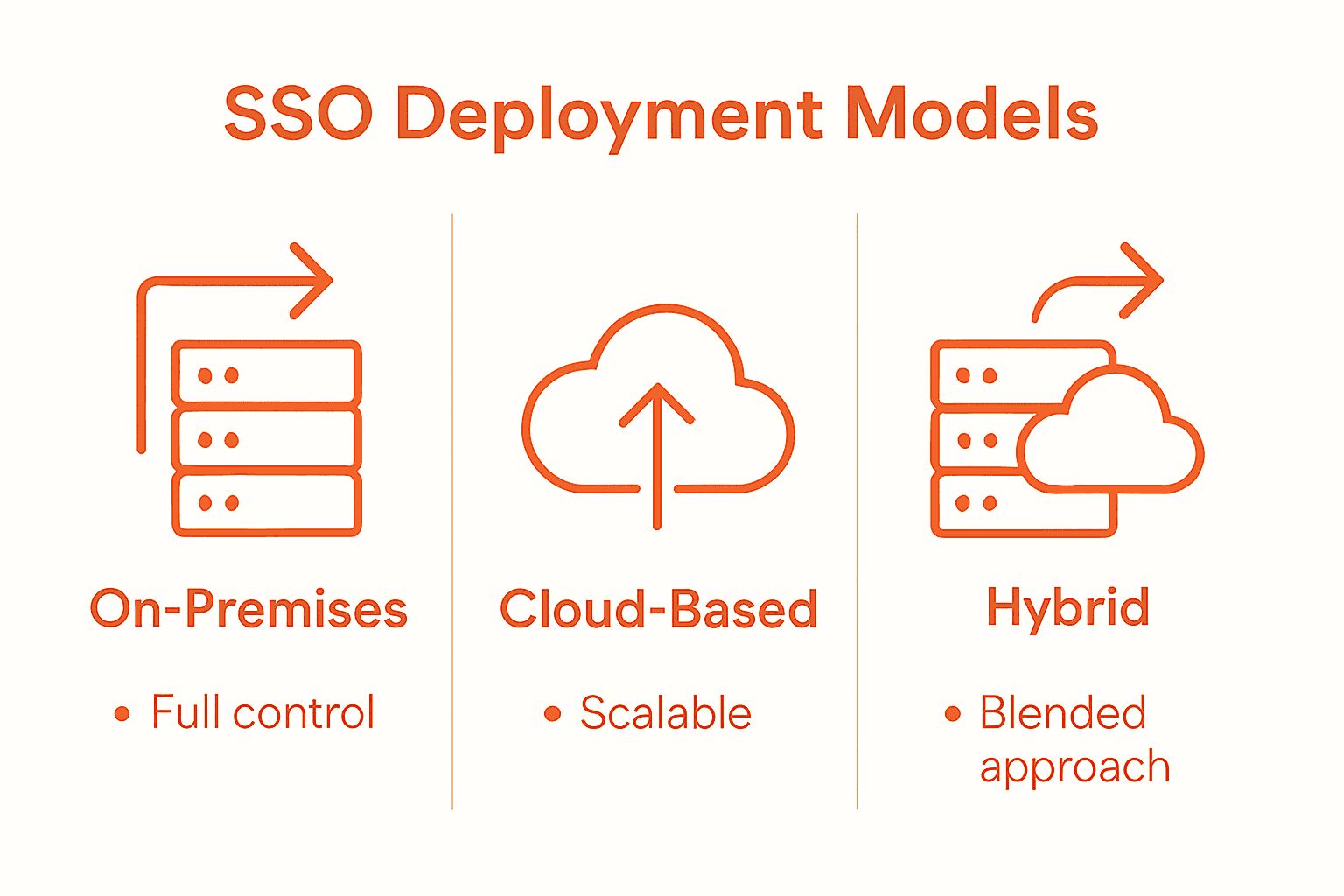
- On-Premises Deployment: Complete infrastructure maintained within organizational networks
- Cloud-Based Deployment: Authentication managed through cloud service providers
- Hybrid Deployment: Combining on-premises and cloud-based authentication mechanisms
For organizations seeking comprehensive single sign-on implementation strategies, understanding these models is crucial. The right SSO solution can dramatically enhance security, reduce administrative overhead, and create a seamless user authentication experience across complex digital ecosystems.
Core Benefits and Common Use Cases
Single sign-on (SSO) delivers transformative advantages for enterprise security and operational efficiency. TechTarget highlights that SSO provides critical benefits including improved security through centralized authentication, enhanced user convenience, and streamlined administrative processes across complex organizational ecosystems.
The strategic advantages of SSO extend far beyond simple login convenience. Ones emphasizes that SSO significantly reduces password fatigue while improving overall user experience. Key benefits include:
- Centralized access management
- Reduced security risks from password complexity
- Simplified user onboarding and offboarding
- Enhanced productivity through seamless application access
- Comprehensive audit trails and authentication tracking
Common enterprise use cases demonstrate SSO’s versatility across different organizational contexts. Typical scenarios include:
- Providing unified access to multiple cloud-based applications
- Integrating internal enterprise resource planning (ERP) systems
- Enabling secure remote workforce authentication
- Managing third-party vendor and partner system access
For organizations seeking comprehensive enterprise password management strategies, understanding SSO’s nuanced benefits can dramatically transform digital security infrastructure. By consolidating authentication mechanisms, enterprises can create more resilient, user-friendly, and efficiently managed digital environments.
Integration Steps and Enterprise Requirements
Single sign-on (SSO) integration represents a complex strategic initiative that demands meticulous planning and execution. Oracle emphasizes that successful enterprise SSO implementation requires comprehensive assessment of existing authentication mechanisms, careful solution selection, and ensuring robust compatibility across organizational applications.
The integration process involves a systematic approach that addresses multiple critical dimensions of enterprise technology infrastructure. Enterprises must navigate several key considerations:
- Technical Compatibility: Ensuring SSO solutions integrate seamlessly with existing application ecosystems
- Security Architecture: Maintaining stringent authentication and access control standards
- Compliance Requirements: Adhering to industry-specific regulatory frameworks
- User Experience: Minimizing disruption during implementation
- Scalability: Supporting potential future organizational growth
A structured implementation methodology typically encompasses the following sequential steps:
- Comprehensive infrastructure audit
- Identification of authentication touchpoints
- Solution architecture design
- Pilot testing and validation
- Phased rollout strategy
- Continuous monitoring and optimization
For organizations seeking comprehensive enterprise password management strategies, successful SSO integration demands a holistic approach that balances technological capabilities with organizational readiness. The ultimate goal extends beyond mere technical implementation it represents a transformative approach to digital identity management.
Security Challenges and Risk Mitigation
Single sign-on (SSO) technologies, while transformative, introduce complex security considerations that enterprises must carefully navigate. ArXiv highlights that SSO systems can potentially create single points of failure, making robust security protocols absolutely critical in preventing widespread authentication vulnerabilities.
The primary security challenges in SSO implementation encompass multiple critical dimensions:
- Authentication Bypass Risks: Potential vulnerabilities in token management
- Credential Exposure: Centralized authentication creating high-value attack targets
- Session Management Complexity: Maintaining secure, time-limited access tokens
- Federated Identity Risks: Managing cross-platform authentication securely
- Compliance Verification: Ensuring consistent security standards
Effective risk mitigation strategies require a multi-layered approach:
- Implementing advanced multi-factor authentication
- Continuous security monitoring and threat detection
- Regular vulnerability assessments
- Encryption of authentication tokens
- Strict access control and least-privilege principles
- Comprehensive user activity logging
Understanding remote work security protocols becomes increasingly crucial as organizations expand digital authentication frameworks. Successful SSO security isn’t about eliminating risks completely, but creating adaptive, resilient systems that can detect, respond, and mitigate potential threats in real time.
SSO Versus Alternative Identity Solutions
Enterprise authentication strategies continue to evolve, presenting organizations with multiple approaches to managing digital identities. ArXiv highlights that while single sign-on (SSO) offers streamlined authentication, alternative solutions provide nuanced approaches to managing user access and protecting organizational resources.
The landscape of identity management encompasses several distinctive authentication methodologies:
- Traditional SSO: Centralized authentication across multiple platforms
- Passwordless Authentication: Eliminating password-based access entirely
- Federated Identity Systems: Cross-organizational authentication protocols
- Privacy-Preserving Authentication: Minimizing personal data exposure
- Multi-Factor Authentication (MFA): Layered verification mechanisms
Comparative analysis reveals unique strengths and limitations of each approach:
- SSO provides convenience but creates potential single points of failure
- Passwordless solutions reduce memory burden but require sophisticated infrastructure
- Federated systems enable broader collaboration with increased complexity
- Privacy-focused approaches like advanced authentication protocols prioritize user data protection
Research from ArXiv specifically highlights emerging privacy-preserving SSO systems like EL PASSO, which enable authentication while maintaining robust user privacy protections. The future of enterprise authentication lies not in selecting a single solution, but in creating adaptive, context-aware identity management strategies.
Strengthen Your Enterprise Security with Seamless Single Sign-On Solutions
The challenge of managing multiple passwords and complex authentication processes can put your enterprise at risk. This article highlights how single sign-on (SSO) reduces password fatigue, streamlines access, and enhances security through centralized authentication. If your organization faces issues like increasing help desk tickets, security vulnerabilities from password reuse, or inefficient onboarding and offboarding, it is time to explore advanced identity management strategies.

Discover how LogMeOnce can help you implement a robust SSO system that unifies user access across platforms while enforcing multi-factor authentication and encrypted cloud security. Take control of your enterprise security now by visiting LogMeOnce to explore our comprehensive cybersecurity solutions. Learn more about enterprise password management and the benefits of single sign-on implementation. Act today to protect your digital ecosystem and simplify authentication for your workforce.
Frequently Asked Questions
What is single sign-on (SSO) and how does it benefit enterprises?
Single sign-on (SSO) is an authentication process that allows users to log in once and gain access to multiple applications or systems without needing to enter separate credentials for each. It benefits enterprises by simplifying password management, reducing security risks from password fatigue, and streamlining user onboarding and offboarding processes.
What are the types of SSO solutions available for organizations?
Organizations can choose from several types of SSO solutions, including web-based, cloud-based, mobile, and smart card-based authentication. Deployment models include Enterprise SSO (E-SSO), Web SSO, and Federated Identity Systems, each tailored to specific infrastructure and security requirements.
What are the common use cases for implementing SSO in an enterprise?
Common use cases for implementing SSO include providing unified access to cloud-based applications, integrating internal enterprise resource planning (ERP) systems, enabling secure access for remote workforces, and managing third-party vendor and partner system access.
What are the security challenges associated with SSO and how can they be mitigated?
Security challenges in SSO include risks of authentication bypass, credential exposure, and complex session management. These can be mitigated through advanced multi-factor authentication, continuous security monitoring, encryption of authentication tokens, and strict access controls.
Recommended
- Single Sign On – Online Security Needn’t be Complex
- What Is Single Sign-On and How Does It Keep Information Secure?


