


 Password Manager
 Identity Theft Protection

 Team / Business
 Enterprise
 Government
 MSP
MSP


Over 80 percent of American businesses report rising concerns about online identity theft every year. As cyber threats grow more complex, traditional password systems often fall short. Continuous authentication offers a smarter, ongoing way to verify user identities with less risk and more confidence. By staying alert to every interaction, organizations can spot suspicious behavior in real time and create safer digital spaces for users across every industry.
Key Takeaways
| Point | Details |
|---|---|
| Continuous Authentication | This approach enhances security by verifying user identity throughout the session, minimizing risks associated with traditional methods. |
| Core Principles | Continuous authentication is based on contextual awareness, behavioral analysis, and adaptive security responses to respond to potential threats. |
| Implementation Challenges | Organizations must balance user experience with security to avoid frustrating users while maintaining effective authentication mechanisms. |
| Future of Security | Leveraging advanced technologies will lead to more sophisticated continuous authentication systems that ensure user convenience without compromising safety. |
Continuous Authentication: Definition and Core Principles
Continuous authentication represents a sophisticated cybersecurity approach that moves beyond traditional single-point verification methods. Unlike static authentication techniques that validate user identity only at initial login, continuous authentication provides ongoing identity verification throughout an entire user session. This dynamic security strategy utilizes advanced machine learning algorithms to analyze multiple behavioral and biometric factors in real time.
At its core, continuous authentication operates through persistent monitoring of unique user characteristics. These verification signals can include behavioral patterns such as typing rhythm, mouse movement, device interaction speed, and even physiological biometrics like fingerprint or facial recognition. By constantly comparing current user behaviors against established baseline profiles, the system can rapidly detect potential unauthorized access or suspicious activities. When anomalies are detected, the authentication system can immediately trigger additional verification steps or block access entirely.
The key principles of continuous authentication revolve around three fundamental elements: contextual awareness, behavioral analysis, and adaptive security responses. Contextual awareness involves understanding the user’s typical environment, including standard login locations, device types, and network connections. Behavioral analysis tracks granular interaction patterns unique to each individual user. Adaptive security responses enable the system to dynamically adjust authentication requirements based on detected risk levels, providing a flexible yet robust security mechanism that significantly reduces the potential for unauthorized system access.
By implementing continuous authentication, organizations can create a more resilient defense against sophisticated cyber threats. Traditional authentication methods that rely solely on passwords or one-time authentication create vulnerable windows where malicious actors could potentially exploit system access. Continuous authentication eliminates these security gaps by maintaining persistent verification, making it exponentially more challenging for unauthorized users to compromise sensitive digital environments.
Types of Continuous Authentication Technologies
Continuous authentication technologies have evolved to encompass a diverse range of sophisticated verification methods that go far beyond traditional security approaches. Motion-based biometric technologies represent one of the most innovative categories, utilizing sensor data from smartphones and wearable devices to create unique user profiles. These technologies capture intricate behavioral patterns without requiring explicit user interaction, enabling seamless and unobtrusive identity verification.
The primary categories of continuous authentication technologies include behavioral biometrics, physiological biometrics, and contextual analysis. Behavioral biometrics analyze dynamic user interaction patterns such as typing rhythm, mouse movement, and touchscreen gestures. Physiological biometrics leverage unique physical characteristics like fingerprint dynamics, facial recognition, and gait analysis. Adaptive neuro-fuzzy inference systems represent a cutting-edge approach that combines machine learning algorithms with nuanced behavioral pattern recognition to provide implicit, ongoing user verification.
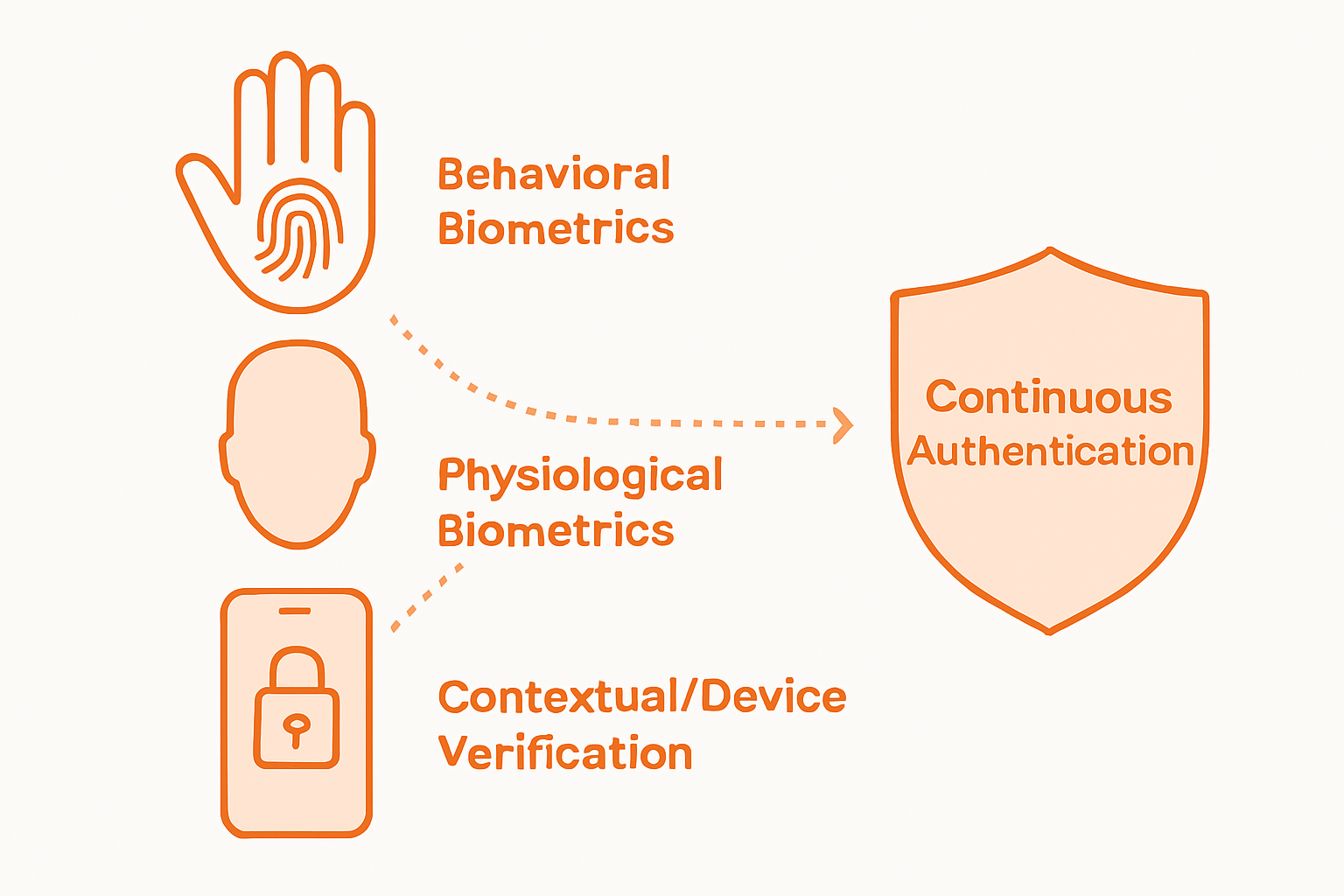
Moreover, continuous authentication technologies can be classified into passive and active verification systems. Passive systems monitor user behavior in the background without interrupting the user experience, continuously collecting and analyzing authentication signals. Active systems might periodically prompt users for additional verification through quick biometric checks or contextual challenges. These technologies integrate multiple verification layers, including geolocation tracking, device fingerprinting, and network behavior analysis to create a comprehensive security framework.
The future of continuous authentication technologies lies in their ability to create increasingly intelligent, adaptive security mechanisms. By leveraging advanced machine learning and artificial intelligence, these systems can develop increasingly sophisticated methods of distinguishing between legitimate users and potential security threats. The goal is to create a seamless, frictionless security experience that provides robust protection without compromising user convenience or system accessibility.
How Continuous Authentication Works in Practice
Continuous authentication operates through a complex, multi-layered process that seamlessly integrates advanced technologies to verify user identity throughout an entire digital interaction. Face recognition technologies combine with sophisticated environmental sensing mechanisms, creating a dynamic security framework that constantly evaluates user legitimacy. This approach goes beyond traditional single-point authentication, transforming security from a static checkpoint into a fluid, ongoing verification process.
The practical implementation of continuous authentication involves several key stages. Initial profiling begins by establishing a baseline of user behavior during the first login, capturing unique characteristics such as typing speed, mouse movement patterns, and device interaction rhythms. Ongoing monitoring then continuously compares current user interactions against this established profile, looking for micro-deviations that might indicate unauthorized access. Environmental context analysis plays a crucial role, incorporating factors like device location, network characteristics, and ambient sensor data to create a comprehensive authentication ecosystem.

When potential anomalies are detected, the system employs graduated response mechanisms. Minor behavioral variations might trigger subtle authentication prompts, such as requesting a quick biometric confirmation or sending a verification notification. More significant discrepancies could result in immediate session interruption, temporary access restrictions, or even complete system lockdown. These adaptive responses ensure that security remains dynamic and responsive, protecting sensitive digital environments without creating undue friction for legitimate users.
The ultimate goal of continuous authentication is to create an invisible yet robust security layer that protects digital assets without compromising user experience. By leveraging machine learning algorithms and advanced sensor technologies, these systems can distinguish between genuine user variations and potential security threats with unprecedented accuracy. As cyber threats continue to evolve, continuous authentication represents a critical advancement in proactive cybersecurity, transforming digital protection from a reactive process to a sophisticated, intelligent defense mechanism.
Use Cases for Businesses and Government
Businesses and government agencies are increasingly adopting continuous authentication as a critical component of their cybersecurity infrastructure. Zero Trust Architecture implementations have become particularly strategic, enabling organizations to maintain rigorous security protocols across complex digital environments. These advanced authentication systems provide unprecedented protection for sensitive data and critical infrastructure by continuously verifying user identities and monitoring potential security risks.
Financial institutions represent a prime example of continuous authentication deployment, utilizing sophisticated behavioral tracking to detect potential fraudulent activities in real time. Government agencies leverage these technologies to protect classified networks and secure communication channels, implementing multi-factor behavioral verification that goes beyond traditional password-based security models. Advanced authentication frameworks allow organizations to create granular access controls that dynamically adjust based on user behavior, device characteristics, and contextual environmental factors.
Different sectors demonstrate unique continuous authentication applications. Healthcare organizations use these technologies to ensure patient data privacy and comply with strict regulatory requirements. Technology companies protect intellectual property by monitoring employee digital interactions. Critical infrastructure sectors like energy and telecommunications deploy continuous authentication to prevent unauthorized system access and potential cyber espionage attempts. These use cases highlight the versatility of continuous authentication in creating adaptive, intelligent security ecosystems that respond dynamically to emerging threats.
The strategic implementation of continuous authentication represents a fundamental shift in cybersecurity philosophy. Rather than relying on static, one-time verification methods, organizations can now create fluid security environments that continuously validate user legitimacy. This approach not only reduces the risk of unauthorized access but also provides comprehensive insights into user behavior patterns, enabling more proactive and intelligent security management across diverse technological landscapes.
Risks, Challenges, and Implementation Mistakes
Continuous authentication technologies introduce complex challenges that organizations must carefully navigate to ensure effective implementation. Privacy-preserving protocols have become crucial in addressing the fundamental concern of data collection, as these systems inherently gather extensive behavioral and biometric information. The potential for invasive surveillance creates significant ethical and legal considerations that demand sophisticated approach to data management and user consent.
Implementation risks can emerge from multiple dimensions of continuous authentication deployment. Technical challenges include managing false positive and negative authentication rates, which can potentially disrupt legitimate user access or create security vulnerabilities. Blockchain-enhanced authentication architectures have emerged as potential solutions to mitigate these risks, offering more robust and transparent verification mechanisms. Organizations frequently make critical mistakes such as over-relying on single authentication signals, failing to establish comprehensive baseline behavior profiles, and neglecting periodic system recalibration.
The most significant implementation challenges revolve around balancing security effectiveness with user experience. Overly intrusive authentication processes can frustrate users and reduce system adoption, while overly permissive systems compromise security integrity. Organizations must develop nuanced strategies that create seamless verification experiences without introducing excessive friction. This requires sophisticated machine learning algorithms capable of distinguishing between genuine user behavior variations and potential security threats with high precision.
Ultimately, successful continuous authentication implementation demands a holistic approach that integrates technological solutions with comprehensive organizational policies. Continuous monitoring, regular system audits, and adaptive configuration management become essential strategies for maintaining robust security frameworks. By acknowledging potential risks and proactively developing mitigation strategies, organizations can transform continuous authentication from a potential vulnerability into a powerful, intelligent security mechanism that protects digital assets while maintaining user trust and operational efficiency.
Strengthen Your Cybersecurity with Continuous Authentication Solutions
The article highlights the challenge organizations face in maintaining robust security beyond initial login points through continuous authentication. Key pain points include preventing unauthorized access, balancing security with user experience, and adapting to emerging cyber threats by leveraging behavioral and biometric verification. Concepts like adaptive security responses and contextual awareness emphasize the need for intelligent, ongoing identity verification to protect sensitive digital environments.
At LogMeOnce, we understand that static authentication leaves dangerous security gaps. Our comprehensive cybersecurity suite integrates advanced multi-factor authentication, passwordless options, and encrypted cloud storage designed to deliver dynamic protection throughout every user session. By adopting continuous authentication principles, you gain proactive defense that immediately detects suspicious behavior and reduces risk without frustrating legitimate users.
Elevate your cybersecurity now with LogMeOnce and experience seamless identity protection tailored for businesses, government agencies, and personal users alike. Discover how easy it is to implement powerful solutions by visiting our password manager and enterprise password management pages, where innovation meets ease of use.
Enhance your security posture today and turn continuous authentication from a concept into your strongest defense.
Take the next step to protect your digital assets with LogMeOnce.

Frequently Asked Questions
What is continuous authentication?
Continuous authentication is a cybersecurity approach that provides ongoing identity verification throughout a user session, rather than just at the initial login. It utilizes advanced machine learning algorithms to monitor behavioral and biometric factors in real time.
How does continuous authentication enhance security measures?
Continuous authentication enhances security by continuously verifying user identity through monitoring behavioral patterns and unique characteristics. This reduces the potential for unauthorized access by detecting anomalies and adapting authentication requirements dynamically.
What types of technologies are used in continuous authentication?
Continuous authentication technologies include behavioral biometrics (monitoring user interaction patterns), physiological biometrics (like facial recognition and fingerprints), and contextual analysis (understanding the user’s environment). These methods can be passive or active in their verification processes.
What are the challenges of implementing continuous authentication?
Implementing continuous authentication comes with risks such as privacy concerns related to data collection, technical challenges in minimizing false positives and negatives, and maintaining a balance between security effectiveness and user experience.
Recommended
- blogs – LogMeOnce
- Why Passwords Are Cybersecurity’s Weakest Link – LogMeOnce
- Why Cybersecurity Awareness Is Vital to Your Business – LogMeOnce
- Consumer Top Features – LogMeOnce


