


 Password Manager
 Identity Theft Protection

 Team / Business
 Enterprise
 Government
 MSP
MSP


Password Risk Assessment Process: A Step-by-Step Guide

Cybercrime linked to weak passwords costs organizations over $6 trillion each year. This growing threat puts sensitive data at constant risk, challenging even seasoned IT teams to keep up. Understanding how to uncover vulnerabilities in your password management approach is essential to staying ahead of attacks. By following a structured assessment process, you can find gaps before they turn into real-world incidents and protect your business from costly breaches.
Quick Summary
| Key Point | Explanation |
|---|---|
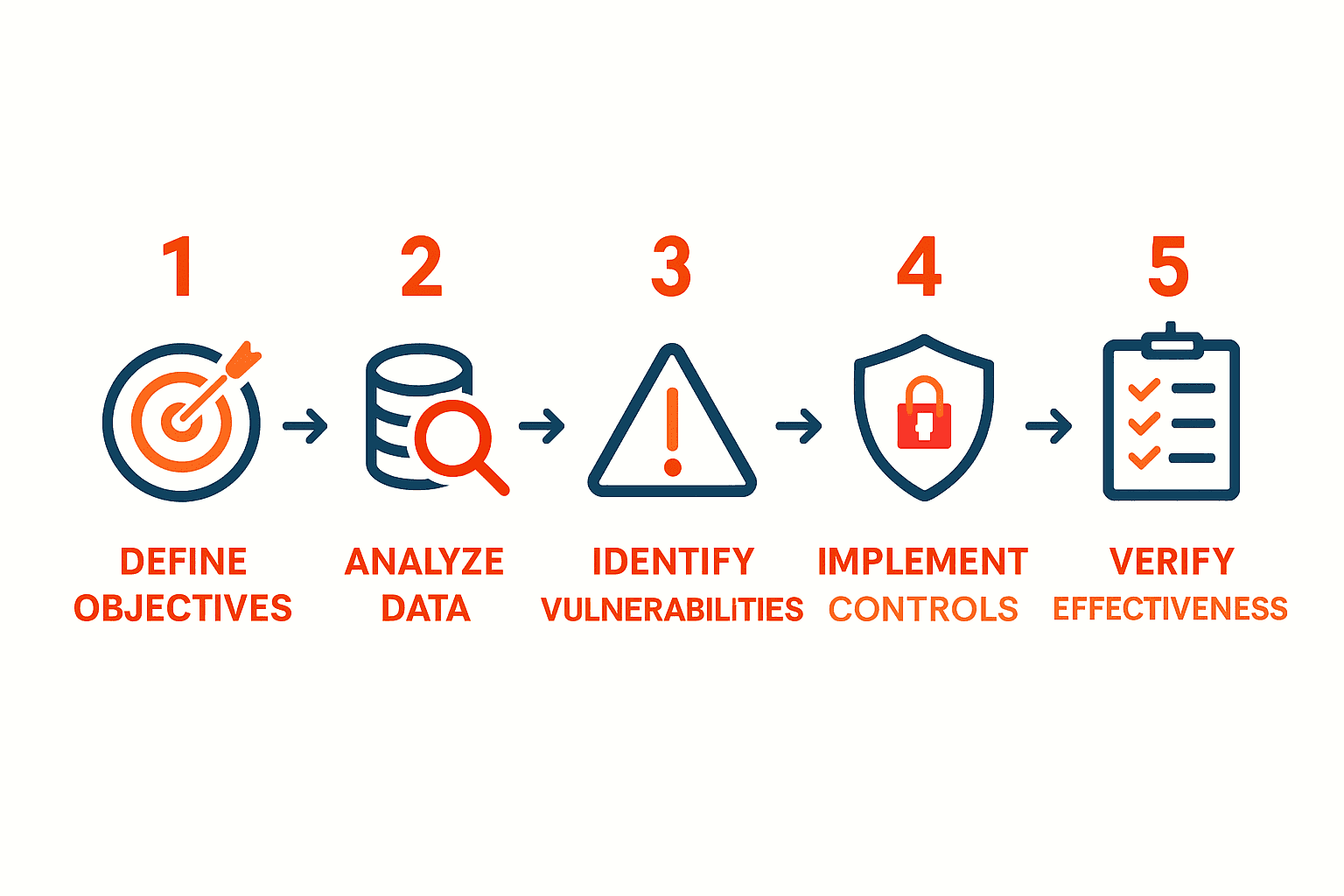
| 1. Define specific assessment objectives | Identify precise goals to guide your password risk analysis and improve security focus effectively. |
| 2. Analyze password data sources thoroughly | Collect and assess data from all authentication points to discover password usage patterns and weaknesses. |
| 3. Systematically identify and categorize vulnerabilities | Map weaknesses in your password management, prioritizing risks based on severity for effective remediation. |
| 4. Implement robust security controls | Introduce multi-factor authentication and other measures, balancing security needs with user experience. |
| 5. Continuously verify effectiveness and document improvements | Conduct ongoing evaluations and maintain detailed records to track security advancements and guide future strategies. |
Step 1: Define password risk assessment objectives
Defining clear password risk assessment objectives is your strategic starting point for understanding and mitigating potential security vulnerabilities. According to the CISA guide, this crucial first step involves systematically documenting your network asset vulnerabilities and establishing precise assessment goals.
To effectively define your password risk assessment objectives, start by identifying the specific scope of your evaluation. This means determining which systems, networks, and user accounts will be included in your assessment. Consider factors like user access levels, password management practices, and potential points of vulnerability. For instance, you might focus on enterprise email systems, remote work platforms, or customer login portals. The key is to create a comprehensive yet focused roadmap that allows you to pinpoint potential security weaknesses.
As you develop your objectives, be as specific and measurable as possible. Instead of a vague goal like “improve password security,” aim for precise targets such as “reduce password reuse across critical systems by 75%” or “eliminate weak password practices in customer authentication processes.” arxiv research suggests that organizations with clearly defined assessment objectives are significantly more successful in identifying and mitigating IT security risks. When you transition to the next step of your password risk assessment, these well-defined objectives will serve as your strategic compass.
Step 2: Gather and analyze password data sources
Gathering and analyzing password data sources is a critical step in understanding your organization security vulnerabilities. MDPI research suggests that systematic data collection allows you to identify password formation patterns and potential weaknesses in your authentication systems.
To effectively gather password data sources, start by mapping out all your organization authentication points. This includes enterprise systems, cloud platforms, remote access portals, and customer login interfaces. Look for logs, authentication records, and access management tools that can provide insights into password behaviors. Pay special attention to metrics like password complexity, reset frequencies, and user account activity. While collecting this data, ensure you maintain strict privacy protocols and comply with data protection regulations.
As you analyze the collected data, look for recurring patterns that might indicate systemic security risks. arxiv studies highlight how understanding password cracking methods can significantly improve defensive strategies. Watch for warning signs like widespread password reuse, predictable password structures, or accounts with minimal security configurations. By methodically examining these data sources, you create a comprehensive picture of your current password security landscape.
 This analysis will guide your next steps in developing targeted password risk mitigation strategies.
Step 3: Identify vulnerabilities and categorize risks
Identifying vulnerabilities and categorizing risks is a strategic process that allows you to systematically evaluate potential security weaknesses in your password management ecosystem. According to the AssessITS framework, this step is crucial for organizations to understand and prioritize their specific security challenges.
To effectively identify vulnerabilities, start by mapping out potential weak points in your password infrastructure. This involves examining authentication systems, user behavior patterns, and existing security protocols. Look for red flags such as outdated password policies, lack of multi factor authentication, widespread password reuse, and accounts with minimal security configurations. Pay close attention to high risk areas like administrative accounts, remote access points, and systems with sensitive data. CISA recommends documenting each vulnerability with specific details about its potential impact and likelihood of exploitation.
Once you have identified vulnerabilities, categorize them based on their severity and potential business impact. Create risk categories such as critical, high, medium, and low. Critical risks might include vulnerabilities that could lead to complete system compromise, while low risks might represent minor configuration issues. This systematic categorization helps you prioritize your remediation efforts, focusing resources on the most significant threats first. By methodically identifying and categorizing risks, you transform potential security weaknesses into a structured action plan that will strengthen your overall password security posture.
Step 4: Implement security controls and improvements
Implementing security controls and improvements is your critical opportunity to transform identified vulnerabilities into robust defensive strategies. arxiv research emphasizes the importance of selecting defensive measures that can effectively protect against sophisticated password attacks.
Start by prioritizing security controls that address your most significant vulnerabilities. This includes implementing advanced authentication mechanisms like multi factor authentication, adopting strong password complexity requirements, and deploying adaptive authentication protocols. Risk-based authentication research suggests using intelligent systems that analyze user behavior patterns to detect and prevent unauthorized access attempts. Consider implementing controls such as salted password hashing, which adds an extra layer of protection by introducing unique encryption elements for each password, making bulk password cracking significantly more challenging.
Your implementation strategy should focus on comprehensive protection without creating excessive friction for users. This means balancing stringent security requirements with user friendly authentication experiences. Consider introducing progressive security measures like gradual password complexity enforcement, continuous user education, and periodic security awareness training. By thoughtfully implementing these security controls, you create a dynamic defense system that evolves alongside emerging digital threats. The goal is not just to block current vulnerabilities but to establish a proactive security framework that can adapt to future challenges.
Step 5: Verify effectiveness and document outcomes
Verifying the effectiveness of your password risk assessment and meticulously documenting outcomes is crucial for continuous security improvement. arxiv research highlights the importance of systematic evaluation to ensure your implemented security controls are providing meaningful protection.
To verify effectiveness, develop a comprehensive assessment framework that goes beyond surface level metrics. Conduct thorough penetration testing, simulate potential attack scenarios, and analyze authentication logs to identify any remaining vulnerabilities or potential weaknesses. Risk-based authentication research suggests implementing quantitative and qualitative measurement techniques that capture both statistical performance and user experience aspects. Track key performance indicators such as reduced unauthorized access attempts, improved password complexity across your organization, and decreased instances of password reuse.
Documenting outcomes serves multiple critical purposes beyond compliance. Create detailed reports that not only highlight your current security posture but also provide a clear historical record of improvements and remaining challenges. Include visual representations like charts and graphs that demonstrate security enhancements over time. These comprehensive documentation practices will help you communicate security progress to stakeholders, justify ongoing security investments, and create a roadmap for future improvements.
 Remember that verification is not a one time event but a continuous process of assessment, refinement, and adaptation.
Strengthen Your Password Security with Proven Solutions
The challenges outlined in the Password Risk Assessment Process highlight the real risks of weak or reused passwords and outdated security controls. If you want to reduce vulnerabilities like password reuse and lack of multi factor authentication you need tools that make protection simple and effective. LogMeOnce delivers on those goals by offering powerful features such as passwordless MFA, encrypted cloud storage, and smart access management that align perfectly with the step-by-step approach described in the article.

Take control of your organization’s security now by exploring how LogMeOnce combines ease of use with advanced safeguards. Visit LogMeOnce to learn how you can implement strong defenses confidently. Don’t wait for breaches to expose your weaknesses when comprehensive password risk mitigation is just a click away. Start your free trial today and build a safer digital future.
Frequently Asked Questions
What are the main objectives for a password risk assessment?
The main objectives for a password risk assessment are to identify vulnerabilities in your password management practices and improve overall security. Start by setting precise, measurable targets, such as reducing password reuse across critical systems by 75%.
How do I gather password data for my assessment?
To gather password data, map out all authentication points within your organization, including enterprise systems and customer login interfaces. Collect logs and access records to analyze metrics like password complexity and reset frequencies within 30 days.
What steps should I take to identify vulnerabilities in password management?
Begin by examining your authentication systems and user behavior patterns to locate potential weak points. Focus on outdated policies and areas with minimal security configurations, and document findings to prioritize remediation efforts.
How can I implement effective security controls after identifying vulnerabilities?
Implement security controls by prioritizing measures that address your top vulnerabilities, such as multi-factor authentication and strong password policies. Aim to introduce these improvements within 60 days to drastically enhance your defenses against password attacks.
Why is it important to verify the effectiveness of implemented security controls?
Verifying effectiveness ensures your security measures provide meaningful protection and helps identify any lingering vulnerabilities. Regularly conduct assessments, such as penetration testing, to evaluate and adapt your strategies, aiming for tighter security postures over time.
Recommended
- Lock and Key: Understanding the Risks of a Weak Password
- Common Mistakes That Lead to a Bad Password – LogMeOnce
- The Do’s and Don’ts of Creating a Password – LogMeOnce


