


 Password Manager
 Identity Theft Protection

 Team / Business
 Enterprise
 Government
 MSP
MSP


Every American relies on smartphones, tablets, or laptops in daily life, yet few realize how vulnerable these devices can be. With over 60 percent of security breaches linked to compromised mobile endpoints, the risks extend beyond personal inconvenience to significant organizational threats. As mobile usage grows, protecting valuable data and ensuring secure access matter more than ever. This guide breaks down exactly what mobile device security means and why it is crucial for individuals and businesses alike.
Key Takeaways
| Point | Details |
|---|---|
| Comprehensive Mobile Device Security Approach | Organizations must implement multi-layered security strategies that combine technical controls, user education, and robust policies to protect mobile devices from digital threats. |
| Key Threats to Mobile Devices | Malware, phishing, data breaches, and social engineering remain significant risks, necessitating vigilant security measures and continuous user training. |
| Regulatory Compliance is Essential | Adhering to data privacy and security regulations is crucial for organizations, especially in sectors like healthcare and finance, to avoid legal penalties and reputation damage. |
| Best Practices for Security | Regular security audits, multi-factor authentication, and automatic software updates are fundamental practices for maintaining strong mobile device protection. |
What Is Mobile Device Security?
Mobile device security represents a comprehensive strategy for protecting portable computing equipment from digital threats and unauthorized access. At its core, mobile device security involves safeguarding data and networks connected to smartphones, tablets, and laptops through multiple defensive layers and proactive management techniques.
The landscape of mobile device security encompasses several critical protection domains. These include endpoint protection, network security, application control, data encryption, and user authentication mechanisms. Organizations must implement robust strategies that address potential vulnerabilities across device hardware, software, and network connections. Cybercriminals constantly evolve their tactics, targeting mobile devices as entry points into broader corporate infrastructure.
Comprehensive mobile device security requires a multi-layered approach that integrates technical controls with user education and organizational policies. Key components include mobile device management platforms, advanced threat detection systems, secure communication protocols, and continuous monitoring capabilities. Businesses need to recognize that mobile devices are not isolated technology assets but interconnected endpoints that can potentially expose sensitive information.
Pro Security Tip: Implement a comprehensive mobile device security policy that requires mandatory multi-factor authentication, regular software updates, and immediate remote wiping capabilities for lost or stolen devices.
Key Mobile Device Security Elements:
- Device-level encryption
- Secure authentication protocols
- Network traffic monitoring
- Application permissions management
- Remote device management capabilities
Key Threats Facing Mobile Devices Today
Mobile devices have become primary targets for sophisticated cybersecurity threats, presenting significant risks for organizations of all sizes. Recent research reveals alarming vulnerabilities in mobile applications, with iOS apps demonstrating increased potential for sensitive data leakage, highlighting the critical need for robust security strategies.
The modern threat landscape for mobile devices encompasses multiple attack vectors. Malware remains a persistent danger, with cybercriminals developing increasingly sophisticated methods to infiltrate mobile systems. Phishing attacks have also evolved, becoming more targeted and difficult to detect. Social engineering tactics frequently exploit human psychology, tricking users into revealing credentials or installing malicious applications. Network-based threats like man-in-the-middle attacks can compromise data transmission, intercepting sensitive information across public or unsecured wireless networks.
Data breaches represent another significant risk for mobile devices. Unauthorized access can occur through weak authentication mechanisms, unpatched software vulnerabilities, or stolen credentials. Mobile cyber attacks targeting enterprise infrastructure continue to grow in complexity and frequency, with attackers specifically targeting organizational data repositories and communication channels. Small businesses are particularly vulnerable, often lacking comprehensive security infrastructure to defend against sophisticated threats.
Pro Security Tip: Implement a zero-trust security model that requires continuous authentication, restricts application permissions, and mandates regular security awareness training for all mobile device users.
Primary Mobile Device Threat Categories:
Here’s a comparison of mobile device security threats and their primary business impact:
| Threat Type | Typical Attack Example | Primary Business Impact |
|---|---|---|
| Malware | Spyware, ransomware apps | Data loss, system downtime |
| Phishing | Fake login prompts, emails | Credential theft, unauthorized access |
| Network Attacks | Man-in-the-middle, eavesdropping | Confidentiality breach, data interception |
| Social Engineering | Impersonation, baiting | User error, policy violations |
| Data Breaches | Exploited vulnerabilities | Legal costs, reputation damage |
- Malware infections
- Phishing attacks
- Network vulnerabilities
- Unauthorized data access
- Social engineering exploits
Common Types of Mobile Security Measures
Mobile security measures represent a comprehensive set of strategies designed to protect portable devices and their associated digital ecosystems, encompassing multiple layers of technological and procedural defenses. Organizations must implement robust protection mechanisms that address the complex and evolving landscape of mobile device vulnerabilities.

The core components of mobile security include application security, which involves rigorous screening and monitoring of mobile applications for potential vulnerabilities. Network security represents another critical dimension, focusing on protecting data transmission channels and preventing unauthorized access. Operating system protection strategies involve maintaining updated software, implementing strict access controls, and utilizing advanced encryption technologies to shield devices from potential intrusions.
Effective mobile security requires implementing comprehensive authentication protocols and maintaining consistent security patch management. Multi-factor authentication, biometric verification, and advanced encryption techniques provide robust defense mechanisms against unauthorized access. Device management platforms enable organizations to remotely monitor, control, and secure mobile endpoints, allowing granular control over device configurations, application installations, and data access permissions.
Pro Security Tip: Create a centralized mobile device management policy that mandates regular security updates, enforces strong authentication requirements, and establishes clear protocols for device usage and data protection.
Key Mobile Security Implementation Strategies:
The table below summarizes common mobile security measures and their organizational benefits:
| Security Measure | What It Does | Key Organizational Benefit |
|---|---|---|
| Multi-factor Authentication | Verifies user identity beyond passwords | Reduces account takeover risk |
| Regular Patch Management | Installs updates for OS and apps | Closes vulnerabilities proactively |
| Network Traffic Encryption | Secures data in transit | Prevents eavesdropping and data theft |
| Device Monitoring Tools | Tracks device status and activity | Detects threats before escalation |
- Multi-factor authentication
- Endpoint protection software
- Regular security patch management
- Network traffic encryption
- Remote device monitoring and management
Legal, Regulatory, and Compliance Obligations
Mobile device security has become a critical intersection of technological innovation and legal frameworks, with governments worldwide developing comprehensive regulations to protect digital infrastructure. Regulatory bodies are increasingly implementing mandatory cybersecurity requirements for mobile ecosystems, demonstrating a global commitment to addressing emerging digital threats and protecting user data.
Compliance frameworks represent a complex landscape of interconnected legal requirements spanning multiple jurisdictions. Different industries face unique regulatory challenges, with sectors like healthcare, finance, and government requiring stringent mobile security protocols. Organizations must navigate intricate requirements including data protection standards, privacy regulations, and industry-specific cybersecurity mandates. These regulations often mandate specific technical controls, reporting mechanisms, and robust incident response strategies to mitigate potential security breaches.
Governmental investigations are increasingly scrutinizing mobile technology ecosystems to ensure fair competition and protect consumer interests. Regulatory agencies are developing more sophisticated approaches to monitor mobile device security, focusing on preventing anti-competitive behaviors and ensuring transparent data handling practices. Companies must maintain comprehensive documentation demonstrating their compliance with evolving legal standards, including detailed records of security implementations, risk assessments, and mitigation strategies.
Pro Security Tip: Develop a proactive compliance management system that continuously tracks regulatory changes, conducts regular internal audits, and maintains adaptive security frameworks that can quickly respond to new legal requirements.
Critical Compliance Focus Areas:
- Data privacy regulations
- Industry-specific security standards
- Cross-border data transfer requirements
- Incident reporting protocols
- User consent and transparency mechanisms
Risks of Neglecting Mobile Security
Recent cybersecurity research reveals alarming statistics about mobile security vulnerabilities, with hundreds of malicious applications infiltrating trusted app marketplaces, highlighting the devastating potential of unchecked mobile device risks. Organizations that fail to implement comprehensive mobile security strategies expose themselves to catastrophic financial and reputational damage.
The potential consequences of mobile security negligence extend far beyond simple data breaches. Ransomware attacks represent a particularly insidious threat, with malicious software capable of completely compromising device functionality and organizational networks. Sophisticated malware strains like DroidLock demonstrate how cybercriminals can seize complete control of mobile devices, potentially holding entire organizational systems hostage and causing massive operational disruptions.
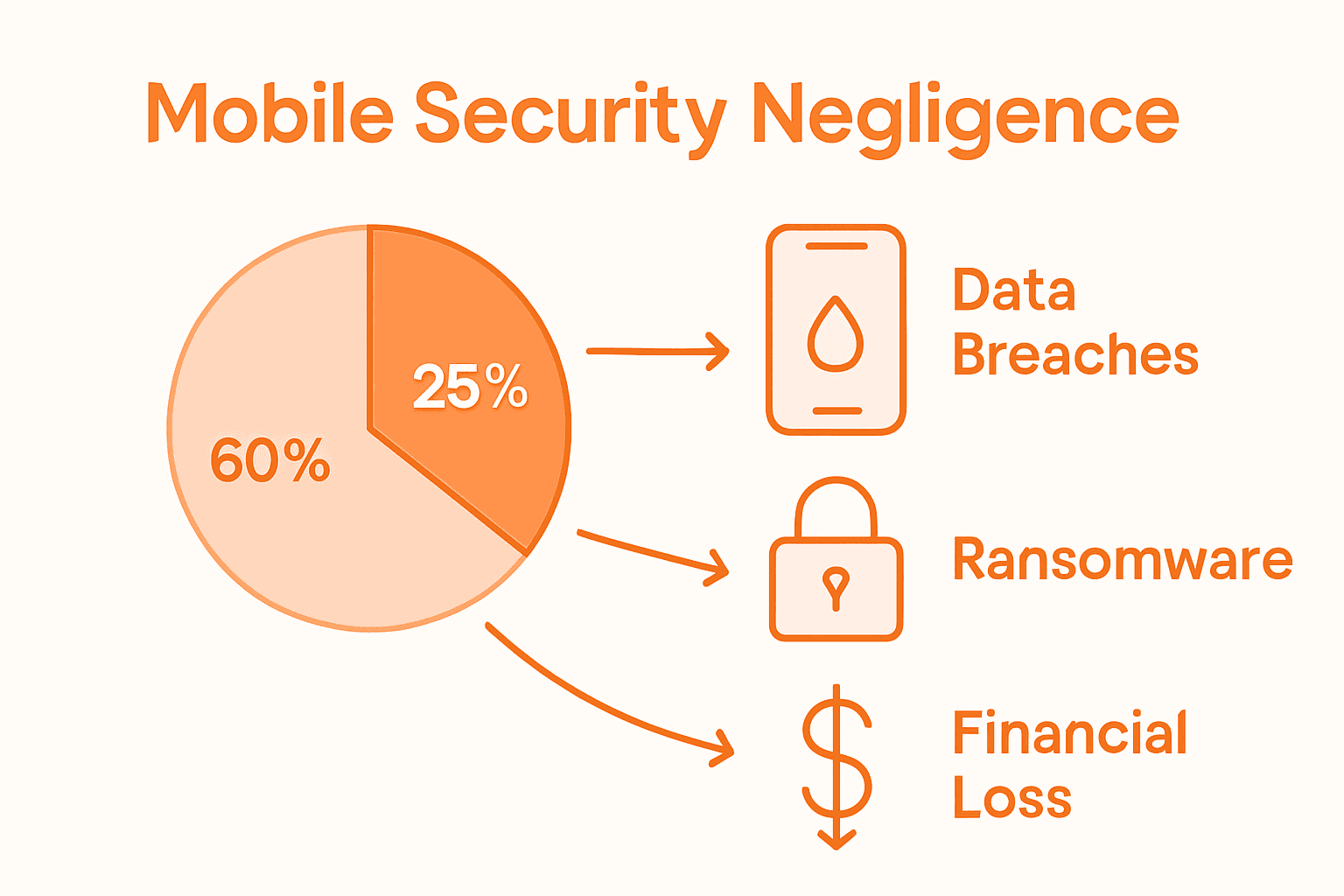
Financial implications of mobile security breaches can be profound, potentially resulting in massive economic losses, regulatory penalties, and permanent reputation damage. Cybercriminals increasingly target mobile devices as entry points into broader organizational networks, exploiting weak security protocols to gain unauthorized access to sensitive corporate information. Small businesses are especially vulnerable, often lacking robust cybersecurity infrastructure and experiencing disproportionately devastating impacts from successful security breaches.
Pro Security Tip: Conduct quarterly comprehensive mobile security audits, implementing immediate remediation strategies for identified vulnerabilities and maintaining an adaptive, proactive security posture.
Primary Mobile Security Vulnerability Domains:
- Unauthorized data access
- Network infrastructure compromise
- Ransomware infiltration
- Corporate espionage risks
- Regulatory compliance violations
Best Practices for Strong Mobile Protection
Mobile security requires a comprehensive, strategic approach that integrates multiple protective technologies and user awareness techniques. Organizations must develop robust defense mechanisms that address potential vulnerabilities across device hardware, software, network connections, and human interactions.
Key protective strategies involve implementing multi-layered security controls that create comprehensive barriers against potential intrusions. This includes advanced endpoint protection, network traffic encryption, strict authentication protocols, and continuous monitoring systems. Regular device updates and proactive security maintenance are critical practices for preventing potential exploits and maintaining system integrity, ensuring that potential vulnerabilities are quickly addressed before they can be manipulated by malicious actors.
Technical implementation of mobile security requires a holistic approach that balances sophisticated technological solutions with practical user education. Organizations must develop clear policies defining acceptable device usage, implement robust mobile device management platforms, and create comprehensive training programs that help employees recognize and respond to potential security threats. This includes establishing strict protocols for device access, data transmission, and remote management capabilities.
Pro Security Tip: Create a dynamic mobile security policy that requires mandatory multi-factor authentication, enforces automatic software updates, and provides clear guidelines for secure mobile device usage across all organizational levels.
Critical Mobile Protection Components:
- Multi-factor authentication
- Continuous device monitoring
- Encrypted communication channels
- Regular security awareness training
- Automated patch management
Protect Your Organization with Advanced Mobile Device Security Solutions
The article highlights the urgent need for strong mobile device security to combat threats like malware, phishing, and unauthorized access that jeopardize sensitive data and business operations. With challenges such as sophisticated ransomware, data breaches, and evolving attack methods, organizations must prioritize multi-layered defenses including multi-factor authentication, continuous device monitoring, and rapid incident response. Your goal is clear Protect your mobile infrastructure with robust security policies that prevent costly downtime and reputational damage.
At LogMeOnce, we understand these critical pain points. Our comprehensive cybersecurity solutions offer passwordless multi-factor authentication, encrypted cloud storage, and real-time dark web monitoring to enhance your organization’s mobile device protection seamlessly. By implementing advanced identity management and endpoint security measures like those emphasized in the article you can reduce risks and maintain compliance with evolving regulatory standards.
Elevate your mobile defense strategy today with proven technologies designed for small businesses, large enterprises, and government agencies. Experience the ease of secure single sign-on alongside dynamic remote access control that keeps your mobile assets safe.
Take control of your mobile security before threats escalate

Explore how our innovative solutions align with your mobile security priorities. Visit LogMeOnce now to start your free trial and empower your organization with enterprise-grade protections tailored for today’s mobile threat landscape. Don’t wait for an attack to expose vulnerabilities Act now and secure your mobile future with trusted tools and expert support.
Frequently Asked Questions
Why is mobile device security important for organizations?
Mobile device security is crucial for organizations because it protects sensitive data and networks from unauthorized access and cyber threats. With the increasing use of mobile devices for business operations, inadequate security measures can lead to data breaches, financial losses, and reputational damage.
What are the common threats to mobile devices?
Common threats to mobile devices include malware, phishing attacks, network vulnerabilities, and social engineering tactics. Each of these threats poses risks to organizational data integrity and can lead to unauthorized access or data leakage.
How can organizations implement effective mobile device security measures?
Organizations can implement effective mobile device security by establishing a comprehensive security policy that includes multi-factor authentication, regular software updates, device encryption, and continuous monitoring. Additionally, employee training on recognizing and responding to security threats is essential.
What are the consequences of neglecting mobile device security?
Neglecting mobile device security can result in significant consequences, including data breaches, ransomware attacks, regulatory penalties, and severe reputational harm. Organizations may also face financial losses due to operational disruptions and the aftermath of data theft.
Recommended
- 7 Ways to Boost Mobile Device Security for an Enterprise
- Password Manager – LogMeOnce
- How to Increase Remote Work Security to Protect Sensitive Data
- The Rise of Mobility and Mobile Cyber Attacks – LogMeOnce


