


 Password Manager
 Identity Theft Protection

 Team / Business
 Enterprise
 Government
 MSP
MSP


Why Password Hygiene Is Critical: Complete Guide

Nearly 80 percent of data breaches stem from weak or reused passwords, leaving both individuals and businesses exposed to major security risks. Password habits often seem like a personal choice, yet the consequences of poor password hygiene can ripple far beyond a single account. With digital threats growing smarter every day, learning the fundamentals of strong password management offers the best chance to keep private information safe and out of the wrong hands.
Key Takeaways
| Point | Details |
|---|---|
| Implement Unique Passwords | Use distinct passwords for each account to reduce vulnerability to credential stuffing and other attacks. |
| Prioritize Complexity and Length | Create passwords with at least 12 characters that utilize a mix of uppercase, lowercase, numbers, and symbols. |
| Regularly Update Passwords | Change passwords frequently and immediately after any potential security incidents to maintain account integrity. |
| Leverage Password Management Tools | Utilize password managers to securely generate and store complex passwords, decreasing the risk of breaches due to memory fatigue. |
Defining Password Hygiene and Core Principles
Password hygiene represents a comprehensive approach to managing and protecting digital credentials through strategic practices that minimize security vulnerabilities. At its core, password hygiene involves creating, maintaining, and handling passwords in ways that significantly reduce the risk of unauthorized access and potential data breaches.
According to research from arxiv, users frequently encounter challenges when managing passwords, often creating similar credentials over multiple platforms. The study highlights a critical insight: people tend to develop predictable password patterns, which substantially increases security risks. This tendency makes it easier for malicious actors to guess or crack passwords through systematic approaches.
Core principles of effective password hygiene include:
- Unique Passwords: Create distinct passwords for each digital account
- Complex Composition: Use combinations of uppercase, lowercase, numbers, and symbols
- Length Matters: Aim for passwords at least 12 characters long
- Avoid Personal Information: Exclude birthdays, names, or easily guessable personal details
- Regular Updates: Change passwords periodically, especially after potential security incidents
To enhance your password strategy, consider implementing additional layers of security such as password management techniques. By understanding and applying these fundamental principles, individuals and organizations can significantly reduce their vulnerability to cyber threats and protect sensitive digital assets.

Common Threats Exploiting Poor Password Habits
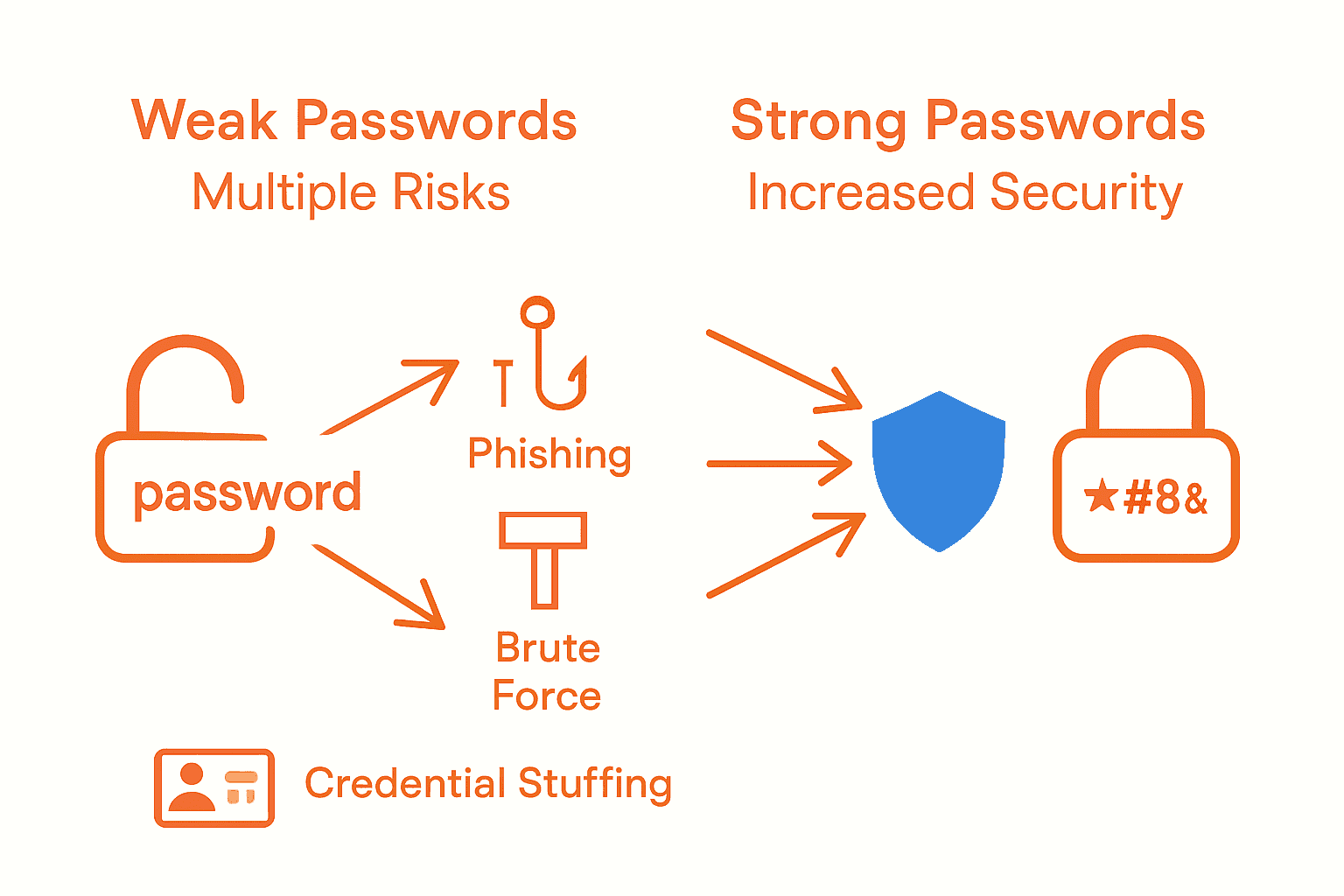
Poor password habits expose individuals and organizations to a range of sophisticated cyber threats that can compromise sensitive digital assets. These vulnerabilities create multiple entry points for malicious actors seeking unauthorized access to personal and professional systems.
Credential stuffing represents one of the most prevalent attack strategies targeting weak password practices. According to research, attackers leverage stolen account credentials to gain unauthorized access across multiple platforms by exploiting users’ tendency to reuse username and password combinations. This technique allows cybercriminals to systematically breach accounts by applying credentials obtained from one compromised system to other potential targets.
Additional critical threats include:
- Phishing Attacks: Deceptive strategies designed to trick users into revealing login information
- Brute Force Attacks: Systematic attempts to guess passwords through automated trial-and-error methods
- Dictionary Attacks: Using comprehensive word lists to systematically guess potential passwords
- Social Engineering: Manipulating individuals into divulging sensitive authentication details
Phishing techniques have become increasingly sophisticated, with attackers creating remarkably convincing fraudulent communications that mimic legitimate entities. These malicious messages often direct unsuspecting users to fake login pages, tricking them into voluntarily surrendering their credentials. By understanding these threats, individuals can develop more robust defensive strategies against potential security breaches and protect their digital identities effectively.
To fortify your digital security, consider exploring password reuse risks and implementing comprehensive password management strategies that minimize vulnerability to these pervasive cyber threats.
Best Practices for Robust Password Hygiene
Password hygiene is more than just creating a complex password—it’s about developing a comprehensive strategy that protects your digital identity across multiple platforms and devices. Implementing robust password practices requires a holistic approach that combines technical knowledge with disciplined personal security habits.
Key best practices for maintaining strong password hygiene include:
- Complexity is King: Create passwords that are at least 12 characters long
- Diversity Matters: Use a mix of uppercase, lowercase, numbers, and special characters
- Unique Per Platform: Generate different passwords for each digital account
- Avoid Personal Information: Steer clear of easily guessable details like birthdays or names
- Regular Rotation: Update passwords periodically, especially after potential security incidents
When developing your password strategy, learn how to create a strong password that balances memorability with security. This involves using techniques like passphrase generation, where you combine random words to create a memorable yet complex credential.
To further enhance your password management, consider using password managers that generate and securely store complex passwords. These tools eliminate the need to remember multiple intricate credentials while providing an additional layer of protection against potential security breaches. By adopting these comprehensive practices, you can significantly reduce your vulnerability to cyber threats and protect your digital assets more effectively.
Consequences of Weak or Reused Passwords
Password vulnerabilities represent a critical security risk that can expose individuals and organizations to devastating digital threats. The seemingly simple act of using weak or repeated passwords can transform your digital presence into an open invitation for cybercriminals seeking unauthorized access.
Password cracking research reveals the profound risks associated with inadequate password practices. In a notable 2009 incident, a massive breach exposed 32 million passwords stored in cleartext, dramatically illustrating the potential catastrophic consequences of poor password management. This single event underscored how vulnerable digital identities can become when basic security protocols are neglected.
The potential consequences of weak password practices include:
- Financial Loss: Unauthorized access to bank accounts or financial platforms
- Identity Theft: Comprehensive personal information compromise
- Reputation Damage: Professional and personal credibility destruction
- Data Breach: Potential compromise of entire organizational networks
- Privacy Invasion: Unauthorized access to personal communications and sensitive data
Password fatigue often drives individuals to make dangerous security compromises. When confronting multiple account requirements, users frequently resort to reusing passwords across platforms—a practice that exponentially multiplies potential breach risks. By understanding the risks of weak passwords, individuals can develop more strategic approaches to digital security, transforming potential vulnerabilities into robust protective measures.
Password Management Solutions and Compliance Needs
Enterprise password management represents a critical intersection of technological security, regulatory compliance, and organizational risk mitigation. Modern businesses must navigate increasingly complex digital landscapes where protecting sensitive credentials is no longer optional but an absolute necessity.
Research from arxiv reveals significant vulnerabilities in traditional password protection strategies. The study highlights critical challenges with existing password strength meters, demonstrating that data-driven approaches can inadvertently expose trained passwords, emphasizing the urgent need for privacy-preserving management solutions that go beyond conventional security frameworks.
Key considerations for comprehensive password management solutions include:
- Centralized Control: Unified credential management across organizational platforms
- Automated Compliance: Real-time monitoring and enforcement of security protocols
- Multi-Factor Authentication: Additional verification layers beyond traditional passwords
- Encryption Standards: Robust protection of stored credential information
- Audit Trails: Comprehensive logging of access and modification events
Additional research from arxiv underscores how different text entry methods can fundamentally impact password security. By understanding enterprise password management strategies, organizations can develop nuanced approaches that balance user experience with robust security requirements, transforming potential vulnerabilities into strategic defensive capabilities.
Strengthen Your Password Hygiene with Proven Security Solutions
Poor password hygiene leaves digital identities vulnerable to threats like credential stuffing and phishing attacks. This article highlights the challenges of managing unique, complex passwords and the risks of reuse. If you want to eliminate the stress of remembering multiple passwords while boosting your defenses, it is time to act with a trusted password management solution.
Discover how LogMeOnce empowers individuals and businesses to enforce strong password policies, safely store credentials, and enable multi-factor authentication for an unmatched layer of protection. Our easy-to-use platform helps you create truly unique passwords and automatically monitors for potential breaches. Don’t wait until weak passwords jeopardize your data—explore LogMeOnce now and experience smart security that adapts to your needs. Learn more about how to create a strong password and the importance of enterprise password management to secure your digital world today.
Frequently Asked Questions
What is password hygiene and why is it important?
Password hygiene refers to practices for managing and protecting passwords to minimize security vulnerabilities. It is crucial because poor password habits can lead to unauthorized access and potential data breaches.
What are the core principles of effective password hygiene?
Core principles include creating unique passwords for each account, using complex combinations of characters, ensuring passwords are at least 12 characters long, avoiding personal information, and regularly updating passwords.
How can poor password habits expose me to cyber threats?
Poor password habits, such as reusing passwords or using easily guessable ones, can lead to common attacks like credential stuffing and phishing, allowing malicious actors unauthorized access to your accounts.
What are some best practices for maintaining strong password hygiene?
Best practices include creating complex passwords, using diverse character types, avoiding personal details, generating unique passwords for each account, and regularly updating them to enhance security.
Recommended
- The Surefire Best Way to Remember Passwords – LogMeOnce
- How Often Should You Change Your Password? – LogMeOnce


