


 Password Manager
 Identity Theft Protection

 Team / Business
 Enterprise
 Government
 MSP
MSP


A single email from a trusted contact can open the door to a ransomware crisis that spirals out of control in hours. For IT managers across the United States, Europe, or Asia, understanding the true nature of ransomware is not just an IT concern but a company-wide challenge. Uncover the reality behind common ransomware myths and discover how modern threats involve not just data encryption but double extortion and stolen data, demanding a new approach to staff training and identity management.
Key Takeaways
| Point | Details |
|---|---|
| Understanding Ransomware Evolution | Ransomware has evolved from simple file encryption to complex multi-stage attacks involving data theft and double extortion tactics. Organizations must recognize this shift to strengthen their defenses. |
| High Payment Rates for Ransom | Approximately 72% of organizations choose to pay ransom demands, incentivizing further sophistication in attacks. Paying does not guarantee data recovery or protection against future breaches. |
| Importance of Preparedness | A proactive approach, including incident response planning and employee training, is essential to minimize damage from ransomware incidents. Prepare for potential legal and financial repercussions associated with attacks. |
| Risk Assessment and Mitigation | Organizations should assess their industry, size, and security posture to prioritize defenses against the most likely attack types, rather than adopting a one-size-fits-all strategy. |
Defining Ransomware and Debunking Myths
Ransomware is malicious software designed to encrypt your organization’s files, systems, or databases, making them inaccessible until you pay a ransom demand. But here’s what most IT managers don’t realize: the threat has evolved dramatically beyond simple file encryption. What began in 1989 with the AIDS Trojan has transformed into a sophisticated multi-stage attack strategy where attackers don’t just lock your data—they steal it first, then threaten to expose it publicly. This approach, known as double extortion, means victims face a brutal choice between paying to recover files or paying to prevent sensitive data disclosure. Some attackers have even introduced triple extortion, adding threats to inform clients or regulators about the breach.

The myths surrounding ransomware are as dangerous as the malware itself. The first widespread misconception is that ransomware attacks only involve encrypting data and nothing more. In reality, modern ransomware operations involve complex data exfiltration before encryption occurs. Attackers scout your network, identify valuable information, copy it to external servers, and only then encrypt your systems. This fundamentally changes the risk profile for your organization. A second myth suggests that few organizations actually pay ransom demands, making it an uncommon problem. The numbers tell a different story: approximately 72% of organizations that experience ransomware attacks now choose to pay the ransom. This high payment rate has incentivized attackers to develop more sophisticated techniques and target larger, wealthier organizations. The third critical misconception involves the belief that paying a ransom guarantees data recovery. Unfortunately, this assumption can leave your organization devastated. Even after payment, decryption keys may not work completely, stolen data may still be published despite promises, or attackers may demand additional payments. Payment provides no contractual guarantee of anything.
Understanding ransomware’s operational methods and evolving tactics is essential for developing effective defenses. The threat landscape includes zero-day vulnerabilities that attackers exploit before patches exist, making prevention incredibly challenging. Attackers also leverage cryptocurrencies for ransom payments specifically because these transactions are difficult to trace and reverse. For IT managers at mid-sized and large organizations, this means relying on prevention, detection, and response strategies rather than hoping to recover data after an attack occurs. Your approach must shift from treating ransomware as a data encryption problem to recognizing it as a sophisticated extortion and data theft operation.
Pro tip: Stop viewing ransomware response as a single IT security initiative and instead treat it as a business continuity issue requiring input from legal, finance, and executive leadership teams before attacks occur.
Types of Ransomware Attacks Targeting Organizations
Ransomware attacks fall into two primary categories based on how attackers select their targets, and understanding this distinction fundamentally changes how you should prepare your defenses. Targeted attacks are precision operations where attackers research specific organizations, identify decision makers, locate valuable data, and plan their approach meticulously. These campaigns cause substantially greater damage than their counterparts because attackers invest time in understanding your network, your security gaps, and your operational weaknesses before launching the assault. A targeted attack against your organization might begin weeks before encryption occurs, with attackers mapping network architecture, testing credentials, and establishing persistent access points. Opportunistic attacks, by contrast, cast a wide net. Attackers deploy ransomware broadly, hoping to infect as many organizations as possible through phishing emails, unpatched vulnerabilities, or compromised software. While opportunistic attacks happen faster and require less preparation, they can still cause significant damage when they land on unprepared systems.
The research on ransomware severity across organizational sectors reveals critical patterns that shape attack selection. Both private and public sector organizations face threats, though attackers often target industries where organizations possess higher revenue, critical infrastructure importance, or regulatory pressure to pay. Healthcare systems, financial institutions, and government agencies frequently experience targeted ransomware campaigns because attackers understand these sectors operate under urgency and possess substantial budgets. Manufacturing facilities have become prime targets because production downtime creates immediate, measurable financial losses. The sophistication gap matters considerably. Organizations with mature security postures encounter more advanced attacks that use custom malware, zero-day exploits, and multi-stage deployments. Smaller organizations often face commodity ransomware variants because attackers can infect many targets with minimal effort.
Modern ransomware attacks employ multiple destructive approaches beyond simple encryption:
- Data exfiltration attacks steal sensitive information before encryption, enabling double extortion threats
- Spreading mechanisms that laterally move across your network to maximize encrypted files and system damage
- Credential harvesting that captures administrative access for future attacks or sale to other threat actors
- Backup targeting that specifically seeks and destroys recovery systems to eliminate restoration options
- Persistence installation that maintains attacker access even after recovery attempts
Your organizational size directly impacts attack likelihood and intensity. Larger organizations typically attract targeted campaigns with higher ransom demands and more sophisticated tactics. Mid-sized organizations occupy a vulnerable middle ground, lacking enterprise-grade defenses but possessing sufficient resources to make ransom payments attractive. Smaller organizations often experience opportunistic attacks that, while simpler, can still devastate operations lacking backup and recovery systems.
Here’s a comparison of targeted and opportunistic ransomware attacks:
| Aspect | Targeted Attacks | Opportunistic Attacks |
|---|---|---|
| Preparation Level | High, extensive planning | Minimal, widespread casting |
| Attack Duration | Weeks to months | Hours to days |
| Typical Victims | Large or high-value organizations | Any unprepared organization |
| Customization | Tailored to specific network | Generic, reusable tools |
| Potential Damage | Severe, larger scope | Variable, often localized |
| Ransom Demands | High, based on research | Lower, mass-scale attempts |
| Attack Methods | Advanced, multi-stage | Common, easily automated |
Pro tip: Map your organization’s industry, size, and security maturity against known attacker preferences, then prioritize defenses against the attack types most likely to target entities like yours rather than treating all ransomware threats equally.
How Ransomware Infiltrates and Spreads
Ransomware doesn’t magically appear on your systems. It arrives through specific, exploitable pathways that your organization likely uses every day. The most common entry point is phishing emails. An attacker crafts a message that appears legitimate, often impersonating trusted vendors, executives, or colleagues. Your employees receive attachments labeled as invoices, payroll documents, or security alerts. One person clicks a link or opens the file, and the malware downloads silently in the background. This human factor is the critical vulnerability. No firewall blocks a message your team member genuinely believes came from their CFO requesting urgent action. Beyond phishing, attackers exploit unpatched vulnerabilities in operating systems and applications. When software vendors release security patches, your organization faces a race against time. Attackers reverse engineer patches to find exploitable flaws, then target organizations that haven’t updated yet. A single missed patch across your network can provide the entry point an attacker needs.
Remote Desktop Protocol (RDP) attacks represent another primary infiltration method. If your organization uses RDP for remote access and hasn’t secured it properly, attackers can brute force credentials or exploit misconfigurations to gain direct system access. Once inside your network through any of these vectors, attackers don’t immediately encrypt everything. Instead, they move laterally across systems, establishing multiple access points and escalating privileges. This lateral movement phase is crucial because it determines the scope of eventual damage. An attacker moving through your network maps its structure, identifies critical systems, locates backup storage, and discovers valuable data. Only after thoroughly exploring your infrastructure do they begin encryption and data exfiltration. This staged approach transforms what could have been a contained incident into an organization wide catastrophe.
The spread of ransomware within networks follows predictable patterns. Lateral movement tactics allow attackers to move from compromised endpoints to servers, storage systems, and domain controllers. Your backups become specific targets because attackers understand that destroyed backups eliminate your recovery options. Attackers also target service providers and managed service providers because compromising one vendor can provide access to multiple downstream organizations. A single supplier infiltration can cascade into attacks against dozens of your clients and partners.
Consider the realistic timeline. Initial access occurs through phishing or vulnerability exploitation. Lateral movement takes days or weeks as attackers carefully navigate your network. Data exfiltration happens gradually, moving files to attacker controlled servers. Only then does encryption begin, often triggered on a coordinated schedule across multiple systems simultaneously. By the time encryption starts and your team notices something wrong, attackers have already stolen your data and established multiple backdoors for future access.
Pro tip: Implement credential-based access controls and monitor for unusual lateral movement patterns, then segment your network so a single compromised workstation cannot directly access your critical systems, backup infrastructure, and sensitive data repositories.
Warning Signs and Preventive Practices
Recognizing ransomware before it causes catastrophic damage separates organizations that recover quickly from those that suffer prolonged downtime and data loss. The warning signs often appear days or weeks before encryption renders your systems unusable. Watch for unexpected file encryption where documents suddenly become inaccessible or display unfamiliar file extensions. Your team members may report that files they accessed yesterday now require a password they never set. System performance degradation is another indicator, as ransomware consumes resources during encryption and data exfiltration. Ransom notes appearing on screens, in text files on desktops, or in email inboxes represent the attacker announcing their presence and demands. Network slowdowns, particularly unusual traffic to unfamiliar IP addresses, signal data being exfiltrated to attacker servers. Disabled security software or antivirus alerts being silenced indicate attackers disabling your defenses. System crashes or unexpected restarts during off hours suggest attackers running encryption processes when your team isn’t actively monitoring. If you notice any combination of these signs, assume a breach is active and isolate affected systems immediately from your network.
Prevention requires a multi-layered approach because no single control stops all attacks. Detecting ransomware warning signs early allows your team to respond before widespread encryption occurs. Implement these fundamental practices: automate software patching so vulnerabilities are closed before attackers exploit them. Maintain offline backups completely disconnected from your network, ensuring attackers cannot delete recovery options. Segment your network so compromised systems cannot directly access critical servers, backups, or sensitive data. Restrict administrative privileges to only those who absolutely require them, limiting attacker ability to escalate access. Deploy antivirus and anti-malware software across all systems, and configure it to run regular scans automatically. Train your employees on phishing identification because most attacks start with a single person opening a malicious email. Establish clear protocols for reporting suspicious emails rather than punishing employees who fall for sophisticated attacks.
Incident response planning transforms chaos into coordinated action when ransomware strikes. Your plan should include designated response roles, communication procedures, escalation paths, and decision criteria for when to pay ransom or attempt recovery. Test your backup and recovery procedures regularly outside of crisis situations. NIST guidance emphasizes that preparation through incident response planning and third-party cybersecurity expert involvement significantly reduces recovery time and ransomware impact. Your organization should also establish relationships with law enforcement and report attacks to relevant authorities, who can provide guidance and track emerging threats. Consider maintaining a list of trusted cybersecurity consultants and forensic investigators before you need them in an emergency.
Pro tip: Conduct quarterly tabletop exercises where your incident response team walks through ransomware scenarios without actually triggering alerts, practicing communication, decision making, and recovery procedures while stress is manageable rather than in the midst of actual crisis.
Legal, Financial, and Reputational Risks
Ransomware attacks extend far beyond technical incidents. They trigger cascading financial, legal, and reputational consequences that can threaten your organization’s survival. Financial impacts arrive immediately and accumulate rapidly. Ransom demands typically range from tens of thousands to millions of dollars, depending on your organization’s size and perceived ability to pay. Recovery costs compound this burden significantly. System restoration, data recovery services, forensic investigations, and consultant fees consume substantial budgets. Operational downtime translates directly into lost revenue. A manufacturing facility unable to produce loses income while fixed costs continue. Healthcare systems diverting patients to other facilities lose patient relationships and revenue. Financial institutions losing transactional capability face compliance violations and penalties. Then regulatory fines enter the equation. Your organization may face penalties from data protection authorities if customer or employee personal information was compromised during the attack. Legal fees accumulate as your organization navigates notification requirements, responds to lawsuits from affected parties, and manages regulatory investigations.
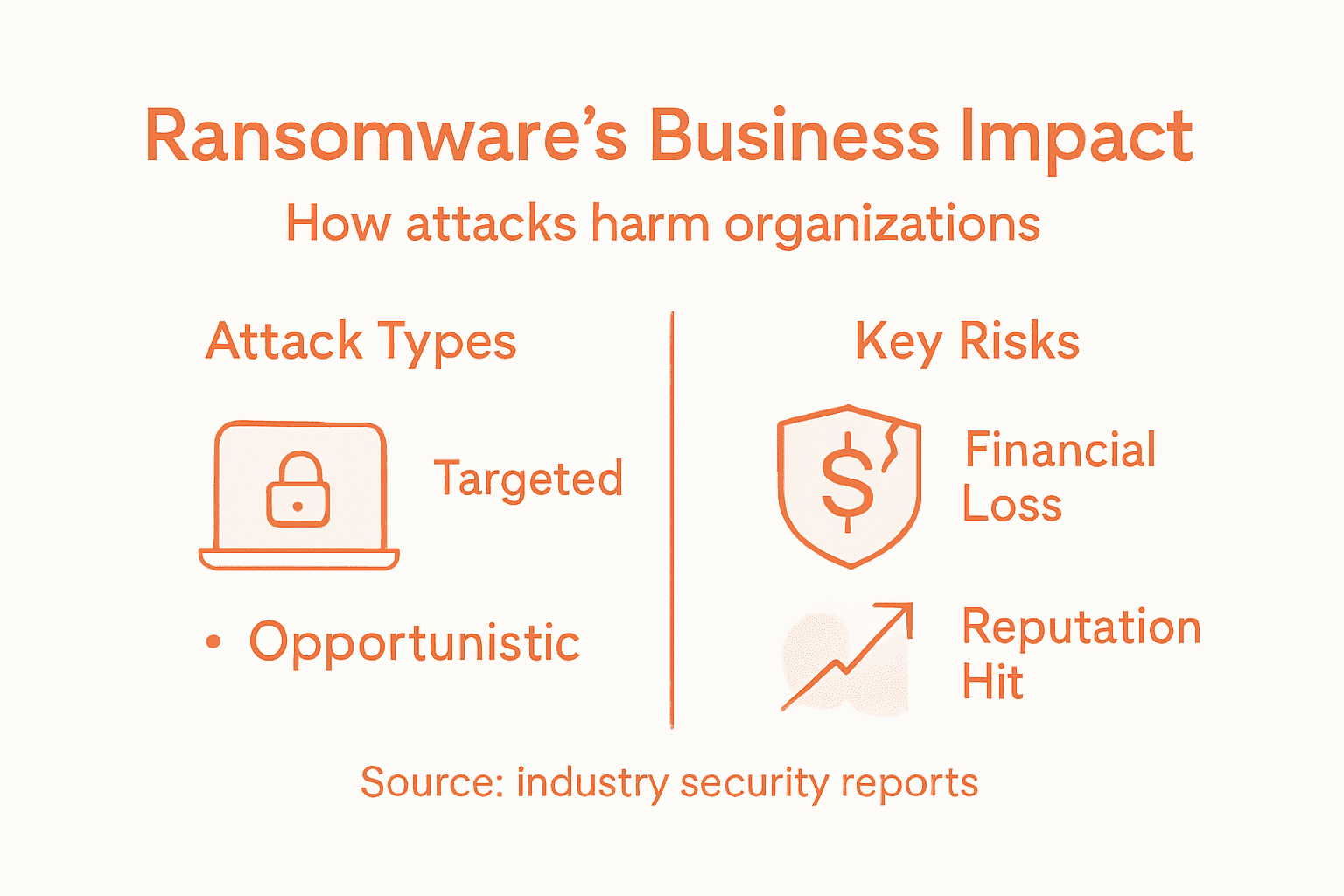
The reputational damage often exceeds the financial impact in long-term consequences. Customers who trusted your organization with sensitive data learn that you failed to protect it adequately. Partners question whether they can continue relationships with a breached organization. Employees experience stress and reduced confidence in leadership’s security commitment. The psychological toll on your team is real. Research into ransomware’s organizational harms beyond financial losses reveals that staff experience acute stress, anxiety about job security, and diminished morale following incidents. Leadership faces credibility challenges when employees lose confidence in the organization’s ability to protect them and their work. Media coverage amplifies reputational damage, with news outlets covering high-profile attacks and creating negative impressions among potential customers and partners. For public sector organizations, operational disruptions can compromise public safety. A ransomware attack on hospital systems can delay surgeries and emergency care. Water treatment facilities under attack cannot provide safe drinking water. Law enforcement agencies unable to access records cannot serve their communities effectively.
Regulatory and compliance obligations multiply ransomware impact. Your organization must notify affected individuals within specific timeframes mandated by laws like GDPR, CCPA, and industry-specific regulations. These notifications are expensive and damaging, requiring communication with potentially millions of people and credit monitoring services. Insurance coverage provides partial protection but carries high premiums and may exclude certain scenarios. The Council of Europe highlights that ransomware creates multi-faceted risks including substantial financial and operational costs requiring comprehensive organizational responses. Business continuity disruptions cascade through supply chains. If you supply components or services to other organizations, your ransomware incident creates their problems too, potentially leading to contractual penalties and relationship damage. Shareholders and investors scrutinize management’s handling of cybersecurity failures, potentially affecting stock price and capital availability for future operations.
Below is a summary of major organizational risks posed by a ransomware attack:
| Risk Category | Short-Term Impact | Long-Term Impact |
|---|---|---|
| Financial | Immediate ransom payments and recovery costs | Ongoing regulatory fines and lost revenue |
| Legal | Need for rapid notifications and compliance actions | Prolonged lawsuits or settlements |
| Reputational | Negative media coverage and customer distrust | Erosion of brand credibility and partnerships |
| Operational | Disrupted services and halted production | Decreased stakeholder confidence and morale |
| Psychological | Staff stress and anxiety during crisis | Reduced employee morale and trust in leadership |
Pro tip: Document your organization’s financial exposure to ransomware incidents by calculating potential ransom costs, recovery expenses, regulatory fines, and lost revenue from operational downtime, then present this analysis to your executive leadership and board to secure budget and priority for prevention investments.
Protect Your Business From Ransomware Threats Today
Ransomware attacks are no longer simple data encryption events. They combine data theft, extortion, and network infiltration that put your entire business continuity at risk. If you are concerned about double extortion, lateral movement, and targeted ransomware campaigns described in the article, it is critical to strengthen both your identity security and data protection strategies now. Avoid costly ransom payments, operational downtime, and reputational damage by implementing layered defenses designed to detect and stop sophisticated attacks before they happen.

Take control of your cybersecurity posture with the comprehensive solutions found at LogMeOnce. From passwordless multi-factor authentication and encrypted cloud storage to dark web monitoring and single sign-on, LogMeOnce empowers your organization to prevent unauthorized access and reduce ransomware vulnerabilities. Get started with a free trial and see how advanced identity management combined with proactive defense can safeguard your business assets and keep your operations running smoothly. Do not wait for a breach to act. Visit LogMeOnce right now and build your ransomware resilience today.
Frequently Asked Questions
What is ransomware?
Ransomware is a type of malicious software that encrypts an organization’s files or systems, making them inaccessible until a ransom is paid.
How does ransomware impact businesses?
Ransomware can cause severe financial losses due to ransom payments, recovery costs, operational downtime, and potential regulatory fines. It can also damage a company’s reputation and employee morale.
What are the different types of ransomware attacks that target organizations?
Ransomware attacks mainly fall into two categories: targeted attacks, which involve meticulous planning against specific organizations, and opportunistic attacks, which broadly aim to infect as many systems as possible without specific targeting.
How can organizations prevent ransomware attacks?
Organizations can prevent ransomware by implementing automated software patching, maintaining offline backups, segmenting networks, restricting administrative privileges, using antivirus software, and training employees on phishing identification.
Recommended
- What Should You Do After a Password Breach? – LogMeOnce
- blogs – LogMeOnce
- 7 Cyber Threats That Target Small Business – LogMeOnce
- 5 Reasons Cloud Encryption is Important for Every Business


