


 Password Manager
 Identity Theft Protection

 Team / Business
 Enterprise
 Government
 MSP
MSP


Over 60 percent of American small businesses have experienced at least one cyber attack in the past year. With every device on your network becoming a potential weak point, effective endpoint security is no longer optional. Cybersecurity professionals in growing companies need practical solutions that close gaps, help meet international standards, and protect sensitive data from emerging threats. This guide presents clear strategies for securing endpoints so your organization can take action and stay compliant.
Key Takeaways
| Point | Details |
|---|---|
| Endpoint Security is Essential | It shifts focus from perimeter security to protecting individual devices that connect to networks. |
| Advanced Technologies Boost Defense | Utilizing AI and machine learning enhances the ability to detect and respond to threats proactively. |
| Diverse Solutions Address Unique Risks | A multifaceted approach incorporating various endpoint security types is crucial for comprehensive protection. |
| Ongoing Training and Compliance are Vital | Continuous employee education and adherence to regulations help mitigate cybersecurity risks effectively. |
Defining Endpoint Security in Modern Networks
In the rapidly evolving digital landscape, endpoint security represents a critical defensive strategy for protecting organizational networks from sophisticated cyber threats. Unlike traditional perimeter-based security models, endpoint security focuses on safeguarding individual devices that connect to corporate networks – including laptops, smartphones, tablets, and workstations.

At its core, endpoint security involves implementing comprehensive protection mechanisms directly on end-user devices. These mechanisms include advanced antivirus software, intrusion detection systems, data encryption protocols, and real-time monitoring capabilities. The primary objective is creating a robust protective shield that prevents unauthorized access, detects potential security breaches, and mitigates risks before they can propagate across network infrastructure.
Modern endpoint security solutions leverage sophisticated technologies like machine learning and artificial intelligence to provide proactive defense strategies. These intelligent systems can analyze behavioral patterns, identify anomalous activities, and automatically respond to potential security incidents without human intervention. By integrating threat intelligence, behavioral analytics, and continuous monitoring, organizations can develop a dynamic and adaptive security posture that addresses emerging cyber risks.
Pro tip: Implement a comprehensive endpoint security strategy that combines multiple layers of protection, including software updates, employee training, and advanced monitoring tools to create a holistic defense mechanism.
Types of Endpoint Security Solutions Compared
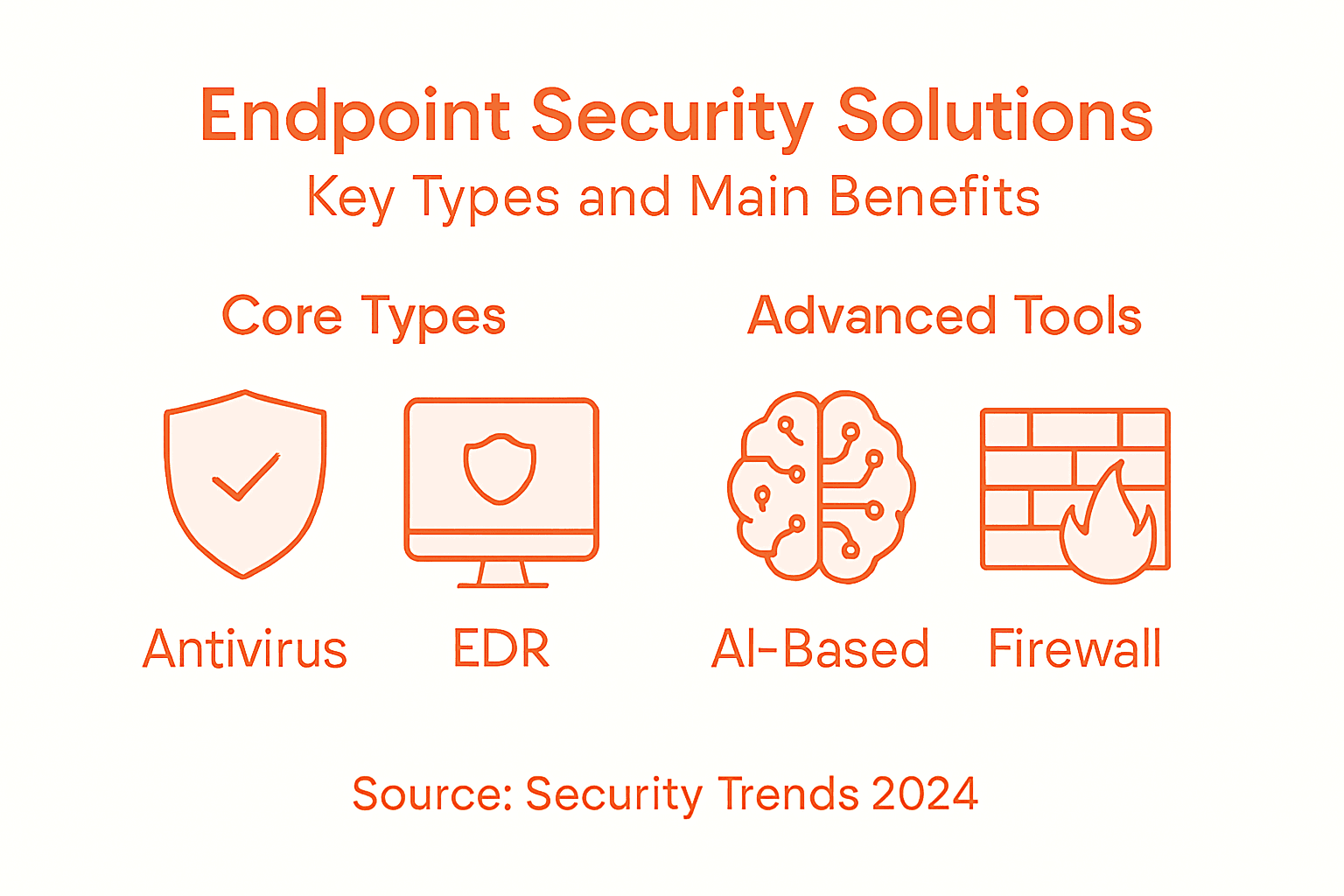
Endpoint security solutions have evolved dramatically, offering organizations a diverse range of protective strategies to safeguard their digital infrastructure. These solutions can be categorized into several key types, each addressing unique aspects of cybersecurity risk management. Mobile device security strategies play a critical role in modern endpoint protection frameworks.
The primary types of endpoint security solutions include:
- Antivirus/Anti-Malware Software: Traditional protection mechanism detecting and neutralizing known malicious software
- Endpoint Detection and Response (EDR): Advanced systems that continuously monitor device activities, identifying and responding to potential security threats in real-time
- Network Access Control (NAC): Solutions that regulate device access to corporate networks based on predefined security compliance requirements
- Data Loss Prevention (DLP): Tools designed to prevent unauthorized data transmission and protect sensitive information from potential breaches
- Encryption Solutions: Systems that protect data by converting information into secure, unreadable formats
More sophisticated endpoint security approaches now integrate artificial intelligence and machine learning capabilities, enabling proactive threat detection and automated response mechanisms. These intelligent systems can analyze complex behavioral patterns, identify potential security anomalies, and mitigate risks before they escalate into significant security incidents.
Here’s how common endpoint security technologies enhance business protection:
| Technology | Main Function | Business Benefit |
|---|---|---|
| Antivirus/Anti-Malware | Detects and removes malicious software | Reduces infection risk and downtime |
| Endpoint Detection & Response | Monitors and responds to threats in real time | Enables rapid incident response |
| Network Access Control | Restricts network access to compliant devices | Prevents unsafe device connections |
| Data Loss Prevention | Blocks unauthorized data sharing | Protects sensitive business information |
| Encryption | Secures data by making it unreadable | Maintains privacy and regulatory compliance |
Pro tip: Implement a multi-layered endpoint security strategy that combines different solution types, ensuring comprehensive protection across various potential vulnerability points.
How Endpoint Security Works in Practice
Endpoint security operates through a sophisticated, multi-layered approach that transforms individual devices into intelligent defensive nodes within an organization’s broader cybersecurity ecosystem. Remote work security strategies have become increasingly critical in understanding how these protective mechanisms function across distributed networks.
The practical implementation of endpoint security typically involves several key operational stages:
- Device Discovery and Inventory: Identifying and cataloging all network-connected devices
- Risk Assessment: Analyzing each endpoint’s current security posture and potential vulnerabilities
- Continuous Monitoring: Real-time tracking of device activities, network interactions, and potential threat indicators
- Automated Response: Implementing immediate protective actions when suspicious activities are detected
- Threat Containment: Isolating compromised devices to prevent lateral movement of potential security breaches
Advanced endpoint security solutions leverage artificial intelligence and machine learning algorithms to create dynamic, predictive defense mechanisms. These intelligent systems can anticipate potential security threats by analyzing historical data, recognizing unusual behavioral patterns, and generating proactive protective responses. Unlike traditional static security models, modern endpoint protection adapts in real-time, creating a fluid and responsive defensive strategy that evolves alongside emerging cyber threats.
Pro tip: Implement a comprehensive endpoint security strategy that includes regular device audits, continuous employee training, and automated threat detection systems to maintain robust cybersecurity resilience.
Real-World Applications for Business Protection
Businesses across industries face increasingly sophisticated cyber threats that demand comprehensive and adaptive endpoint security strategies. Organizations must implement robust protective mechanisms to safeguard their digital assets, intellectual property, and sensitive information. Cyber threats targeting small businesses demonstrate the critical importance of proactive security measures.
Endpoint security solutions provide critical protection across various real-world business scenarios:
- Financial Services: Protecting transaction data and preventing unauthorized account access
- Healthcare: Securing patient records and maintaining HIPAA compliance
- Retail: Defending customer payment information and preventing point-of-sale system breaches
- Manufacturing: Protecting intellectual property and preventing industrial espionage
- Technology Companies: Safeguarding software development environments and preventing source code theft
Modern endpoint security goes beyond traditional defensive approaches by integrating advanced technologies like behavioral analytics, artificial intelligence, and machine learning. These intelligent systems can detect anomalous activities, predict potential security incidents, and automatically respond to emerging threats before they can cause significant damage. By creating a dynamic and adaptive security environment, businesses can maintain operational continuity while minimizing potential financial and reputational risks associated with cybersecurity breaches.
Pro tip: Develop a comprehensive endpoint security strategy that combines technological solutions with ongoing employee training, ensuring a holistic approach to organizational cybersecurity.
Addressing Compliance, Risks, and Common Challenges
Cybersecurity professionals must navigate a complex landscape of evolving threats, regulatory requirements, and technological challenges. Endpoint security risks represent a critical area of focus for organizations seeking to protect their digital infrastructure and maintain operational integrity.
Key compliance and risk management challenges include:
- Regulatory Compliance: Meeting industry-specific standards like GDPR, HIPAA, and PCI DSS
- Device Diversity: Managing security across multiple platforms, operating systems, and device types
- Remote Work Security: Protecting distributed workforce environments and personal devices
- Data Privacy: Preventing unauthorized data access and maintaining confidentiality
- Threat Detection: Identifying and mitigating advanced persistent threats and zero-day vulnerabilities
Successful endpoint security strategies require a multifaceted approach that combines technological solutions, employee education, and continuous monitoring. Organizations must develop robust frameworks that address both technical vulnerabilities and human factors. This involves implementing advanced detection technologies, creating comprehensive security policies, conducting regular risk assessments, and fostering a culture of cybersecurity awareness throughout the organization.
The table below summarizes the main compliance and risk challenges businesses face and matched solutions:
| Challenge | Common Risk | Effective Solution |
|---|---|---|
| Remote Work Security | Unmanaged device access | Use secure VPNs and device monitoring |
| Device Diversity | Multiple OS vulnerabilities | Standardize security tools and policies |
| Regulatory Compliance | Fines and penalties | Continuous compliance monitoring |
| Data Privacy | Sensitive data leaks | Strong encryption and access controls |
| Threat Detection | Missed advanced attacks | Automate threat intelligence and analytics |
Pro tip: Conduct quarterly security audits and implement continuous employee training programs to create a proactive and adaptive endpoint security environment.
Strengthen Your Endpoint Security with LogMeOnce Solutions
Endpoint security is vital for protecting every device that connects to your organization’s network. This article highlights the growing challenges businesses face including managing device diversity, preventing unauthorized access, and ensuring compliance with regulations like HIPAA and GDPR. If you are looking to stop data breaches, automate threat detection, and secure remote work environments, understanding these risks is the first step toward stronger defense.
LogMeOnce offers advanced, easy-to-use cybersecurity solutions designed to complement your endpoint security strategy. Whether you need seamless passwordless multi-factor authentication, encrypted cloud storage, or consolidated identity management, our tools deliver dynamic protection that adapts to evolving threats. Experience real-time monitoring, secure single sign-on, and powerful data encryption, all tailored to safeguard your business assets.

Explore how comprehensive identity and access management can enhance your endpoint security today. Don’t wait until a breach happens. Visit LogMeOnce, start a free trial, and secure your enterprise’s devices effortlessly with our industry-leading solutions. Learn more about boosting mobile device security here and improve remote work protection here. Empower your organization now with LogMeOnce.
Frequently Asked Questions
What is endpoint security?
Endpoint security is a strategy that focuses on protecting individual devices, such as laptops, smartphones, and tablets, that connect to corporate networks. It involves implementing protective mechanisms like antivirus software, intrusion detection systems, and real-time monitoring to guard against cyber threats.
Why is endpoint security important for businesses?
Endpoint security is crucial for businesses because it helps safeguard sensitive information, intellectual property, and prevents unauthorized access. With the rise of cyber threats, a strong endpoint security strategy ensures that devices are protected and that potential vulnerabilities are managed effectively.
How do modern endpoint security solutions work?
Modern endpoint security solutions utilize advanced technologies like machine learning and artificial intelligence to monitor device activities and detect anomalies. They can automatically respond to security incidents, enabling real-time protection and a dynamic security posture that adapts to emerging threats.
What are the common types of endpoint security solutions?
Common types of endpoint security solutions include antivirus/anti-malware software, Endpoint Detection and Response (EDR), Network Access Control (NAC), Data Loss Prevention (DLP), and encryption tools. Each plays a vital role in protecting devices against various cybersecurity risks.
Recommended
- Best Cybersecurity Tools to Use In 2025 – LogMeOnce
- How to Increase Remote Work Security to Protect Sensitive Data
- The Most Essential Network Security Tools – LogMeOnce
- 7 Ways to Boost Mobile Device Security for an Enterprise


