


 Password Manager
 Identity Theft Protection

 Team / Business
 Enterprise
 Government
 MSP
MSP


Onboarding a new employee should not feel like organizing a puzzle with missing pieces. For IT managers at mid-sized enterprises, the shift from paper checklists to structured digital onboarding transforms early experiences for both staff and administrators. This approach uses coordinated digital tools to deliver critical information, enable secure access, and reduce security risks right from day one. Discover how these integrated methods give you more control, better visibility, and help new hires become valuable team members sooner.
Key Takeaways
| Point | Details |
|---|---|
| Effective Digital Onboarding | Leverage technology for streamlined integration of new employees to improve workflow and engagement. |
| Access and Credential Management | Implement automated provisioning to reduce manual errors and enhance security from day one. |
| Focus on Socialization | Design onboarding programs that foster connections among new hires to improve retention and collaboration. |
| Compliance and Security | Ensure onboarding platforms meet industry standards for identity verification and data protection to mitigate risks. |
Digital Onboarding Defined and Core Concepts
Digital onboarding refers to the structured use of technology and formal processes to integrate new employees into your organization from day one. Rather than relying solely on in-person meetings or paper-based procedures, this approach leverages digital tools to deliver information, build connections, and establish expectations efficiently. For IT managers overseeing mid-sized enterprises, understanding what digital onboarding actually is (and isn’t) directly impacts how smoothly your new hires transition into productive team members. At its core, digital onboarding encompasses formal and informal practices designed to accelerate newcomer adjustment through organized information delivery, targeted interventions, and collaborative technologies that work together to create a cohesive onboarding experience.
The concept extends beyond simply handing someone a laptop and access credentials. Effective digital onboarding addresses three fundamental dimensions. First, it ensures newcomers receive the right information at the right time—whether that’s company policies, system access procedures, or departmental workflows. Second, it creates pathways for connection and socialization with colleagues and teams, even in distributed work environments. Third, it establishes foundational knowledge about your organization’s culture, values, and operational standards. Research shows that technology-enhanced onboarding supports early employee socialization while allowing flexibility beyond traditional face-to-face interactions. This matters because new employees increasingly expect mobile-friendly access, self-service information portals, and asynchronous learning options rather than being confined to scheduled in-person sessions.
What makes digital onboarding distinct is how it functions as an integrated ecosystem rather than isolated point solutions. Your new hires benefit from coordinated touchpoints—automated email sequences that introduce them to departments, digital forms that centralize paperwork, access management systems that grant appropriate permissions, and communication platforms that facilitate team connections. The process starts before an employee’s first day and continues through their initial weeks, creating predictable milestones rather than chaotic scrambling. For IT managers specifically, this means fewer manual access requests, reduced security incidents from misconfigured accounts, and better audit trails documenting who received what information and when. Digital onboarding also establishes baseline compliance—ensuring every new hire completes required training, acknowledges security policies, and understands data protection responsibilities before touching sensitive systems.
A critical component of modern digital onboarding is access and credential management. Your organization likely manages dozens or hundreds of application passwords, API keys, and system credentials. Coordinating which new employees need access to which resources shouldn’t require spreadsheets and back-and-forth emails with system owners. Enterprise password management solutions can integrate directly into your onboarding workflows, automatically provisioning and deprovisioning credentials as employees join and transition roles. This eliminates manual errors, accelerates time-to-productivity, and maintains security by ensuring access follows principle of least privilege from day one.

Pro tip: Automate your digital onboarding workflows to trigger credential provisioning simultaneously across all systems rather than sequentially—this cuts new hire productivity lag from weeks to days while reducing the security risk window where incomplete access creates workarounds.
Types of Digital Onboarding Solutions
Digital onboarding solutions come in various forms, each designed to address specific needs within your organization. Rather than a one-size-fits-all approach, modern onboarding typically combines multiple solution types working together. The foundational categories include information-delivery systems that push company policies and procedures to new employees, socialization platforms that facilitate connections across departments, and compliance management tools that track training completion and policy acknowledgment. Beyond these basics, digital onboarding interventions span information, socialization, counseling, and self-study approaches, each leveraging different technologies and delivery mechanisms to create a comprehensive integration experience. For IT managers, understanding which solution types address which onboarding gaps helps you build an integrated tech stack rather than collecting disconnected point solutions that create more work instead of less.
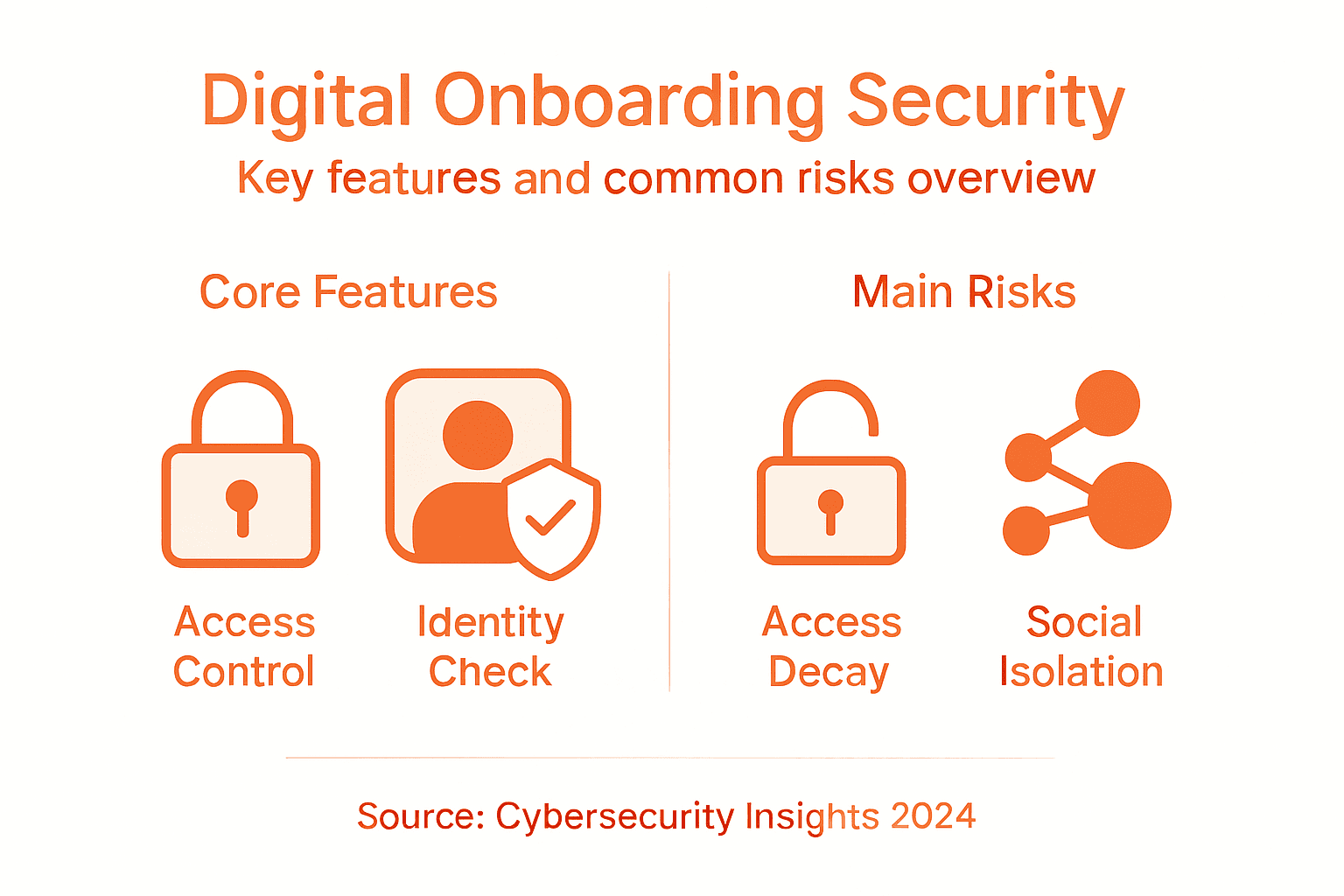
Your specific onboarding solutions depend largely on what you’re trying to accomplish. Identity and access management stands as the critical technical foundation—this includes identity verification tools, biometric authentication systems, and automated access provisioning that ensure only the right people access the right resources at the right time. Workflow automation platforms eliminate manual handoffs by triggering sequential tasks—when HR marks an employee as hired, the system simultaneously creates email accounts, provisions software licenses, generates access requests for system owners, and queues mandatory training modules. Communication and collaboration tools create the social dimension, connecting new hires with mentors and team members through chat platforms, video conferencing integrations, and virtual onboarding spaces. Document management and e-signature solutions streamline paperwork completion, allowing new employees to review and execute offer letters, confidentiality agreements, and tax forms digitally rather than through printed packets.
The most sophisticated modern solutions integrate multiple capabilities into unified platforms. Cloud-based onboarding suites combine employee data collection, identity verification, access management, automated workflow orchestration, and compliance tracking into single dashboards that IT managers can monitor and adjust in real time. These platforms often incorporate artificial intelligence and analytics—flagging anomalies in access patterns, predicting which new hires are at risk of early departure based on engagement signals, and providing visibility into which onboarding steps are completed versus bottlenecked. For security-conscious IT managers, password management capabilities embedded in onboarding platforms eliminate the risk of shared credentials, temporary passwords left unchanged, or sensitive login information transmitted insecurely through email. The key distinction between basic and advanced solutions is orchestration—whether your systems talk to each other automatically or require manual intervention and data re-entry between platforms.
Here’s how the main digital onboarding solution types differ in focus and benefits:
| Solution Type | Primary Focus | Key Technologies | Typical Business Impact |
|---|---|---|---|
| Information Delivery | Disseminating core policies and guides | Portals, document sharing, e-learning | Faster knowledge acquisition |
| Socialization Platforms | Facilitating team connections | Chat, video, virtual events | Stronger employee engagement |
| Compliance Tools | Ensuring required training & policies | Automated reminders, tracking, e-signatures | Reduced regulatory risk |
| Identity & Access Management | Secure resource assignment | Provisioning, SSO, biometrics | Lower manual errors and improved security |
Pro tip: Prioritize onboarding solutions that integrate with your existing identity and access management infrastructure rather than creating parallel systems—this reduces administrative overhead and eliminates the security gaps created when multiple systems contain conflicting employee status information.
How Digital Onboarding Streamlines Access
Traditional access provisioning is a nightmare. A new hire’s first day arrives, HR sends an email to IT, IT creates tickets for multiple system owners, those owners respond days later with partial information, temporary passwords get shared via text message, and somewhere in that chaos someone forgets to grant database access or cloud storage permissions. Meanwhile, the new employee sits idle, unable to start their actual work. Digital onboarding eliminates this fragmentation by replacing ad-hoc manual processes with centralized, automated workflows that complete access provisioning simultaneously across all systems. When a hire date enters your system, the onboarding platform triggers coordinated provisioning—email accounts, software licenses, security group memberships, and credential assignments execute in parallel rather than sequentially. This compression of timeline from weeks to hours directly translates into faster productivity and dramatically reduces the security window where incomplete access exists.
The streamlining happens at three critical levels. First, information accessibility improves dramatically. New employees access comprehensive onboarding materials through a single portal rather than hunting through shared drives, old wiki pages, or asking colleagues for outdated procedure documents. They can review system access requirements, security policies, and operational workflows at their own pace before their start date, arriving prepared rather than overwhelmed. Second, authentication and access assignment becomes predictable and auditable. Instead of temporary passwords that never get changed, security questions that reveal nothing about actual identity, or trust-based access grants to whoever asks nicely, digital onboarding platforms enforce consistent identity verification and principle of least privilege access from day one. Every new hire receives exactly the permissions their role requires, nothing more. Third, telecommunication software and virtual environment integration enables seamless access to organizational resources, communication channels, and social networks immediately, preventing the isolation new employees experience when they can’t find the right Slack channel or access the team calendar.
What makes this approach powerful for IT managers is the elimination of manual handoffs and the creation of complete audit trails. When a new hire’s status changes—whether they transition departments, take on additional responsibilities, or separate from the organization—the same automated platform triggers access updates. You’re no longer dependent on HR remembering to notify IT or IT remembering which systems that person actually used. Every access grant and revocation creates a timestamped record, addressing compliance requirements and security investigations simultaneously. The system becomes your source of truth rather than spreadsheets and institutional memory. One practical consideration: be cautious about relying on single sign-on through third-party identity providers for all access, as this creates dependency and potential security gaps if that provider experiences issues or changes policies.
Pro tip: Build your onboarding access workflows around role-based access control templates rather than individual user assignments—this ensures consistency, scales easily as you hire, and makes permission audits straightforward since you’re reviewing roles rather than hundreds of individual accounts.
Security Features and Compliance Standards
Digital onboarding platforms must balance frictionless user experience with rigorous security controls. This is non-negotiable. Your organization faces regulatory requirements that vary by industry and geography, but they all share a common thread: you must verify who people are, prevent fraud, protect sensitive data, and maintain auditable records. The security foundation starts with identity proofing and verification. When someone joins your organization, the platform must confirm they are who they claim to be through documented, repeatable processes. NIST Special Publication 800-63-4 establishes technical requirements for identity proofing, authentication mechanisms, and federation protocols that government agencies and increasingly private enterprises follow. These guidelines specify how systems should handle identity evidence, verify authenticity, and establish assurance levels appropriate to the sensitivity of resources being accessed. For IT managers, this means your onboarding platform should implement identity verification proportional to risk—basic document verification for standard employees might suffice, while contractors or third-party vendors accessing sensitive systems require biometric authentication or multi-factor verification.
Beyond initial identity verification, effective digital onboarding platforms incorporate continuous security monitoring and fraud prevention. Identity verification, anti-fraud measures, data encryption, and comprehensive audit trails form the operational core. Advanced systems use behavioral biometrics to detect anomalies—if someone logs in from an unusual location, accesses resources inconsistent with their role, or exhibits patterns suggesting account compromise, the system flags suspicious activity for investigation. Encryption protects sensitive data both in transit and at rest, ensuring that even if someone gains unauthorized database access, they cannot read confidential information without decryption keys. Every action within the onboarding system generates timestamped logs: who accessed what, when, why, and what decisions were made. This audit trail becomes invaluable during security investigations, compliance audits, and litigation.
Compliance standards vary significantly by industry and geography. Financial institutions must meet Anti-Money Laundering and Know Your Customer regulations, requiring verified identity information and beneficial ownership documentation before account opening. Healthcare organizations operating under HIPAA must restrict access to personal health information and maintain detailed access logs. European organizations fall under GDPR requirements for data protection and consent management. Rather than building custom compliance implementations for each framework, modern onboarding platforms incorporate built-in compliance workflows for major regulations. They streamline KYC verification, automate sanctions screening, manage consent collection and storage, and generate compliance reports on demand. The practical benefit for IT managers is straightforward: your platform becomes part of your compliance infrastructure rather than creating additional compliance work. When auditors request access logs or identity verification documentation, you provide automatically-generated reports rather than manually assembling spreadsheets.
Pro tip: Implement role-based security policies within your onboarding platform that automatically enforce different verification levels and access controls based on employee type—contractors receive stricter monitoring and temporary credentials, permanent employees follow standard workflows, and executives undergo enhanced due diligence before gaining administrative access.
Common Challenges and Risk Mitigation
Digital onboarding sounds straightforward in theory but encounters real friction in practice. The most obvious challenge is information overload and accessibility. New employees receive massive amounts of data simultaneously: system credentials, policy manuals, organizational charts, compliance training modules, benefits documentation, and procedural guides. Without clear structure and progressive disclosure, they drown in information and retain almost nothing. Worse, if your onboarding platform lacks mobile accessibility or forces awkward navigation, employees abandon it and call IT support for answers that were already documented. Another critical challenge emerges from insufficient feedback mechanisms. When someone completes an onboarding task, they should receive immediate confirmation. When they submit paperwork, they should know within hours whether it was accepted or requires correction. When they request access to a system, they should see their ticket status in real time rather than wondering if anyone is processing their request. Barriers in digital onboarding related to information access difficulties, lack of proactivity, and insufficient immediate feedback significantly hamper newcomer adaptation and engagement during critical early weeks. Silence creates anxiety. Anxiety drives workarounds. Workarounds create security gaps.
A more insidious challenge affects distributed and remote organizations particularly severely: isolation and failed socialization. Digital onboarding excels at delivering information and granting access but struggles with the human connection dimension. New employees working remotely never bump into colleagues by chance, never overhear conversations that provide context, never develop the informal networks that drive actual collaboration. They complete their digital checklist and feel like outsiders. This disconnection directly impacts retention rates. The research is clear: employees who develop strong relationships with coworkers during their first weeks have dramatically lower early departure rates. Mitigation requires intentional design. Structured onboarding programs must emphasize socialization through assigned mentors, scheduled team introductions, virtual coffee chats, and asynchronous discussion forums where they can ask questions without feeling like they are slowing down their real work.
From an IT security perspective, over-provisioning and access decay represent ongoing risks. During onboarding urgency, teams grant broader access than actually necessary to speed up productivity. Then that access never gets revoked when employees change roles or leave the organization. You end up with employees who can access systems they stopped using years ago, creating audit failures and potential compliance violations. Mitigation requires automated access reviews tied to organizational data. Quarterly, your onboarding platform should cross-check current system access against current job roles and flag mismatches for immediate remediation. Another security challenge involves credential management failures. Temporary passwords created during onboarding often remain unchanged indefinitely. Shared credentials get passed between team members. Login information lives in email or password managers with no central control. This chaos directly contradicts the security architecture you carefully built into your onboarding process. The solution integrates centralized credential management that automates temporary password lifecycle, enforces unique credentials per person, and maintains encryption standards throughout the employee lifecycle.
Here’s a summary of common challenges and proactive mitigation strategies in digital onboarding:
| Challenge | Underlying Cause | Mitigation Strategy |
|---|---|---|
| Information Overload | Too much data at once | Stagger content release, use onboarding checklists |
| Social Disconnection | Remote settings, lack of informal touchpoints | Schedule virtual meetups, assign mentors |
| Over-Provisioning Access | Manual, rushed provisioning | Automate access reviews and role checks |
| Credential Mismanagement | Temporary accounts, sharing | Enforce password lifecycle, centralized management |
Pro tip: Build automated monthly access reviews into your onboarding platform that flag employees whose current system access no longer matches their current role, then route those discrepancies to managers for immediate confirmation or removal rather than letting access creep expand indefinitely.
Strengthen Your Digital Onboarding with Advanced Cybersecurity Solutions
The article highlights the critical challenges of digital onboarding such as access management complexity, security risks with manual credential handling, and the need for seamless identity verification. These pain points can delay new hire productivity and expose organizations to security vulnerabilities. LogMeOnce offers a powerful suite of identity and password management tools designed to address these exact challenges. Our solutions focus on automated credential provisioning, multifactor authentication, and role-based access control to enforce the principle of least privilege from day one.

Take control of your digital onboarding processes now by integrating LogMeOnce comprehensive security platform. Benefit from passwordless authentication, encrypted cloud storage, and real-time monitoring that reduce risks associated with over-provisioning and credential mismanagement. Empower your IT managers to streamline onboarding workflows and protect sensitive data while delivering a frictionless experience for new employees. Visit https://logmeonce.com today and start a free trial to transform how your organization balances usability with uncompromising security.
Frequently Asked Questions
What is digital onboarding?
Digital onboarding refers to the structured process of integrating new employees into an organization through technology. It utilizes digital tools to provide information, facilitate connections, and establish expectations from the first day of employment.
How does digital onboarding improve cybersecurity?
Digital onboarding enhances cybersecurity by streamlining access and credential management. It ensures that employees receive the correct access permissions and training from day one, reducing risks associated with unauthorized access and compliance failures.
What are the main types of digital onboarding solutions?
The main types of digital onboarding solutions include information delivery systems, socialization platforms, compliance tools, and identity and access management solutions. Each type addresses specific needs to create a comprehensive onboarding experience.
What challenges might organizations face during digital onboarding?
Common challenges include information overload for new hires, social disconnection in remote settings, over-provisioning access rights, and credential mismanagement. It’s essential to implement structured strategies to mitigate these issues effectively.
Recommended


