


 Password Manager
 Identity Theft Protection

 Team / Business
 Enterprise
 Government
 MSP
MSP

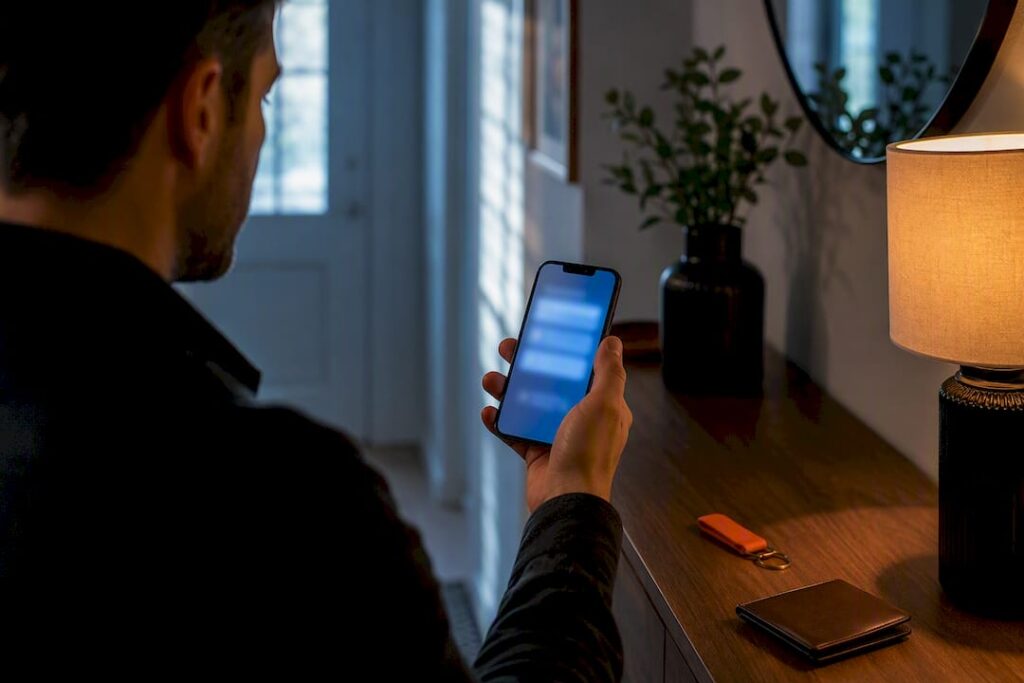
Yes, criminals can and do hack bank accounts, usually through stolen passwords, phishing sites, or a compromised phone number rather than breaking into the bank itself. If you suspect it’s happening to you, call your bank’s fraud line immediately, freeze the account, change your passwords, turn on multi-factor authentication, and file reports with the FBI’s IC3 and the FTC. Speed matters. Banks generally have windows for reporting fraud that limit your liability, and every hour you wait gives an attacker more time to move money out.
TL;DR:
- Most bank account hacks occur through stolen passwords via phishing, credential stuffing, or SIM swapping, not by cracking encryption.
- Speedy response is crucial; report fraud, freeze your account, and change passwords immediately to limit losses.
- Using long, unique passwords in a password manager and switching to authenticator apps or hardware keys significantly reduces risk.
- Banks rely on behavioral analytics and device tracking to detect suspicious activity, but vigilant account monitoring remains essential.
- Law enforcement actively investigates these crimes, with losses exceeding hundreds of millions of dollars annually, emphasizing the importance of quick action.
How Hackers Actually Get Into Bank Accounts
Nobody is cracking bank encryption. Attackers go after the weakest link, which is almost always the account holder, not the institution’s servers.
Phishing and fake login pages lead the list. Criminals now buy sponsored search ads that push pixel-perfect fake bank login pages above the real one, harvesting your username and password the moment you type them in. Credential stuffing comes next: attackers take passwords leaked from an unrelated breach, say, an old retail site, and test them against banking portals, betting you reused that password. Malware and keyloggers hide in fake banking apps or trojanized downloads and quietly record everything you type. Social engineering convinces you to hand over a one-time passcode over the phone, usually from someone posing as bank security. SIM swapping lets an attacker port your phone number to a device they control, intercepting the SMS codes your bank sends to verify your identity.
The common thread: real-time credential capture. Once a criminal has your password, account takeover schemes often combine harvested logins with automated stuffing attacks against the legitimate bank site within minutes, which is exactly why locking things down fast matters more than almost anything else you’ll read here.
- Phishing sites and spoofed domains that mimic real bank portals
- Credential stuffing using passwords stolen from other breaches
- Keyloggers and malicious banking apps
- Social engineering to extract OTPs or security answers
- SIM swaps that reroute your two-factor codes to an attacker’s phone
Signs Your Bank Account Has Been Compromised
Most victims notice something is wrong before their bank does. Watch for these patterns:
- Small test transactions. Criminals often run a $1 or $2 charge first to confirm a card or account still works before draining it.
- Login failures or surprise password reset emails you never requested.
- New payees, cards, or a changed phone number on file that you didn’t set up.
- Bank alerts for purchases or transfers you didn’t make, even small ones.
- Odd calls or emails referencing your real recent activity, a sign someone already has account details and is fishing for more.
Any one of these on its own could be a glitch. Two or more together means act now, not after you’ve finished your coffee.
What to Do the Moment You Suspect a Hack
Order matters here. Work through these steps roughly in sequence, though you can parallelize a few if you have help.
- Call your bank’s fraud department directly (not a number from a suspicious email) and request an account freeze or hold. Ask about reversing pending transactions.
- Change every password tied to that account, starting with anything reused elsewhere, and revoke active login sessions on the bank’s app or site.
- Switch multi-factor authentication from SMS to an authenticator app or a hardware security key. If you had no MFA at all, turn it on now.
- File a report with IC3 for the cybercrime angle, and file with the FTC through IdentityTheft.gov if personal data was stolen. Consider a credit freeze if you suspect broader identity theft.
- Document everything, screenshots of unauthorized transactions, timestamps of suspicious emails or calls, and any confirmation numbers from your bank. This paperwork drives your dispute.
Pro Tip: Take screenshots the second you notice anything wrong. Fraudulent transactions sometimes disappear from your app’s pending list within hours, and you’ll want proof before that happens.
Building Layered Defenses That Actually Hold Up
One good habit rarely stops a determined attacker. Layered defenses do.
Start with passwords. Security researchers recommend unique, complex passwords of at least 15 characters for financial accounts, stored in a password manager rather than memorized or reused. Reuse is the single biggest driver of credential-stuffing losses, since one leaked password from a forgotten shopping site can unlock your entire financial life if you’ve recycled it.
Authentication method matters as much as password strength. Authenticator apps and hardware security keys resist interception far better than SMS codes, which can be rerouted through a SIM swap or read off a lock screen. Device hygiene rounds out the basics: keep your phone and banking apps patched, only download apps from official stores, and skip banking transactions on public Wi-Fi unless you’re on a trusted VPN, guidance echoed by consumer banking resources like U.S. Bank’s account security guide.
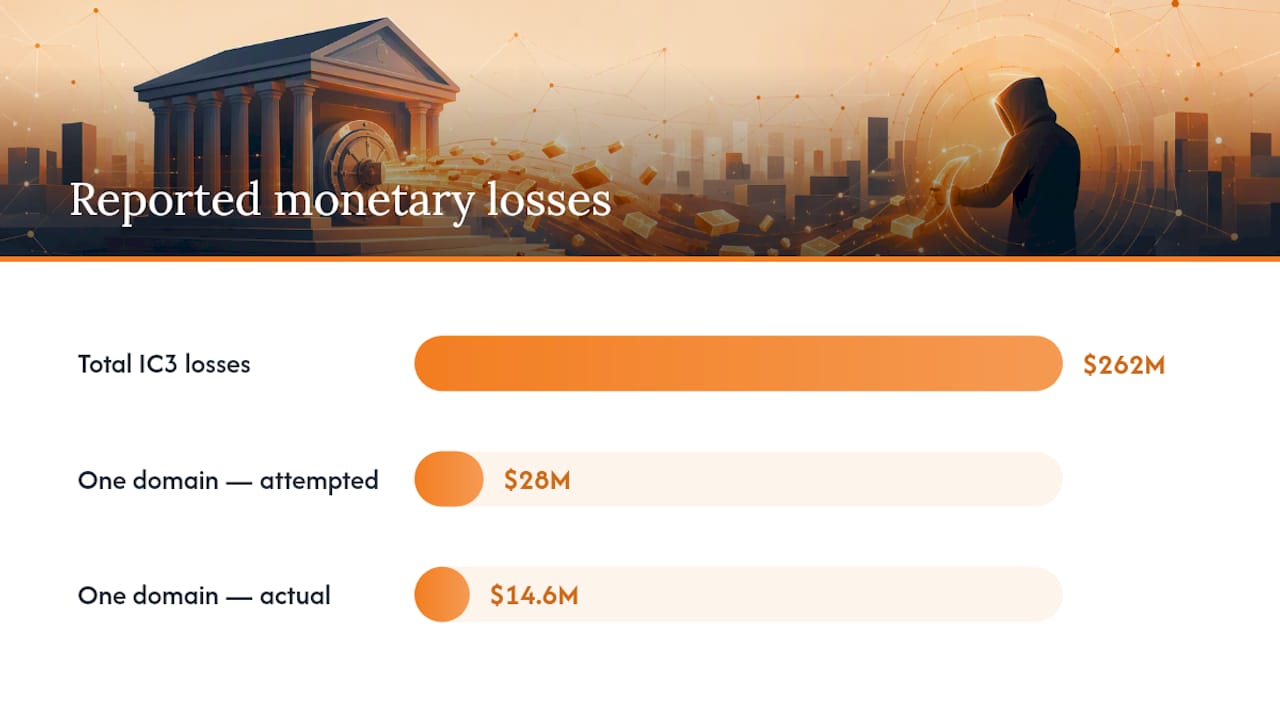
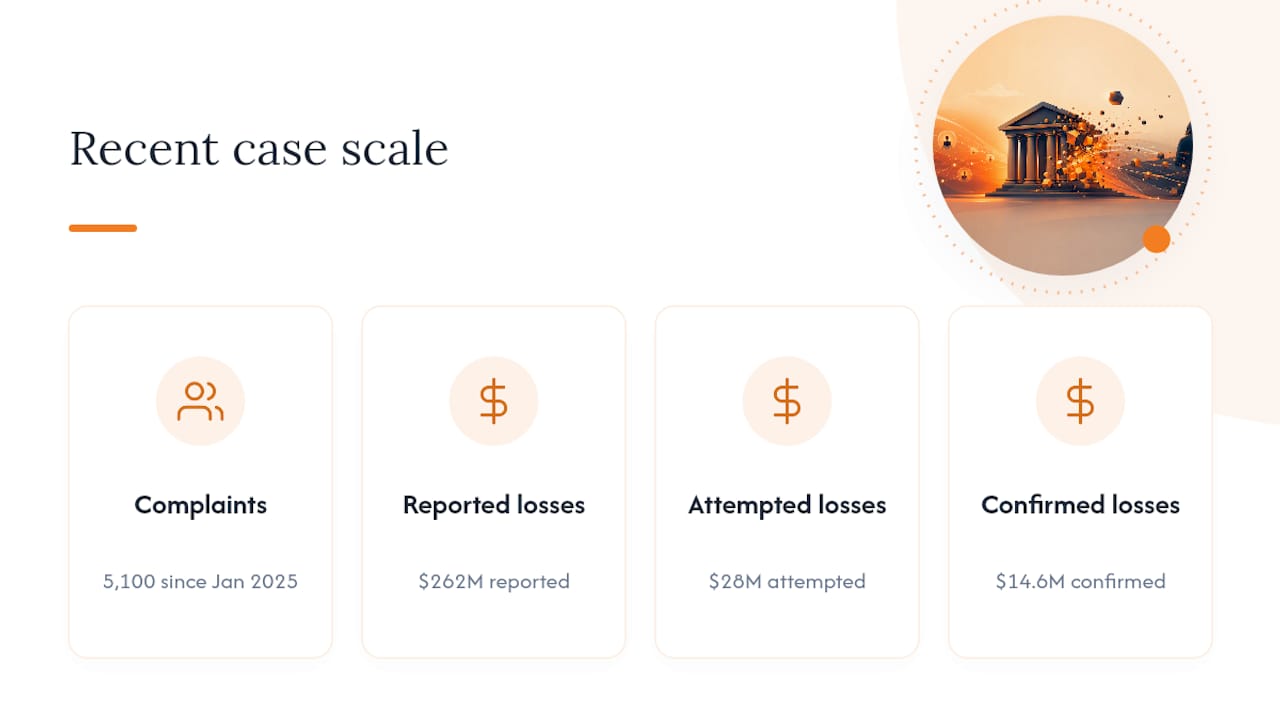
The scale of the problem is bigger than most people assume. Since January 2025, the FBI’s IC3 logged more than 5,100 complaints of bank account takeover fraud, with reported losses topping $262 million. One seized criminal domain alone was tied to $28 million in attempted theft and $14.6 million in actual losses from at least 19 victims. That’s not a fringe crime. It’s an active, organized business model.
- Use 15+ character unique passwords stored in a password manager
- Choose authenticator apps or hardware keys over SMS codes
- Patch devices and apps regularly; avoid public Wi-Fi for banking
- Turn on transaction alerts and use virtual card numbers for online purchases
- Limit financial details shared on social media and shred paper statements
Reporting Fraud and What Recovery Looks Like
Your bank comes first. Most institutions can freeze an account, recall a wire, or open a formal dispute the same day you call, and contacting the financial institution immediately is the standard first move recommended across the industry.
From there, file with IC3 and report the fraud to the FTC, since these reports feed law enforcement databases that connect individual cases into larger investigations. Consider a credit freeze with the three major bureaus if you suspect broader identity theft, not just a single compromised account. Consumer protections under the Electronic Fund Transfer Act generally limit your liability on electronic transfers if you report quickly, though the exact window depends on your bank’s terms.
- Call your bank first; ask about freezes, reversals, and dispute timelines
- File with IC3 for the cybercrime record and FTC/IdentityTheft.gov for identity theft
- Freeze credit with the bureaus if personal data was exposed
- Keep every document; disputes often take weeks, not days
How Identity Protection Tools Fit Into the Picture
Every defense above maps to a specific tool category. Dark web monitoring scans breach dumps and criminal marketplaces for your credentials and flags exposure before it turns into a drained account. A password manager enforces unique, long passwords across every site you use, which directly kills the credential-stuffing pathway that fuels most account takeovers. Passwordless MFA and hardware-backed authentication remove the OTP entirely, closing the SIM-swap and social-engineering loopholes that plague SMS codes.
If you’re evaluating any identity-protection tool, check three things: how it encrypts stored credentials, whether it offers real dark web monitoring rather than a generic warning, and what recovery support looks like if you’re ever locked out.
- Dark web monitoring flags leaked credentials before criminals use them
- A password manager eliminates password reuse across accounts
- Passwordless MFA removes OTP interception risk entirely
- Check encryption standards and account recovery options before choosing a tool
Where “Hacking Bank Accounts” Crosses Into a Federal Crime
Curiosity about how bank hacking works is not illegal. Acting on it is. Accessing someone else’s account without authorization, even “just to see,” violates federal law under the Computer Fraud and Abuse Act, and prosecutors treat financial account intrusion as a serious felony, not a prank.
The DOJ’s own enforcement record makes the stakes clear. The seizure of a criminal password database tied to tens of millions of dollars in attempted and actual bank losses shows that federal agencies actively investigate and dismantle these operations, often years after the initial theft. Penalties can include lengthy prison sentences, restitution, and permanent felony records that follow someone into every future job application.
There’s also a gray zone worth naming: ethical or “white hat” security research. Legitimate penetration testers who probe banking systems for vulnerabilities do so under signed contracts with the institution, with defined scope and legal protection. Testing a bank’s app or website without that authorization, even with good intentions, is still a crime. The line isn’t about motive. It’s about consent from the account or system owner. If you’re interested in security research as a career, pursue it through certified programs and authorized bug bounty platforms, not by probing accounts that aren’t yours.
Weak Points Inside Banking Systems and Apps
Banks invest heavily in security, but no system is airtight, and the weak points tend to cluster in predictable places. Session management is one: apps that don’t properly expire old login sessions leave a door open if a device is lost or stolen. API integrations, the connections banking apps use to talk to budgeting tools or payment processors, create additional attack surface if those third-party services aren’t vetted carefully.
Mobile banking apps carry their own risks. A device with outdated software or root-level modifications (“jailbroken” or “rooted”) can bypass the security sandboxing that normally protects app data, which is why banks increasingly refuse to run on modified devices. Fake banking apps uploaded to unofficial app stores, or even sneaking briefly onto official ones, mimic real institutions closely enough to fool users into entering credentials directly into malware.
Legacy infrastructure is the quieter problem. Many banks run core systems built decades ago, patched and layered with modern security on top rather than rebuilt from scratch. That patchwork approach works most of the time, but it can leave gaps between old and new systems that attackers specifically hunt for. None of this means your money isn’t safe. It means the weakest point in the chain is usually you, the customer, not the vault.
Why Two-Factor Authentication Isn’t Bulletproof
Two-factor authentication cuts account takeover risk dramatically, but it’s not the finish line. SMS-based codes, the most common form, are vulnerable to SIM swapping and to interception through compromised carrier accounts. Attackers have also learned to bypass MFA through pure social engineering, calling victims and posing as bank security to talk them into reading a one-time code out loud.
Real-time phishing kits make this worse. Some fraudulent login pages now capture your password and immediately prompt you for the MFA code, relaying it to the real bank site within seconds, effectively defeating the second factor before you’ve hung up the phone. This is why security professionals increasingly steer people toward authenticator apps or hardware security keys, which generate codes locally on your device or require physical possession of a key, rather than relying on a text message that can be redirected. MFA is still worth having. Just don’t treat it as an unbreakable wall.
Recent Cases That Show the Scale of the Problem
The numbers behind bank account hacking aren’t abstract. The Justice Department’s seizure of a stolen password database tied to bank account takeover fraud connected to attempted losses of roughly $28 million and confirmed losses of $14.6 million from at least 19 identified victims, all traced back to a single criminal domain selling harvested credentials. That’s one seized operation, not the full picture of the crime.
Since January 2025, IC3 has logged over 5,100 complaints specifically about bank account takeover, with reported losses exceeding $262 million. These cases typically follow the same playbook: a phishing site or leaked password list, automated testing against real bank logins, then rapid fund transfers before the victim notices. The speed is the point. Investigators consistently find that the gap between initial compromise and money movement is measured in minutes, which is exactly why the immediate response steps earlier in this article emphasize speed over thoroughness. You can document everything perfectly after the fact, but the freeze call has to happen first.
How Banks Spot and Shut Down Suspicious Activity
Banks run behavioral analytics that flag transactions inconsistent with your normal patterns, an unusual location, an unfamiliar payee, or a transfer amount far outside your typical range. When something trips those thresholds, most banks either hold the transaction for review or push a real-time alert to your phone asking you to confirm it.
Device fingerprinting adds another layer. Banks track the devices and browsers you typically use to log in, so a login attempt from a new device in a different country often triggers step-up verification, an extra identity check beyond your normal password. Some institutions also monitor for the rapid-fire login attempts characteristic of credential stuffing and will temporarily lock an account after a handful of failed tries.
None of this is instant or perfect. Detection systems catch a lot of fraud, but they’re built to minimize false positives, which means some fraudulent transactions slip through the same filters that occasionally block your legitimate late-night purchase. That’s exactly why your own vigilance, checking your account regularly and responding fast to alerts, still carries real weight even with sophisticated bank-side monitoring running in the background.
The Ripple Effect on Your Credit and Financial Standing
A hacked bank account rarely stays contained to that one account. If an attacker opens new credit lines using your stolen identity details, that activity shows up on your credit report and can drag your score down fast, sometimes before you even know new accounts exist. Even without new credit lines, a drained checking account can trigger overdraft fees and bounced payments on autopay bills, which then get reported to credit bureaus as late payments.
Recovery isn’t instant. Disputing fraudulent accounts with credit bureaus and creditors typically takes weeks, and during that window your credit utilization and payment history can look worse than reality. Lenders evaluating you for a mortgage or car loan during that period see the damaged numbers, not the explanation behind them.
The financial reputation cost extends beyond credit scores too. Banks track internal fraud flags on your identity, and repeated fraud reports, even ones where you’re the victim, can sometimes trigger extra scrutiny on future account openings. It’s an unfair burden on victims, but it’s a real one, which is exactly why fast reporting and documentation matter as much for protecting your credit as for recovering stolen money.
A Final Word on What Actually Moves the Needle
Most bank account hacks trace back to a reused password or a rushed click on a fake login page, not some elite exploit. Banks and law enforcement can help you recover funds, but the first hour after compromise is on you. Pick one habit this week: unique passwords, real MFA, and active alerts.
— Mike
A Practical Next Step: Closing the Gaps This Article Just Covered
Every prevention step above comes down to one weak spot: reused, weak, or exposed passwords sitting behind flimsy authentication. This solution is built around closing exactly that gap. The password manager generates and stores unique, long credentials for every account you have, so a breach on one forgotten site never becomes a bank account takeover. Dark web monitoring watches for your credentials showing up in criminal marketplaces, giving you a warning before an attacker acts on it, and passwordless MFA removes the OTP interception risk that undermines SMS-based codes entirely.
Pricing is straightforward. The Password Manager starts at Professional for $2.50 per month, with Ultimate at $3.25 and Family at $4.99, while standalone Dark Web Monitoring runs $1.67 per month. If you’ve read this far and realized your own password habits are the weak link, check the full plan comparison and set up unique credentials and dark web alerts before, not after, something goes wrong.
Where to Report Fraud and Find Official Guidance
Report cybercrime at IC3. Report identity theft and get a recovery plan through the FTC. File fraud complaints at reportfraud.ftc.gov.
This article is general information, not a substitute for advice from a qualified financial advisor. Consult a qualified financial professional about your own circumstances before acting on anything here.
Sources
- Justice Department announces seizure of stolen password database used for bank account takeover
- Credential stuffing — account security guidance
- Protect your personal information from hackers and scammers — FTC
FAQ
Can bank accounts really be hacked?
Yes. Attackers rarely break bank encryption directly; instead they steal login credentials through phishing, credential stuffing, or SIM swapping, then log in as you. The IC3 has documented over 5,100 such cases since January 2025, with reported losses exceeding $262 million.
What is the $3,000 rule for banks?
This isn’t a universal federal rule; some banks apply internal thresholds for extra verification on large transfers or cash transactions as part of their own fraud controls. Check with your specific bank, since exact thresholds and triggers vary by institution and aren’t standardized law.
How do hackers get into your bank account?
Most access starts with phishing sites, credential stuffing using passwords leaked from other breaches, malware that logs your keystrokes, or SIM swapping that intercepts your text-message verification codes. Social engineering, tricking you into reading a one-time code over the phone, remains one of the most effective methods even against accounts with MFA enabled.
How do hackers get money out of your bank account once they’re in?
Once inside, attackers typically move fast: setting up new payees, initiating wire transfers, or linking the account to a payment app they control, often within minutes of gaining access. This speed is exactly why immediately freezing the account and contacting your bank’s fraud department matters more than any other single step.
Does a password manager actually prevent bank account hacking?
A password manager can’t stop every attack vector, like SIM swapping, but it directly eliminates password reuse, which drives most credential-stuffing attacks. Combined with strong MFA and dark web monitoring, it closes the most common entry points criminals rely on.
What should I do first if I think my account was hacked?
Call your bank’s fraud line immediately to request a freeze, then change your passwords and enable app-based or hardware MFA. File reports with IC3 and the FTC afterward to support the investigation and any dispute you file.
Recommended
- 6 Reasons to Take Password Fatigue Seriously (And How to Avoid It)
- SOS: What to Do After a Data Breach
- Weak Password Cost Report
- LogMeOnce Offers Emergency Advice to Shark Tank Judge Barbara Corcoran: Protect Your Passwords and Don’t Assume Hackers Are Gone


