


 Password Manager
 Identity Theft Protection

 Team / Business
 Enterprise
 Government
 MSP
MSP


Dark Web Scanning: Complete Guide for 2025

More than 24 million american records are exposed on the dark web every year, yet many people still misunderstand what dark web scanning truly involves. With cybercrime growing rapidly, organizations and individuals face real threats from criminals operating in hidden corners of the internet. This guide explains how dark web scanning works, its types, and why staying informed can help protect your data from becoming the next target.
Key Takeaways
| Point | Details |
|---|---|
| Dark web scanning enhances cybersecurity | This proactive technique detects potential threats within unindexed internet segments, allowing for early intervention. |
| Technological sophistication is crucial | Advanced algorithms and deep learning are employed to improve the accuracy of threat detection. |
| Integration into security strategies is essential | Incorporating dark web scanning into existing protocols creates multi-layered defenses against digital threats. |
| Awareness of limitations is necessary | Challenges such as false positives and legal ambiguities must be managed to effectively utilize dark web scanning. |
What Is Dark Web Scanning?
Dark web scanning is a sophisticated cybersecurity technique designed to proactively monitor and analyze hidden, unindexed parts of the internet where malicious actors often operate. According to Jatit, this process involves monitoring hidden networks to detect illicit activities and gather critical intelligence for cybersecurity purposes.
At its core, dark web scanning represents a systematic approach to identifying potential digital threats before they can impact organizations or individuals. Arxiv explains that the process specifically focuses on identifying, extracting, and analyzing activities within unindexed internet regions to uncover potential security risks. These hidden internet segments are intentionally concealed and require specialized tools and techniques to access and investigate.
Key characteristics of dark web scanning include:
- Automated monitoring of underground digital marketplaces
- Real-time tracking of stolen credential exchanges
- Intelligence gathering on emerging cybersecurity threats
- Detection of personal or corporate data leaks
The primary goal of dark web scanning is not just passive observation but active threat prevention. By continuously searching these obscure digital spaces, cybersecurity professionals can identify compromised information, potential security breaches, and emerging attack strategies before they become widespread risks. This proactive approach transforms dark web scanning from a reactive security measure into a strategic intelligence gathering mechanism.
How Dark Web Scanners Work
Dark web scanners employ advanced technological mechanisms to navigate and investigate the hidden, encrypted regions of the internet where cybercriminals frequently exchange sensitive information. According to Cybernod Blog, these sophisticated tools operate by monitoring hidden forums and marketplaces, utilizing keyword matching techniques to detect specific data and provide real-time alerts when compromised information is discovered.
Technological architecture plays a critical role in how dark web scanners function. Arxiv reveals that modern scanners leverage deep learning techniques to classify and detect illicit activities by analyzing content from unindexed websites. This process involves complex algorithms that can rapidly scan through massive volumes of encrypted and anonymized data, identifying potential security threats with remarkable precision.
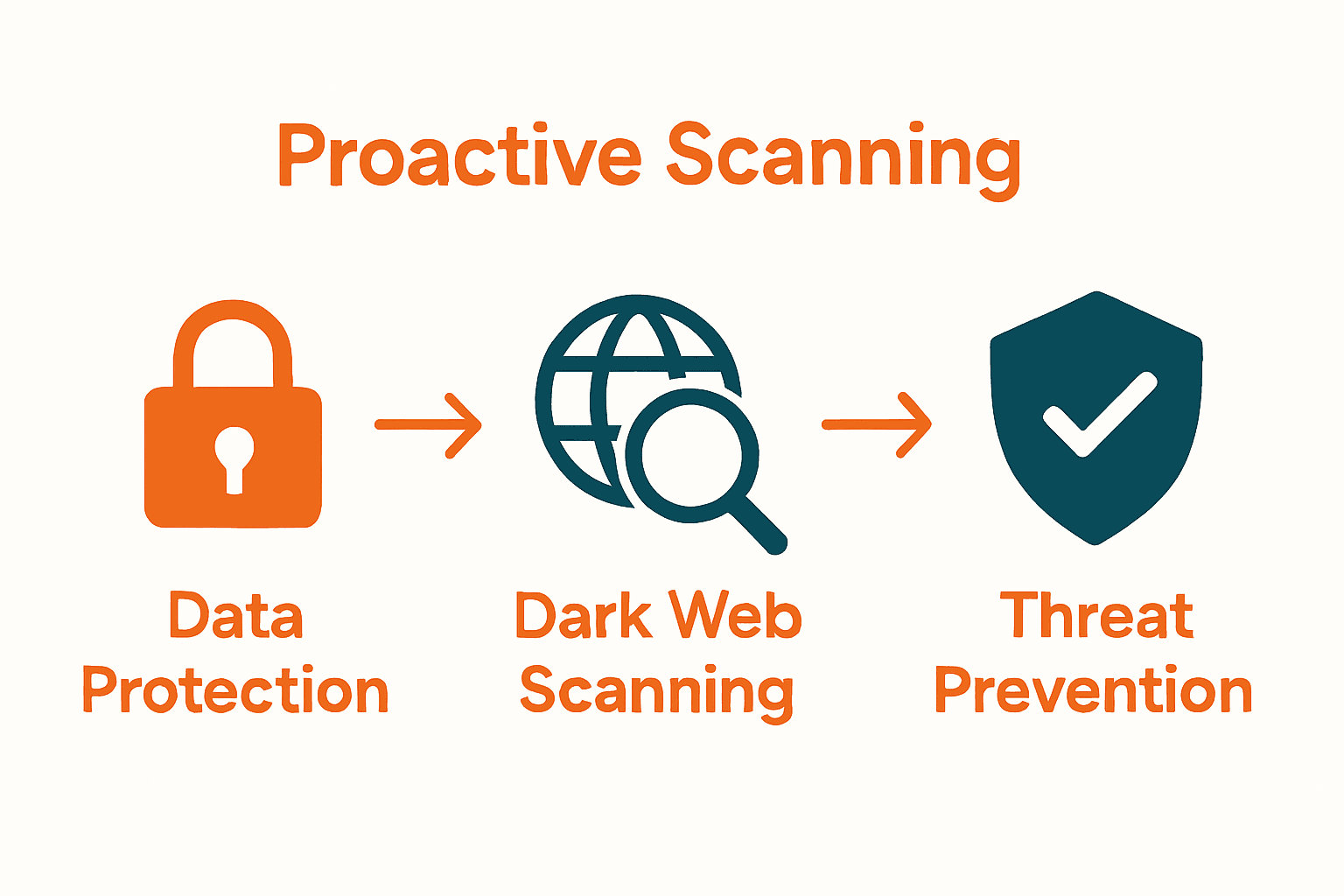
The scanning process typically involves several sophisticated steps:
- Accessing anonymized network layers like Tor
- Crawling through hidden websites and forums
- Using natural language processing to interpret context
- Matching detected data against known breach databases
- Generating immediate threat notifications
Cybersecurity professionals recognize that dark web scanners are not passive monitoring tools but active intelligence gathering systems.
 By continuously searching through digital underground spaces, these advanced technologies help organizations and individuals stay ahead of potential data breaches, credential theft, and emerging cyber threats. The ability to proactively identify compromised information before it can be exploited represents a significant advancement in modern cybersecurity strategies.
Types And Variations Of Scanning
Dark web scanning encompasses multiple sophisticated approaches designed to address diverse cybersecurity challenges. According to Arxiv, scanning methodologies can be categorized into distinct types, including black-box approaches that investigate vulnerabilities without internal system knowledge and gray-box methods that combine external testing with partial internal insights.
Arxiv highlights additional scanning techniques that cybersecurity professionals employ, such as payload injection and fuzzing, which are critical for detecting complex vulnerabilities like cross-site scripting in web applications. These nuanced approaches allow security teams to simulate potential attack vectors and identify potential system weaknesses before malicious actors can exploit them.
Primary scanning variations include:
- Passive Scanning: Monitoring without direct interaction
- Active Scanning: Direct probing and interaction with systems
- Targeted Scanning: Focused investigations on specific data types
- Comprehensive Scanning: Broad, holistic system assessments
- Continuous Scanning: Real-time, ongoing monitoring
The selection of a specific scanning variation depends on multiple factors, including organizational risk tolerance, computational resources, and the specific security objectives. Cybersecurity professionals carefully choose and customize scanning approaches to create multilayered defense strategies that can adapt to the constantly evolving landscape of digital threats. This flexible, strategic approach transforms dark web scanning from a reactive tool into a proactive intelligence gathering mechanism.
Key Benefits And Use Cases
Dark web scanning has emerged as a critical cybersecurity strategy with far-reaching implications for organizations and individuals alike. According to Jatit, this technology aids in open-source intelligence and investigations by uncovering hidden threats and providing critical information for cybersecurity measures. Organizations can proactively identify potential security risks before they escalate into significant breaches.
Arxiv highlights how deep learning techniques enhance the detection of illicit activities, transforming dark web scanning into a sophisticated intelligence gathering mechanism. By utilizing advanced algorithmic approaches, cybersecurity professionals can classify and anticipate potential digital threats with unprecedented accuracy.
Key benefits and use cases include:
- Personal Identity Protection: Monitoring personal data exposure
- Corporate Security: Tracking potential corporate credential leaks
- Financial Fraud Prevention: Detecting stolen financial information
- Regulatory Compliance: Supporting cybersecurity risk management
- Threat Intelligence: Gathering actionable insights on emerging cyber risks
The strategic implementation of dark web scanning extends beyond traditional security measures. For comprehensive enterprise password management, organizations can leverage these advanced scanning techniques to create multilayered defense strategies. By continuously monitoring digital underground spaces, businesses can stay one step ahead of potential cyber threats, transforming reactive security approaches into proactive, intelligence-driven protection mechanisms.
Risks And Limitations
Dark web scanning technologies face significant challenges that can limit their effectiveness and reliability. According to Arxiv, one of the primary obstacles is the identification and extraction of relevant artifacts due to the inherently anonymous nature of these networks. This anonymity creates a complex landscape where traditional forensic techniques often fall short.
Arxiv further highlights critical limitations of scanning tools, particularly the potential for false positives and negatives. These inaccuracies can significantly compromise the reliability of threat detection, especially when dealing with context-sensitive vulnerabilities that require nuanced interpretation.
Primary risks and limitations include:
- Technical Complexity: Sophisticated anonymization techniques
- Resource Intensive: High computational requirements
- Legal Ambiguity: Potential jurisdictional challenges
- Incomplete Coverage: Inability to access all hidden network segments
- Rapid Technological Evolution: Constant changes in dark web infrastructure
Navigating these challenges requires a sophisticated approach to enterprise password management. Cybersecurity professionals must develop adaptive strategies that acknowledge the inherent limitations of dark web scanning while still leveraging its potential for threat intelligence. The key is maintaining a balanced, realistic perspective that combines advanced technological tools with human expertise and continuous learning.
Integrating Scanning Into Security Strategies
Successful cybersecurity requires a comprehensive approach to threat detection and prevention. According to Arxiv, incorporating dark web scanning into security protocols significantly enhances an organization’s ability to identify and mitigate threats originating from unindexed parts of the internet. This strategic integration transforms reactive security measures into proactive intelligence gathering mechanisms.
Arxiv emphasizes the power of deep learning-based activity classification in improving the detection and analysis of illicit online activities. By integrating advanced scanning techniques, organizations can develop more robust and adaptive security frameworks that anticipate and neutralize potential digital threats before they can cause significant damage.
Key integration strategies include:
- Establishing continuous monitoring protocols
- Creating incident response workflows
- Developing cross-functional threat intelligence teams
- Implementing real-time alert mechanisms
- Conducting regular vulnerability assessments
Understanding how memory limitations impact security is crucial for comprehensive protection. When humans struggle to remember complex information, advanced scanning techniques become even more critical. By seamlessly integrating dark web scanning into existing security strategies, organizations can create multi-layered defense mechanisms that compensate for human cognitive limitations and provide comprehensive digital protection.
Strengthen Your Digital Defense with Proactive Dark Web Scanning Solutions
Dark web scanning reveals hidden threats before they become breaches. This powerful cybersecurity technique tackles challenges like stolen credentials, data leaks, and emerging cyberattacks lurking in anonymous networks. If you want to protect your identity and business from evolving risks, you need a solution that goes beyond simple monitoring. LogMeOnce offers an advanced approach to security that combines continuous dark web monitoring with passwordless multi-factor authentication and encrypted cloud storage. These features work seamlessly to prevent unauthorized access and quickly respond to potential threats.

Take control of your cybersecurity today by exploring how LogMeOnce integrates dark web scanning into comprehensive identity protection and password management. Discover the full range of security tools designed for individuals and enterprises alike at LogMeOnce. Don’t wait for a breach to happen. Get started now to secure your digital future with confidence.
Frequently Asked Questions
What is dark web scanning?
Dark web scanning is a cybersecurity technique that monitors hidden parts of the internet to identify and analyze potential digital threats. It focuses on detecting illicit activities and gathering intelligence to prevent security breaches.
How do dark web scanners work?
Dark web scanners use advanced technologies, including deep learning and natural language processing, to navigate encrypted sections of the internet. They monitor hidden forums and marketplaces and provide real-time alerts when compromised information is found.
What are the key benefits of dark web scanning?
Dark web scanning helps protect personal identities, track corporate credential leaks, prevent financial fraud, support regulatory compliance, and gather actionable insights on emerging cyber risks. This proactive approach allows organizations to address potential security threats before they escalate.
What are the risks and limitations of dark web scanning?
The primary risks of dark web scanning include technical complexity, resource intensity, legal ambiguities, incomplete coverage of hidden networks, and the potential for false positives and negatives. These challenges highlight the need for adaptive strategies in cybersecurity.
Recommended
- The Benefits of Dark Web Monitoring for Businesses – LogMeOnce
- Identity Theft Protection & Dark Web Scan – LogMeOnce
- Identity Theft Protection – LogMeOnce
- Humans are not very good at remembering anything longer than 9 characters in length – LogMeOnce


